Table of Contents
- How to Prepare Your Cat for Spay Surgery: Steps to Take Before the Big Day
- Fasting Your Cat Before Surgery: What You Need to Know
- Cat Spay Recovery Tips and How to Keep Your Cat Quiet After Spay
- Signs of Complications After Cat Spay: When to Call Your Vet
Last Updated: June 13, 2026
How to Prepare Your Cat for Spay Surgery: Steps to Take Before the Big Day
Knowing how to prepare your cat for spay surgery is one of the most responsible things you can do as a pet owner. Spaying surgically removes a female cat’s reproductive organs, eliminating the heat cycle, reducing behavioral issues like vocalization, and protecting against reproductive cancers. It is one of the safest veterinary procedures available, but your preparation makes a real difference in how smoothly the day goes.
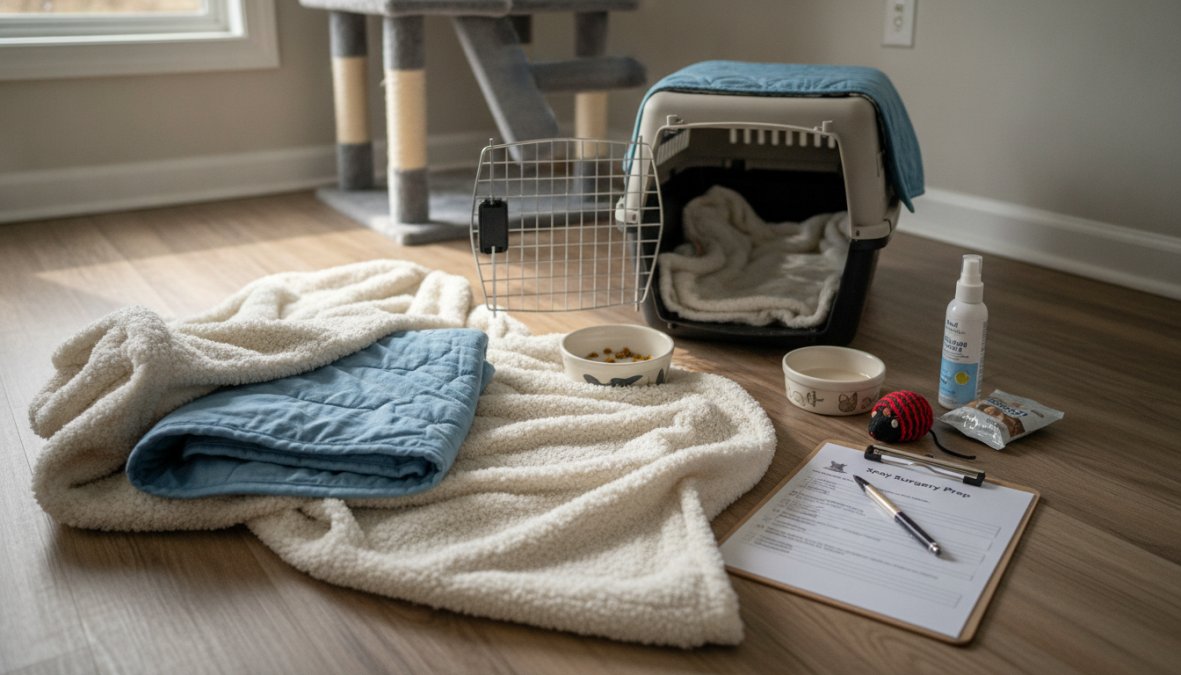
Pre-Surgery Preparation Checklist
Use this checklist in the 48 hours before surgery:
- Confirm your appointment and ask about the consent form requirements
- Begin fasting per your veterinarian’s instructions (see below)
- Set up a quiet recovery space at home with a soft bed away from other pets
- Wash and prepare the carrier with familiar-smelling bedding
- Purchase or locate an Elizabethan collar (cone of shame) in advance
- Confirm whether pain medication will be sent home and how to administer it
- Arrange your schedule to be home for at least 24-48 hours post-surgery
- Write down your vet’s emergency contact number
According to the American Veterinary Medical Association’s guidance on feline surgery, pre-operative preparation by the owner is directly linked to smoother anesthetic induction and faster recovery.
Breed and individual health considerations matter. Flat-faced breeds like Persians can have anesthesia sensitivity due to their airway anatomy. Older intact cats may have more developed uterine tissue, extending recovery. Discuss any pre-existing conditions with your veterinarian so the team can adjust the sedation protocol.
Calming techniques include placing worn clothing inside the carrier, using feline pheromone sprays on bedding, and keeping your cat’s routine normal in the 24 hours before the appointment.
Introduce the carrier at least three days before surgery by leaving it open with a treat or toy inside. Cats that enter voluntarily show measurably lower stress during pre-operative handling.
Fasting Your Cat Before Surgery: What You Need to Know
Fasting before surgery is not optional. General anesthesia suppresses the gag reflex, meaning a cat with food in her stomach risks aspiration pneumonia, a life-threatening complication.
The standard guideline is to withhold food for 8-12 hours before surgery. Water is typically permitted until 2-4 hours before, though your vet will give exact instructions based on your cat’s age and health. Kittens under 16 weeks may have a shorter fasting window due to low blood sugar risk, always confirm with the surgical team.
What to actually do the night before:
- Feed your cat her normal evening meal at the usual time
- Remove all food bowls and accessible dry food by the cutoff time your vet specifies
- Check for hidden food sources: other pets’ bowls, countertop scraps, open pantry bags
- Keep fresh water available until the morning cutoff
- Confine your cat to a room overnight if she tends to scavenge
One bowl of kibble left on the floor can undo your entire fasting plan. Do a sweep of the house before bed.
Do NOT fast kittens under 12 weeks without specific veterinary guidance. Young kittens can develop dangerous hypoglycemia during prolonged fasting. Your veterinary team should provide a customized fasting window based on your kitten’s weight and age.
On the morning of surgery, do not offer food even if your cat is crying, vocalization before meals is normal feline behavior. Bring the signed consent form and any requested medical records, and arrive 10-15 minutes early so your cat has time to settle.
For Manchester, New Hampshire pet owners, CorePet’s Spay Neuter Dental service focuses exclusively on spay, neuter, and dental procedures, meaning the team handles these cases every single day, experience that matters for anesthesia management and surgical efficiency.
Cat Spay Recovery Tips and How to Keep Your Cat Quiet After Spay
Recovery lasts 10-14 days, and your cat’s behavior during that window directly affects how well the incision heals. The surgery takes 20-45 minutes, but the post-operative period is where most owners underestimate the challenge.
The first 24 hours are most critical. Your cat will be lethargic and unsteady from sedation, this is normal. Keep her in a quiet, warm room away from other pets and children, and prevent jumping, running, or climbing stairs.
Cat spay recovery tips that actually work:
- Confine your cat to a single room for the first 48-72 hours
- Use a low-sided litter box so she does not have to stretch to enter
- Place food, water, and litter within a few feet of her resting spot
- Put the Elizabethan collar on immediately when you get home and leave it on
- Cover furniture she would normally jump onto with boxes or laundry baskets temporarily
- Check the incision site twice daily for the first week without touching it unless instructed
Activity restriction should continue for the full 10-14 days, not just until the cat "seems fine." Many cats feel well before internal sutures have fully healed, premature activity is the leading cause of surgical site complications.
According to Cornell University College of Veterinary Medicine’s feline health resources, appetite typically returns within 24-48 hours. If your cat is not eating or drinking by the 48-hour mark, contact your veterinarian. Give pain medication exactly as directed, even if your cat seems comfortable, cats mask discomfort well, and adequate pain control also reduces the urge to lick the incision.
The Elizabethan collar is non-negotiable during recovery. Cats that lick or chew their incision can open sutures, introduce bacteria, and create infections requiring a second surgical procedure. Keep the cone on for the full duration your vet recommends.
Financial planning note: CorePet’s pricing is listed on the website. Investing in a proper spay now is significantly less expensive than treating pyometra, a life-threatening uterine infection, in an intact cat.
Signs of Complications After Cat Spay: When to Call Your Vet
Most cat spay surgeries proceed without complications, but knowing what to watch for lets you act quickly. The incision site is your primary monitoring point.
Normal post-operative signs include mild swelling for the first 2-3 days, slight redness at the incision edges, and reduced appetite for the first 24-48 hours.
Signs that require an immediate call to your veterinarian:
- Excessive swelling, heat, or discharge from the incision site
- Sutures that appear to be opening or pulling apart
- Persistent vomiting more than 24 hours after surgery
- Complete loss of appetite lasting longer than 48 hours
- Labored breathing or pale gums
- Extreme lethargy that does not improve after the first 24 hours
- Signs of pain when the abdomen is touched
- Your cat is obsessively licking or biting the surgical site despite wearing the cone
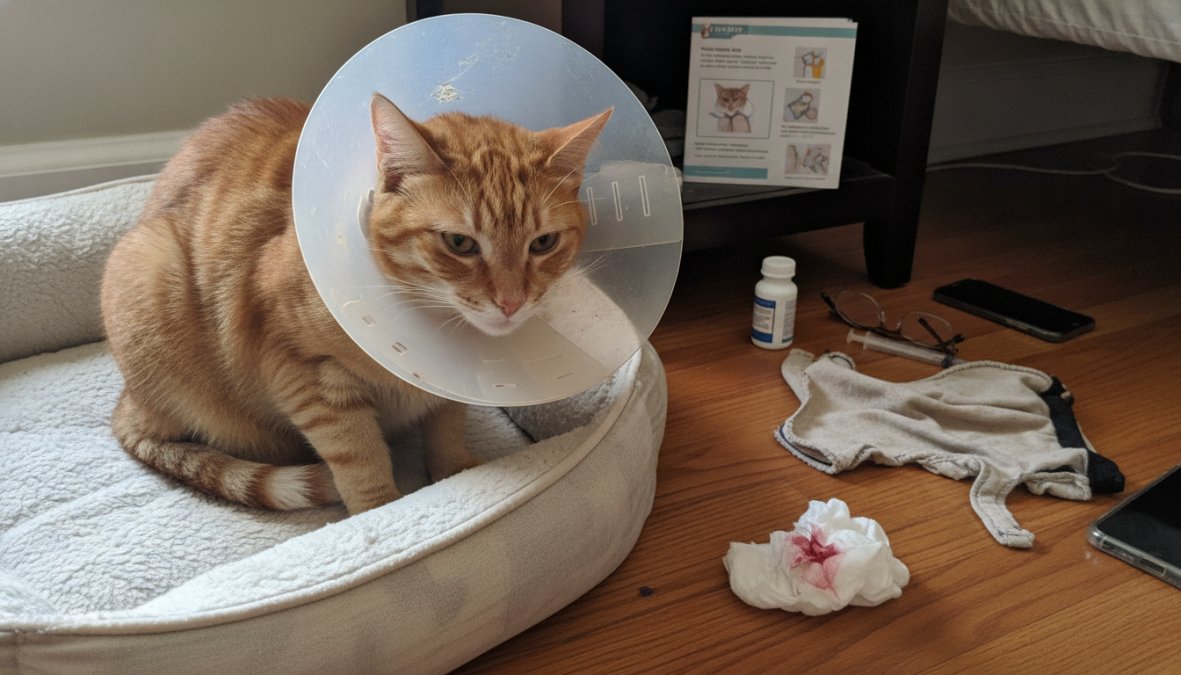
Infection is the most common post-operative complication and is almost always preventable. Keep the incision dry, do not bathe your cat for at least 10 days, and prevent licking. Yellow, green, or odorous discharge requires same-day veterinary attention.
Internal bleeding is rare but serious. Signs include a rapidly distended abdomen, pale gums, extreme weakness, or collapse. This is an emergency, do not wait for a scheduled appointment.
As documented in the American Animal Hospital Association’s surgical care standards, post-operative monitoring by owners is a critical component of successful feline surgical outcomes, with the first 72 hours being the highest-risk window. Have your vet’s after-hours number saved before surgery day.
For a deeper look at long-term benefits of desexing, the ASPCA’s overview of spay and neuter benefits for cats provides a thorough breakdown of the evidence.
Frequently Asked Questions
How long should I withhold food before my cat's spay surgery?
Most veterinarians recommend withholding food from your cat for 8 to 12 hours before spay surgery. This fasting period reduces the risk of vomiting under anesthesia, which can be dangerous. Water is typically allowed until a few hours before the procedure, but always follow your specific veterinarian's pre-operative instructions, as guidelines can vary slightly depending on your cat's age, weight, and health status.
Can I give my cat water before spay surgery?
In most cases, small amounts of water are permitted up to a few hours before the procedure. However, your veterinarian will give you specific fasting instructions during the pre-operative consultation. When preparing your cat for spay surgery, always follow those guidelines precisely. Withholding water for too long can cause dehydration, while allowing it too close to surgery can increase anesthesia risks, so timing matters.
What supplies do I need for cat spay recovery at home?
For a smooth cat spay recovery, gather these supplies before surgery day: a clean, quiet recovery space (like a spare room or large crate), soft bedding, a low-sided litter box, an Elizabethan collar (cone of shame), any prescribed pain medication, and easy-to-digest food. Having everything ready before you bring your cat home reduces stress for both of you and helps you follow post-operative care instructions without scrambling.
How do I keep my cat calm and quiet after being spayed?
To keep your cat quiet after spay surgery, confine her to a small, comfortable room away from other pets and children for at least 7 to 10 days. Limit jumping and running by blocking access to high surfaces. Use a properly fitted Elizabethan collar to prevent licking the surgical site. Offer gentle reassurance without overstimulating her. If your cat seems restless or in pain, contact your veterinarian, additional pain medication or sedation guidance may be needed.
What are the signs of complications after a cat spay I should watch for?
After your cat's spay surgery, monitor the incision site daily for redness, swelling, discharge, or opening of the sutures. Other warning signs include persistent lethargy beyond 48 hours, loss of appetite lasting more than a day, vomiting, pale gums, labored breathing, or signs of significant pain. A small amount of swelling and mild lethargy immediately post-surgery is normal, but worsening symptoms warrant an urgent call to your veterinarian.
Are there low-cost spay options available for cat owners?
Yes. Many communities have low-cost spay and neuter clinics, nonprofit organizations, and specialized surgery centers that offer affordable sterilization procedures without sacrificing quality of care. Facilities that focus exclusively on spay, neuter, and dental procedures, like CorePet in Manchester, New Hampshire, can often provide high-quality care at more reasonable costs than full-service general practices. Check CorePet's pricing page for current rates and available options.
Spay surgery is a significant procedure, and the preparation you do beforehand shapes the entire experience for your cat. CorePet, based in Manchester, New Hampshire, focuses exclusively on spay, neuter, and dental procedures, using modern surgical techniques and individualized care to make the process as safe and straightforward as possible. Book an appointment with CorePet and give your cat the benefit of a team that handles these procedures every day with the attention and skill they deserve.
This article was written using GrandRanker