Table of Contents
- Why Pets Experience Anxiety Before Veterinary Surgery
- Signs of Stress in Pets Before Surgery
- How to Calm a Pet Before Surgery: The Night Before
- Natural Calming Aids for Pets Before Surgery
- Preparing Your Dog for Anesthesia: Step-by-Step
- How to Reduce Pet Anxiety at the Vet on Surgery Day
- How to Calm a Pet Before Surgery: Setting Up a Recovery Space
- Conclusion
Last Updated: May 29, 2026
Surgical procedures are stressful for pets, and knowing how to calm a pet before surgery can directly affect both the safety of the procedure and the speed of recovery afterward. This guide from CorePet, Manchester’s locally owned spay, neuter, and dental surgery center in New Hampshire, walks you through every stage of pre-surgical preparation, from the night before all the way through post-operative care at home. Below, we’ll show you exactly how to reduce anxiety, what behavioral and physical signs to watch for, and which calming tools actually work.
Here’s what most guides get wrong: they focus entirely on the pet’s anxiety and ignore the owner’s role. Your emotional state transfers to your animal more directly than you might expect. We’ll cover that too.
Why Pets Experience Anxiety Before Veterinary Surgery
Pet anxiety before veterinary surgery is a well-documented stress response triggered by unfamiliar environments, disrupted routines, and the absence of normal social cues. It is not simply nervousness. It is a physiological cascade that, if left unmanaged, can complicate anesthesia administration and slow post-operative recovery.
The clinical environment is fundamentally alien to most pets. Strange smells, unfamiliar sounds, and the presence of other anxious animals all register as threat signals. For pets who have had previous negative veterinary experiences, the response can be even more pronounced.
The Role of Cortisol and Adrenaline in Surgical Stress
When a pet perceives a threat, the adrenal glands release cortisol and adrenaline. These stress hormones elevate heart rate and respiratory rate, tighten muscles, and sharpen alertness. In a survival context, this response is useful. In a surgical context, it creates real problems.
Elevated cortisol before anesthesia can increase the amount of sedation needed to achieve a safe plane of unconsciousness. High adrenaline levels affect cardiovascular stability during the procedure. Veterinary teams monitor these indicators closely during pre-surgical assessment, which is one reason blood work and health checks matter so much before any procedure.
The goal of pre-surgical calming is not just to make your pet more comfortable. It is to support better patient safety and more predictable surgical outcomes.
Breed-Specific Anxiety Triggers to Know Before Surgery Day
Not all pets respond to stress the same way, and breed-specific anxiety triggers are a detail most generic guides skip entirely.
Brachycephalic breeds (bulldogs, pugs, Persian cats) are already prone to respiratory difficulty, which compounds when anxiety elevates respiratory rate. Herding breeds like border collies and Australian shepherds tend toward hypervigilance and may become extremely reactive in clinical environments. Sighthounds such as greyhounds metabolize anesthesia differently and are often more sensitive to sedation protocols.
For cats, territorial animals by nature, the act of being placed in a carrier and transported is itself a significant stress trigger, before they ever reach the clinic. Knowing your pet’s breed-specific tendencies allows you to tailor your calming approach rather than applying a one-size-fits-all strategy.
Signs of Stress in Pets Before Surgery
Recognizing the signs of stress in pets before surgery is the foundation of effective intervention. You cannot address anxiety you have not identified.
Behavioral Signs: Vocalization, Clinging, and Hiding
Behavioral signs of pre-surgery anxiety include excessive vocalization (whining, barking, meowing), clinging behavior where the pet refuses to leave your side, and hiding in enclosed spaces. Some pets show the opposite pattern: they become unusually restless, pacing and unable to settle.
Separation anxiety often becomes more visible in the 24 hours before a procedure, particularly if the pet senses a change in the household routine. Watch for appetite changes, excessive grooming, or destructive behavior as additional indicators.
Physical Signs: Heart Rate, Respiratory Rate, and More
Physical stress indicators are equally important to track. Elevated heart rate, rapid respiratory rate, dilated pupils, panting in dogs (or open-mouth breathing in cats, which is almost always a stress signal), and trembling are all signs that your pet’s nervous system is in high gear.
Some pets will shed excessively or have loose stools in the hours before a stressful event. Yawning, lip licking, and whale eye (showing the whites of the eyes) are subtler calming signals that indicate a pet is uncomfortable but trying to self-regulate.
If your pet shows open-mouth breathing, extreme lethargy, or collapses before a scheduled procedure, contact your veterinary team immediately. These can signal a medical emergency, not just anxiety.
How to Calm a Pet Before Surgery: The Night Before
The night before surgery is your most important window for pre-surgical calming. Most of what you do in those final hours will set the tone for how your pet experiences the morning.
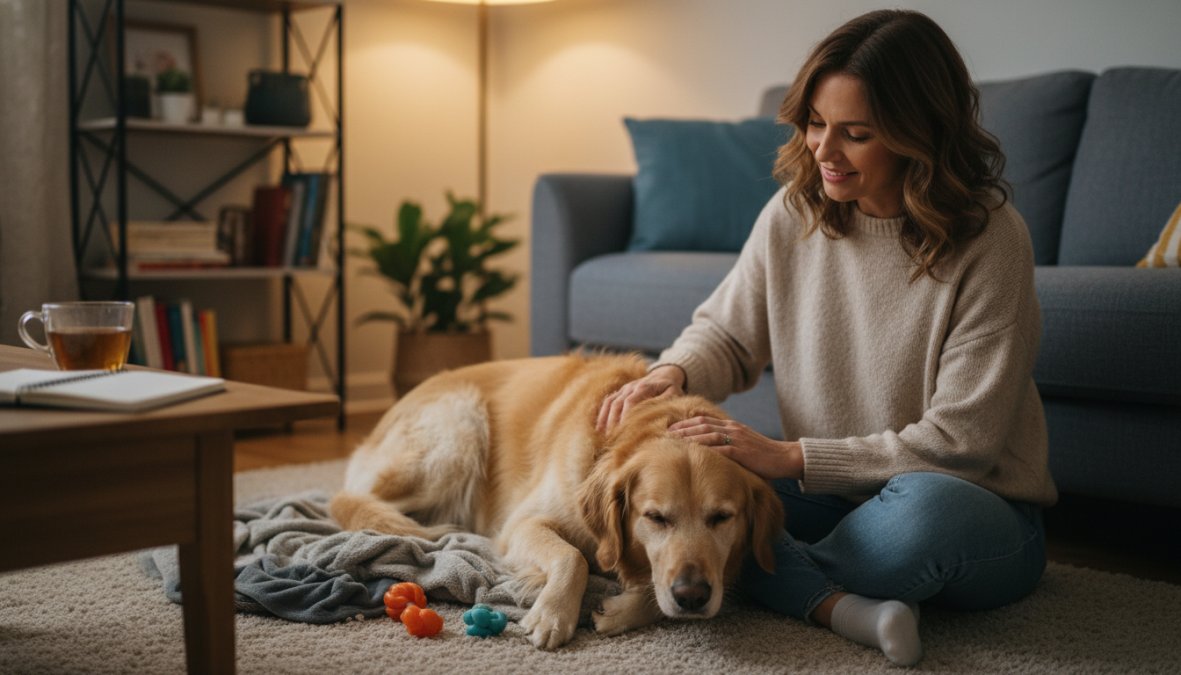
A pet owner sitting calmly on the living room floor with a relaxed golden retriever stretched out beside them, gently stroking the dog’s back in soft evening lamplight, is doing something more therapeutic than it looks. That physical contact and calm presence directly communicates safety to a nervous animal.
Pre-Surgical Fasting Instructions and Aspiration Risk
Pre-surgical fasting is a non-negotiable safety requirement, not a preference. Pets must fast before anesthesia to eliminate aspiration risk, which occurs when stomach contents enter the airway during sedation. This is one of the most serious preventable complications in veterinary surgery.
General guidelines from veterinary medicine recommend withholding food for 8-12 hours before a procedure. Water is typically permitted until a few hours before surgery, but confirm the exact window with your veterinary team since protocols vary by procedure and patient age. Puppies, kittens, and diabetic pets may have modified fasting requirements.
According to American College of Veterinary Anesthesia and Analgesia guidelines, fasting protocols should be individualized based on patient health status and the type of procedure planned.
Do not sneak your pet a treat the morning of surgery out of guilt. The aspiration risk is real, and the consequences can be life-threatening.
Creating a Quiet, Calm Home Environment
The evening before surgery, reduce stimulation in your home. Turn down music or television volume. Avoid having visitors over. Keep other pets calm and separated if they tend to roughhouse.
Give your pet access to their favorite resting spot and familiar bedding. Familiar scents are genuinely calming for animals. A worn t-shirt placed in their bed provides olfactory comfort that many pets respond to well.
Avoid altering your own behavior dramatically. If you suddenly start hovering or acting anxious, your pet will register that something is wrong.
Owner-Pet Emotional Mirroring: How Your Calm Affects Theirs
This is the angle almost every pre-surgical guide ignores, and it matters more than most owners realize.
Pets, particularly dogs, are highly attuned to their owner’s emotional state. Research from animal behavior studies at Linköping University has documented that dogs synchronize their cortisol levels with their owners during stressful situations. If you are anxious about the surgery, your pet will likely be more anxious too.
Practical implications: speak in a low, even tone. Move slowly and deliberately. Avoid tearful goodbyes at drop-off. A calm, matter-of-fact handoff to the veterinary team is far less distressing for your pet than an emotional farewell that signals danger.
Practice a brief separation routine in the week before surgery. Leave your pet with a family member or in a quiet room for 20-30 minutes daily. This reduces the shock of being left at the clinic on surgery day.
Natural Calming Aids for Pets Before Surgery
Natural calming aids for pets before surgery fall into three distinct categories: tactile pressure tools, olfactory and pheromone-based products, and auditory interventions. Understanding how each one works, and exactly when and how to deploy it, is what separates effective pre-surgical preparation from a collection of well-meaning guesses.
Non-Pharmacological Sensory Tools: Wraps, Pheromones, and Sound
Tactile calming wraps
Calming wraps such as the Thundershirt work on the principle of maintained pressure stimulation, a concept related to deep pressure therapy used in both human and veterinary behavioral medicine. Constant, gentle compression applied to the torso appears to activate the parasympathetic nervous system, reducing the fight-or-flight response. The mechanism is similar to swaddling in infants.
For best results, introduce the wrap at least two to three days before surgery, not for the first time on surgery morning. A pet that has never worn one may find it an additional stressor rather than a comfort. Put it on during a calm, positive moment at home (a quiet evening, after a walk) so the association is neutral before it is needed. Sizing matters: the wrap should be snug enough to maintain contact across the chest and back without restricting breathing or movement. Most manufacturers provide weight-based sizing guides.
Results vary meaningfully by individual animal. Dogs with generalized anxiety tend to respond more consistently than dogs whose anxiety is specifically triggered by novel environments. Cats can also benefit, though acceptance of wearing any garment varies widely by individual temperament.
Pheromone sprays and diffusers
Pheromone products work by mimicking naturally occurring chemical signals that animals use to communicate safety. For dogs, dog-appeasing pheromone (DAP) products, sold under the brand name Adaptil, replicate the pheromone a nursing mother dog produces to calm her puppies. For cats, Feliway Classic replicates the feline facial pheromone that cats deposit when they rub their face against objects they consider safe territory.
Placement and timing are the details most guides skip:
- Carrier or crate: Spray the interior of the carrier 15 to 30 minutes before placing the pet inside. Do not spray directly onto the animal. The off-gassing period is important, spraying immediately before use reduces effectiveness.
- Home environment: Plug-in diffusers should be running in the pet’s primary resting area for at least 48 hours before surgery day to build ambient concentration. A diffuser switched on the morning of surgery has not had time to work.
- Car travel: A spray applied to a bandana or small cloth placed near (not directly against) the pet’s face during transport can help. Avoid spraying the car interior directly, as the alcohol carrier in spray formulations can be irritating in an enclosed space.
Pheromone products are not sedatives and will not eliminate severe anxiety on their own. They are most effective as part of a layered approach and for pets with mild to moderate baseline anxiety.
Sound therapy
This is the content gap most competitors leave entirely unclaimed, and the evidence behind it is more specific than most owners realize.
Research conducted in shelter environments, where stress levels are measurably high and behavioral indicators are easy to track, has found that classical music and reggae music produce the most consistent reductions in stress behaviors in dogs, including reduced vocalization, less time standing, and more time resting. Heavy metal and pop music showed no benefit and in some cases increased agitation. The specific tempo and tonal qualities of classical and reggae music (slower tempo, lower frequency dominance) appear to be the relevant variables rather than genre as a cultural category.
For cats, lower-frequency music and music composed specifically for feline hearing ranges (which extend higher than human hearing) has shown the most consistent calming effect. A small body of research has explored species-specific music composed to match the frequency range and tempo of cat vocalizations, and while this remains a niche area, it represents a meaningful departure from simply playing human-oriented music near a cat.
Practical application for surgery preparation:
- Begin playing calming music in your pet’s resting area the evening before surgery, at low volume (audible but not dominant in the room)
- Continue during the morning preparation routine
- If your pet travels in a carrier in the car, a phone playing softly near the carrier is more effective than the car stereo, which fills the entire vehicle at a volume calibrated for human hearing
- Avoid sudden silence followed by sudden sound, which can be more disruptive than consistent ambient noise
Familiar scent items
Olfactory familiarity is one of the most underused calming tools available to pet owners. A worn t-shirt or pillowcase placed inside the carrier or on the recovery bed provides a scent anchor that communicates the owner’s presence even when the owner is not physically there. For dogs especially, owner scent has been shown to reduce stress indicators in separation contexts. Use an item worn recently (within 24 hours) for maximum scent concentration.
Veterinarian-Prescribed Options: Zylkene and Sedation
For pets with moderate to severe anxiety, a conversation with your veterinary team about pharmacological support is worth having well before surgery day, ideally at the pre-surgical consultation, not the morning of the procedure.
Zylkene is a non-prescription supplement derived from alpha-casozepine, a bioactive peptide found in a casein protein in cow’s milk. It works by binding to GABA receptors in the brain, producing a mild anxiolytic effect without sedation or motor impairment. Because it does not cause sedation, it is suitable for use in the days leading up to a surgical procedure without interfering with anesthetic protocols.
Zylkene is typically started three to five days before a stressful event to allow the compound to reach effective levels. It is available in capsule form that can be opened and mixed with food. It is generally well tolerated, with a low incidence of gastrointestinal side effects. It is not a substitute for veterinary-prescribed medication in severe cases, but it is a reasonable first-line option for situational anxiety in otherwise healthy pets.
For pets with severe fear responses, your veterinary team may prescribe a low-dose anxiolytic or sedative to be administered at home approximately 60 to 90 minutes before departure for the clinic. The goal is not full sedation but a reduction in the acute fear response that makes transport and clinical handling safer and less traumatic. The specific medication, dose, and timing will be individualized to your pet’s weight, health status, and the nature of the procedure.
Never administer human anti-anxiety medications, including benzodiazepines, antihistamines marketed as sleep aids, or any over-the-counter calming products formulated for humans, to pets without explicit veterinary guidance. Drug metabolism in dogs and cats differs significantly from humans, and several compounds that are safe for people are toxic to companion animals at any dose.
If your pet has a history of extreme veterinary anxiety, ask your veterinary team about a pre-visit anxiety protocol at least one week before surgery. Some practices can prescribe a trial dose of a calming medication to be tested at home before surgery day, so you know how your individual pet responds before it matters most.
Preparing Your Dog for Anesthesia: Step-by-Step
Preparing a dog for anesthesia involves more than emotional calming. There is a practical checklist of medical steps that support patient safety and give the surgical team what they need to proceed confidently.
Blood Work, Health Checks, and Pre-Surgical Routine
Pre-surgical preparation for anesthesia typically follows this sequence:
- Schedule a pre-surgical consultation at least one week before the procedure date
- Complete blood work to assess organ function, particularly kidney and liver health, which affect how the body processes anesthetic agents
- Disclose all current medications and supplements to the veterinary team, including over-the-counter products and herbal remedies
- Confirm vaccination status is current, as some facilities require this before admission
- Follow fasting instructions precisely as communicated by your veterinary team
- Administer any prescribed pre-surgical calming aids at the directed time the morning of surgery
- Prepare your transport setup the night before (carrier, familiar bedding, pheromone spray)
- Arrive on time for check-in, since rushed arrivals elevate both owner and pet stress
Blood work before anesthesia is not optional for older pets or those with known health conditions. It gives the veterinary team critical information that directly affects anesthetic protocol selection and patient safety.
How to Reduce Pet Anxiety at the Vet on Surgery Day
Knowing how to reduce pet anxiety at the vet on the day of surgery requires thinking through two distinct phases: transportation and the clinical handoff.
Transportation Safety Tips for Anxious Pets
Transportation is often the first major stress trigger of surgery day. A few adjustments make a significant difference:
- Load the carrier into the car before bringing your pet to it, so the association is not "carrier = car = vet"
- Cover wire crates with a light blanket to reduce visual stimulation during transit
- Drive calmly; hard braking and sharp turns increase physical disorientation and stress
- Keep the car at a comfortable temperature; overheating amplifies anxiety
- For dogs who travel well in the back seat, a properly secured harness is safer than a loose carrier
According to the American Veterinary Medical Association’s pet transportation guidelines, properly secured pets in vehicles are significantly safer during sudden stops and are less likely to experience injury that compounds pre-surgical stress.
What to Expect in the Clinical Environment
The clinical environment at a dedicated surgery center is different from a general practice waiting room, and that difference matters for anxious pets. Facilities that focus exclusively on surgical procedures, like CorePet in Manchester, New Hampshire, tend to have simplified intake processes that minimize the time a pet spends in the waiting area.
What typically happens at check-in: a brief physical assessment, confirmation of fasting compliance, weight check, and a review of the surgical plan with the owner. The handoff is usually quick. This is intentional. A calm, efficient handoff is better for the pet than a prolonged farewell.
How to Calm a Pet Before Surgery: Setting Up a Recovery Space
Preparing a recovery space before you leave for the clinic is one of the most practical things you can do on surgery day. Your pet will return home in a physiologically and neurologically vulnerable state, and having the environment ready before you walk out the door removes one source of post-surgical chaos at a moment when you will have limited bandwidth to manage it.
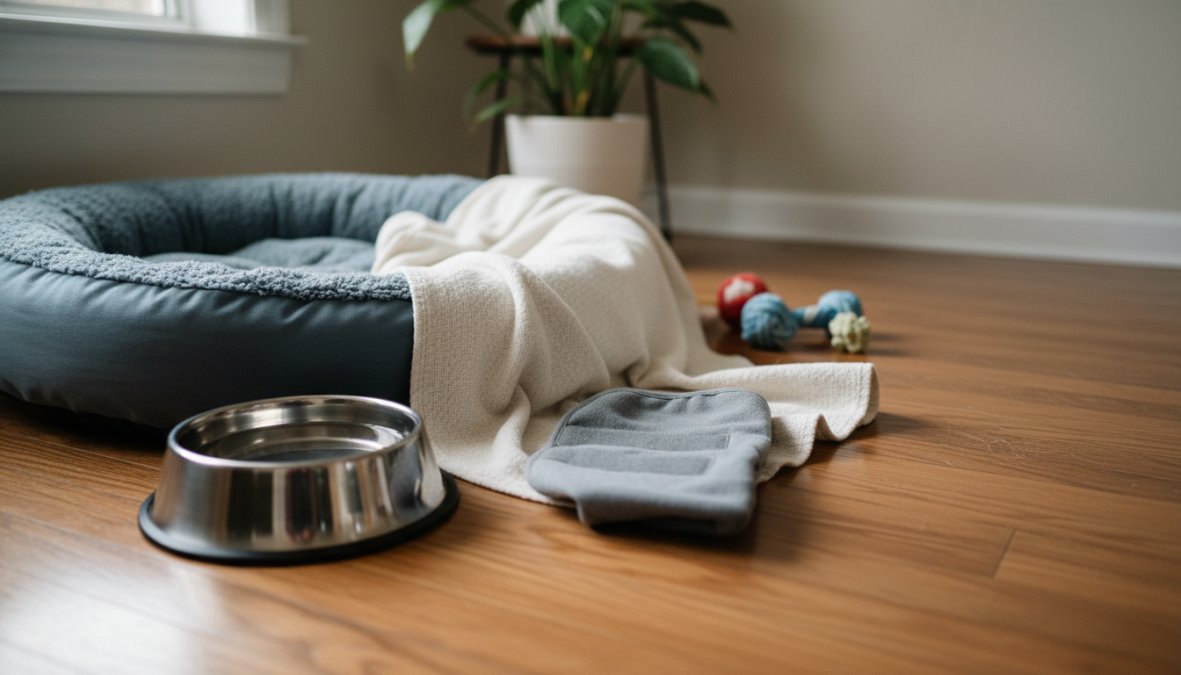
Choose a quiet room away from high-traffic areas of the home. Set up a low, padded bed that is easy for a groggy animal to step onto without needing to jump or climb. Keep the room at a comfortable, stable temperature, pets emerging from anesthesia have reduced thermoregulatory capacity and are more susceptible to both chilling and overheating than they normally would be. Place a water bowl within easy reach at ground level.
- Soft, washable bedding in a confined, quiet area
- Water bowl at ground level
- Calming wrap nearby for use if the pet is distressed post-surgery
- Baby gate or crate to prevent jumping or stair climbing
- Phone number for the veterinary team posted visibly
- Bland diet ingredients ready (boiled chicken and rice for dogs, as directed)
- Pheromone diffuser plugged in and running before you leave for the clinic
- E-collar (cone) accessible and correctly sized
Post-Surgery Anxiety Management: The First 24 Hours After Anesthesia
This is the window most pre-surgical guides ignore entirely, and it is one of the most disorienting experiences a pet can have. Understanding what is happening neurologically, and having a specific protocol ready, makes a significant difference in how smoothly your pet transitions back to baseline.
What post-anesthetic disorientation actually looks like
Pets emerging from general anesthesia do not simply wake up and return to normal. The recovery process unfolds in stages, and the first several hours at home often involve behaviors that alarm owners who are not prepared for them:
- Vocalization: Whining, crying, or repetitive meowing that does not seem connected to pain. This is a common feature of emergence from anesthesia and reflects neurological disorientation rather than distress in the conventional sense. It typically resolves within two to four hours as the anesthetic agents clear the system.
- Ataxia: Stumbling, uncoordinated movement, or an inability to walk in a straight line. The vestibular system is sensitive to residual anesthetic agents, and balance disruption is normal in the immediate post-operative period.
- Apparent non-recognition: Some pets, particularly cats, will not respond to their name, will not make eye contact, or may seem to look through familiar people. This is temporary and reflects the dissociative quality of some anesthetic agents rather than any permanent neurological change.
- Aggression or fear responses: A pet that is normally gentle may snap, hiss, or scratch when touched in the first few hours post-anesthesia. This is a reflexive response to disorientation and physical vulnerability, not a behavioral change. Handle with calm, minimal contact until the pet has clearly reoriented.
- Excessive thirst or hunger: Some pets emerge from anesthesia with a pronounced drive to eat or drink. Follow your veterinary team’s instructions on reintroduction of food and water precisely, offering too much too quickly after anesthesia can trigger vomiting.
A calming protocol for the first 24 hours
The same sensory principles that reduce pre-surgical anxiety apply during post-anesthetic recovery, but the application needs to be adjusted for a pet that is physically compromised and neurologically disoriented.
Hours 0-4 (immediate return home):
Keep the recovery room as quiet as possible. Dim lighting is preferable to bright overhead lights, which can be disorienting for a pet whose pupils may still be partially dilated. Do not attempt to engage the pet in normal interaction, no play, no excited greetings, no other pets or children in the room. Sit nearby if your presence is calming, but avoid hovering directly over the animal, which can feel threatening to a disoriented pet. Speak in a low, even tone if you speak at all.
If you have been using a pheromone diffuser in the recovery room, it should already be running. The ambient pheromone concentration will be present without requiring any action on your part, which is exactly what you want during this phase.
Hours 4-12 (stabilization phase):
Most pets will have regained basic coordination and recognition by this point. Reintroduce water in small amounts if your veterinary team has cleared it. Offer the bland diet in a small portion, roughly one-quarter of a normal meal, and observe for vomiting before offering more. Gentle, brief physical contact (a hand resting on the pet’s side, not active stroking) is appropriate if the pet is seeking it. Do not force contact.
If the pet is wearing an e-collar and showing significant distress about it, a brief supervised period without the collar while you watch the surgical site directly is preferable to allowing the pet to injure itself trying to remove the collar. The goal is compliance over time, not perfect compliance in the first hours.
Hours 12-24 (early recovery):
By this point, most pets are recognizably themselves, though energy levels will be lower than normal and some soreness around the surgical site is expected. This is the phase where pain management compliance becomes critical. Follow the dosing schedule your veterinary team provided without skipping or delaying doses, pain that is allowed to escalate is significantly harder to manage than pain that is kept ahead of.
Resume the calming music protocol from the pre-surgical period if it was effective. Familiar sounds and scents continue to support nervous system regulation during the recovery window.
Contact your veterinary team immediately if your pet shows any of the following in the first 24 hours post-surgery: pale or white gums, labored breathing, inability to stand after four hours at home, continuous vocalization that does not diminish, vomiting more than once, or any bleeding or significant swelling at the surgical site. These are not normal recovery signs.
Bland Diet, Crate Training, and Post-Operative Recovery Tips
Most veterinary teams recommend a bland diet for the first 24 hours after surgery to reduce gastrointestinal upset, which is common after anesthesia. Boiled chicken and plain white rice is the standard recommendation for dogs. Reintroduce regular food gradually over 48 to 72 hours, starting with small, frequent portions rather than a full meal.
Crate training before surgery pays dividends during recovery. A pet that is already comfortable resting in a crate will be much easier to manage during the restricted activity period following a procedure. If your pet is not crate trained, use a small, gated room as an alternative. The key is confinement that prevents jumping, stair climbing, and rough play, not punishment.
As documented in post-operative care guidelines from the Veterinary Anesthesia and Analgesia Support Group, restricted activity during the initial recovery period is one of the most important factors in preventing post-surgical complications such as incision dehiscence and seroma formation.
Monitor the surgical site daily for signs of infection: redness, swelling, discharge, or excessive licking. An e-collar prevents self-trauma to the site. Most pets tolerate them better than owners expect once they adjust, particularly if the collar is introduced calmly rather than wrestled on during a moment of distress.
Set a phone alarm for each medication dose during the recovery period. Missing a pain management dose in the first 48 hours post-surgery is a common mistake that leads to unnecessary discomfort and slows healing. If your pet refuses the medication hidden in food, ask your veterinary team for an alternative formulation, many medications are available as flavored chews or transdermal gels that are easier to administer to a reluctant patient.
Frequently Asked Questions
Is it normal for my pet to be anxious before surgery?
Yes, it is completely normal. Pets pick up on changes in routine, unfamiliar smells in the clinical environment, and even their owner's stress. Elevated cortisol and adrenaline levels are common responses to pre-surgical stress in both dogs and cats. Knowing how to calm a pet before surgery, through routine maintenance, calming aids, and a quiet home environment, can meaningfully reduce that anxiety and support better surgical outcomes.
Should I give my dog anything to calm them before surgery?
Always consult your veterinarian before giving any calming product. Natural options like Zylkene or pheromone sprays may be recommended in the days leading up to the procedure. Veterinarian-prescribed sedation is available for highly anxious patients. Avoid giving over-the-counter human medications, as these can interfere with anesthesia. When preparing a dog for anesthesia, your veterinary team is the best resource for safe, individualized recommendations.
What should I do the night before my pet's surgery?
Follow your vet's pre-surgical fasting instructions carefully, withholding food reduces aspiration risk during anesthesia. Keep your home calm and avoid disrupting your pet's routine. Use non-pharmacological sensory tools like calming wraps or pheromone sprays if your pet shows signs of stress. Avoid excessive reassurance, as owner-pet emotional mirroring means your own anxiety can transfer to your pet. A quiet, low-stimulation evening is one of the best natural calming aids for pets before surgery.
How do I transport an anxious pet to the vet on surgery day?
Use a secure, familiar carrier or crate to reduce separation anxiety during transit. Line it with a worn piece of your clothing to provide scent comfort. Drive calmly and avoid sudden stops. For cats, covering the carrier with a light blanket can reduce visual stress triggers. Arrive a few minutes early so your pet can settle before entering the clinical environment. These transportation safety steps help keep heart rate and respiratory rate lower heading into surgery.
How can I help my cat stay calm before a vet visit for surgery?
Start crate training your cat a few days before surgery so the carrier feels safe, not threatening. Use feline pheromone sprays inside the carrier the night before. Maintain your cat's normal routine as much as possible, since disruption is a key stress trigger. On the morning of surgery, keep handling gentle and voices soft. Knowing the signs of stress in pets before surgery, like hiding, vocalization, or rapid breathing, helps you respond calmly and reduce further escalation.
What does post-surgery anxiety look like, and how do I manage it?
After veterinary surgery, pets may show confusion, restlessness, vocalization, or clinginess as anesthesia wears off. This is normal but manageable. Prepare a quiet recovery space away from other pets and loud activity. Follow your vet's pain management instructions closely, as unmanaged discomfort fuels anxiety. Offer a bland diet as directed and limit movement. Gentle presence, without over-stimulation, is one of the most effective tools for post-operative recovery and easing your pet back to comfort.
This article was written using GrandRanker