Table of Contents
- Is It Too Late to Spay a 5 Year Old Dog?
- Benefits of Spaying an Older Dog
- Risks of Spaying an Older Dog
- Spay Recovery for Older Dogs
Spay a 5 Year Old Dog: Is It Too Late?
Last Updated: July 25, 2026
Is it too late to spay a 5 year old dog? This question comes up often for pet owners who adopted senior dogs or delayed the procedure for other reasons. At CorePet, we work with countless owners facing this exact decision, and the answer might surprise you: age alone isn’t the determining factor. What matters far more is your dog’s current health status and your veterinarian’s assessment. Modern surgical techniques and pre-operative screening have changed the calculation significantly.
Is There a Maximum Age for Spaying?
Veterinary medicine has moved away from strict age cutoffs for spaying. Unlike decades past when vets often refused to spay dogs over 5 or 6 years old, today’s approach focuses on individual health assessment rather than a magic number. A healthy 10-year-old dog may be a better surgical candidate than an unhealthy 3-year-old.
The risks do increase with age, older dogs metabolize anesthesia differently and may have underlying conditions that complicate surgery. However, pre-operative bloodwork and cardiovascular screening are the real gatekeepers for safety. Dogs with clean bloodwork results and normal heart function often sail through spay surgery with minimal complications, regardless of age.
Ask your veterinarian for a geriatric health assessment before committing to surgery. This evaluates organ function, cardiac status, and anesthesia tolerance specific to your dog’s age and breed.
Benefits of Spaying an Older Dog
The reproductive health advantages of spaying don’t disappear at age 5. Some of the most serious conditions prevented by spaying become more likely as dogs age, making the procedure even more valuable for senior females.
Pyometra prevention is the biggest health win. This life-threatening uterine infection occurs almost exclusively in unspayed females and becomes increasingly common in older dogs. Pyometra can develop suddenly, requires emergency surgery, and carries a mortality rate of 5-15% even with treatment. A dog spayed at 5 years old will never face this condition.
Mammary tumors represent another significant benefit. Spaying eliminates future mammary cancer risk entirely. For unspayed dogs, the risk increases with each estrus cycle, making spaying a 5-year-old dog particularly valuable.
Spaying a 5-year-old dog eliminates pyometra risk entirely and prevents mammary tumors, two serious conditions that become increasingly likely in older unspayed females.
Risks Associated with Surgery in Older Dogs
Understanding the real risks helps you make an informed decision. Older dogs do face higher surgical risk than younger ones, but the increase is often smaller than owners expect.
Anesthesia complications are the primary concern. Older dogs may have reduced cardiac output, kidney function, or liver metabolism, all of which affect how their bodies process sedation. This is precisely why pre-surgical bloodwork and cardiac screening become essential for older dogs.
Surgical bleeding can be heavier in senior dogs due to changes in blood clotting. Modern surgical techniques minimize this risk, but it remains slightly elevated compared to younger dogs.
Post-operative recovery takes longer. A 2-year-old dog might feel back to normal within 7-10 days, while a 10-year-old might need 14-21 days to fully heal. The actual complication rate for spay surgery in healthy older dogs is surprisingly low, most studies report rates between 2-5%, comparable to younger dogs when properly screened.
Pre-Surgical Bloodwork and Health Screening
Before any spay surgery on a 5-year-old dog, comprehensive pre-operative bloodwork is non-negotiable. This is the foundation of safe anesthesia in older dogs.
Standard bloodwork panels measure kidney function, liver function, blood glucose, and electrolytes. Complete blood count (CBC) checks red and white blood cell counts, revealing infections or anemia. Cardiac evaluation is often recommended for dogs over 7 years old or any dog with a heart murmur. Urinalysis detects urinary tract infections or kidney disease that bloodwork alone might miss.
A dog with undetected heart disease or kidney dysfunction can experience life-threatening complications under anesthesia. Never skip pre-operative screening for an older dog.
What to Expect Before and After Surgery
Understanding the timeline and recovery process helps you prepare your home and manage expectations for your older dog’s healing.
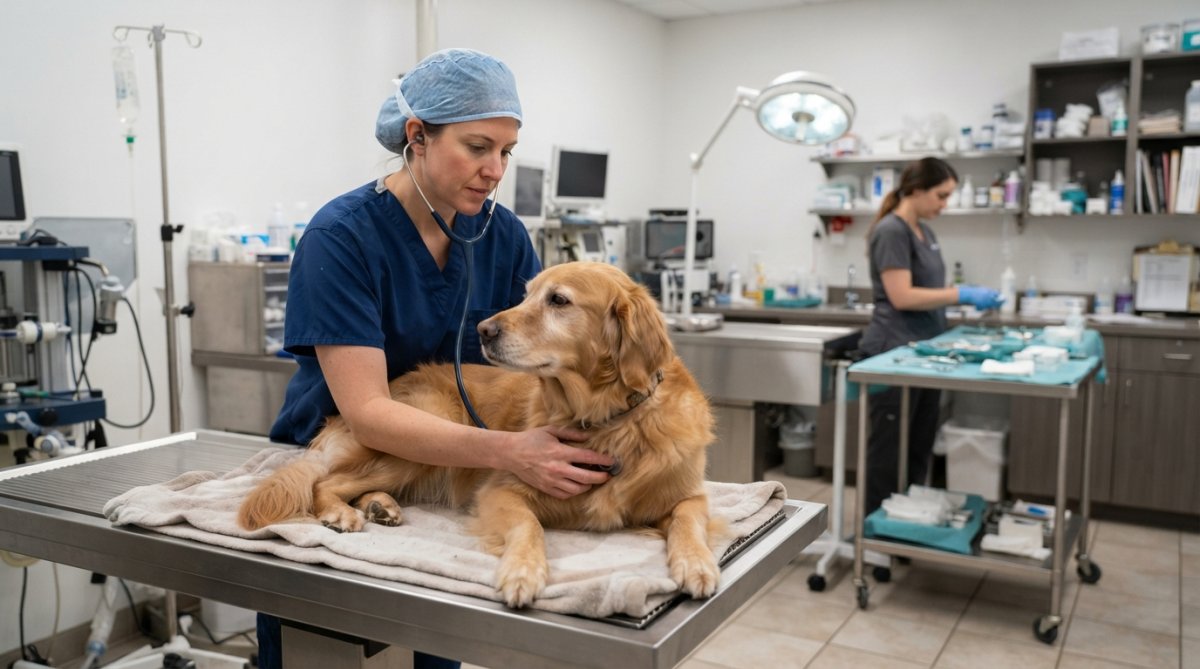
(/blog/pet-anesthesia-recovery-what-to-expect/) Before and After Surgery]
Pre-operative preparation typically begins 7-10 days before surgery with bloodwork and fasting instructions (usually 8-12 hours before surgery). Ask about pain medication, as some vets recommend starting before surgery to reduce post-operative discomfort.
Immediate post-operative recovery (first 24 hours) is critical. Your dog will be groggy and may not eat or drink much. Pain medication keeps her comfortable, and anti-inflammatory drugs reduce swelling. Most dogs go home the same day or the next morning.
Week one is the hardest part of recovery. She needs complete rest, no running, jumping, or climbing stairs. Crate rest, short leash walks only, and careful supervision are essential. Pain medication continues, and you’ll monitor the incision daily for swelling, discharge, or opening.
Weeks two through three show gradual improvement. Most dogs feel significantly better by day 10-14. The incision should be fully sealed by week 10-14.
Pain management deserves special attention in older dogs. Older dogs often hide pain more than younger ones, so your vet may recommend pain medication for 7-14 days post-op, even if your dog seems fine.
Health Conditions Prevented by Spaying
Beyond pyometra and mammary tumors, spaying prevents ovarian cysts and tumors, uterine infections, and behavioral issues linked to estrus cycles. The cumulative health benefit of spaying a 5-year-old dog is substantial, as she avoids years of potential reproductive disease.
Spay Recovery for Older Dogs
Recovery in senior dogs differs from younger dogs in meaningful ways. Older dogs heal more slowly, plan for 3-4 weeks of modified activity. Pain management is more critical, so consistent pain medication for 10-14 days post-op is standard for senior dogs. Rest compliance is harder due to arthritis or joint issues, so orthopedic bedding and careful confinement help.
Appetite changes are common for a few days post-op. Offering small, frequent meals of soft or wet food often helps. Incision care requires vigilance, check daily for redness, swelling, discharge, or opening. Watch for fever, lethargy, vomiting, or refusal to eat. Activity restrictions must be enforced with strict crate rest and leash-only walks for at least 2 weeks.
Many owners find that their older dog actually feels better after recovery than before surgery, with improved energy and mood once fully healed.
Breed-Specific Considerations
Certain breeds face higher anesthetic risk or have anatomical factors that complicate spay surgery, and these considerations become more relevant in older dogs.
Brachycephalic breeds (bulldogs, pugs, Boston terriers) have narrower airways and are more prone to anesthetic complications. Giant breeds (Great Danes, Saint Bernards, Mastiffs) have higher rates of bloat and heart disease, requiring pre-operative cardiac screening. Toy breeds may require customized anesthesia protocols due to their small size.
Ask your veterinarian whether your dog’s breed has specific considerations that affect spay surgery risk or recovery.
Financial Cost Comparison
Cost is a practical factor in the spay decision for many owners. Spaying a 5-year-old dog typically costs more than spaying a younger dog due to extended surgery time, more intensive monitoring, and additional pre-operative screening.
A veterinary surgery center that focuses on spay and neuter procedures often provides transparent, competitive pricing. Spay Neuter Dental at CorePet, located in Bedford, New Hampshire, focuses on providing these essential services at reasonable costs without surprise fees. Compare this cost against the potential expenses of treating pyometra (emergency surgery, hospitalization) or mammary cancer (tumor removal, possible chemotherapy), and the spay procedure often looks like a sound investment in your dog’s long-term health.
Deciding whether to spay your 5-year-old dog comes down to one question: Is she healthy enough for surgery? If pre-operative screening shows good organ function and a healthy heart, the answer is almost always yes. The health benefits, eliminating pyometra risk, preventing mammary tumors, and avoiding years of reproductive disease, typically outweigh the surgical risks for older dogs in reasonable health. CorePet’s focus on spay procedures with advanced surgical techniques and comprehensive pre-operative screening ensures your older dog receives the safest possible care. Schedule a consultation to discuss your dog’s individual health status and get a clear recommendation tailored to her needs.
Frequently Asked Questions
What are the main benefits of spaying an older dog?
Spaying a 5 year old dog eliminates the risk of pyometra, a life-threatening uterine infection common in unspayed females. It also prevents mammary tumors and removes the stress of estrus cycles. Many owners report improved quality of life and peace of mind knowing their dog's reproductive health risks are eliminated, even in middle-aged and senior dogs.
Is anesthesia safe for a 5 year old dog undergoing spay surgery?
Modern anesthesia is generally safe for healthy 5 year old dogs when proper pre-surgical screening is completed. Pre-operative bloodwork helps identify any underlying health conditions. Your veterinarian will use the safest sedation and anesthesia protocols appropriate for your dog's age and health status. Always discuss anesthesia concerns with your DVM before scheduling.
How long does recovery take after spaying an older dog?
Spay recovery for older dogs typically takes 10-14 days for incision healing, though full post-operative recovery may extend 2-3 weeks. Senior dogs may recover slightly more slowly than younger dogs. Pain management and restricted activity are essential during this period. Follow your veterinarian's post-operative care instructions carefully to prevent complications and ensure proper healing.
What are the main alternatives to traditional spaying?
Alternatives include ovarian sparing spay (OSS), where only the uterus is removed, and hormone-blocking medications. However, these options don't eliminate all reproductive health risks. Discuss alternatives with your veterinarian to determine which approach best suits your 5 year old dog's health status and your preferences for long-term reproductive health management.
This article was written using GrandRanker