Table of Contents
-
Breed-Specific Risks: Is Low Cost Spay Safe for My Pet’s Breed?
-
Your Objective Safety Checklist for Evaluating Any Spay Clinic
-
Why Spay and Neuter Is Essential for Pet Health and Overpopulation
-
Financial Assistance and Finding a Reputable Clinic in Manchester, NH
Last Updated: June 4, 2026
Is Low Cost Spay Safe for My Pet? The Honest Answer
If you’ve asked yourself “is low cost spay safe for my pet,” you’re not alone. At CorePet, we hear this question from Manchester, New Hampshire pet owners every week, and the short answer is: yes, a low-cost spay can be completely safe, but only when the clinic meets specific standards of care. Below, we’ll walk you through how to evaluate any spay clinic, what safety standards to demand, and which red flags to avoid.
Here’s what most guides get wrong: they treat “affordable” as a proxy for “inferior.” That assumption is outdated. The real variable isn’t price, it’s protocol.
What Makes a Spay or Neuter Clinic ‘Low Cost’?
A low-cost spay clinic reduces the price of sterilization surgery by specializing exclusively in high-volume, high-efficiency procedures rather than offering full general practice services. The cost reduction comes from operational focus, eliminating overhead like diagnostic imaging suites and 24-hour emergency care, not from cutting corners on anesthesia, monitoring, or surgical technique.
High-Volume Clinic vs. Full-Service Animal Hospital: Key Differences
Both models can deliver excellent outcomes. The difference lies in scope, not quality.
|
Feature |
High-Volume Spay Clinic |
Full-Service Animal Hospital |
|---|---|---|
|
Surgical focus |
Spay/neuter only |
Broad surgical range |
|
Surgeon experience in sterilization |
Very high (daily repetition) |
Moderate (varied caseload) |
|
Pre-surgical workup |
Basic to moderate |
Comprehensive |
|
On-site emergency care |
Limited |
Full |
|
Cost |
Lower |
Higher |
|
Post-op monitoring |
Standard recovery |
Extended if needed |
High-volume clinics develop genuine expertise precisely because that’s all they do. The trade-off is that complex cases may need a referral.
Safety and Quality of Care Standards You Should Expect
Safety in spay surgery is determined by protocols, not price tags. Any clinic should meet a minimum threshold of care standards before you trust them with your pet.
Anesthesia Protocols and Surgical Monitoring
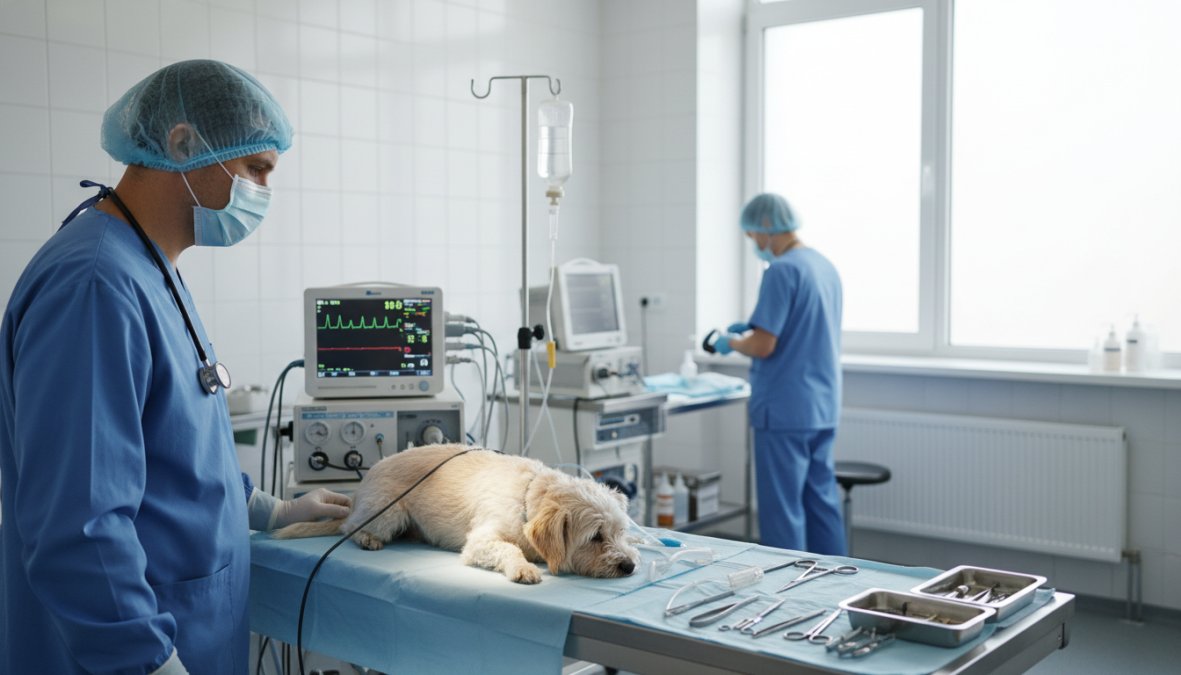
Anesthesia is where the risk lives in any surgical procedure. A safe spay clinic uses modern, multi-drug protocols tailored to the patient’s weight, species, and health status. Inhalant anesthesia (typically isoflurane or sevoflurane) should be used for maintenance, not just injectable sedation alone.
Continuous monitoring throughout surgery is non-negotiable, a dedicated technician or equipment tracking heart rate, oxygen saturation, respiratory rate, and body temperature. According to the American Veterinary Medical Association’s surgical care guidelines, proper anesthetic monitoring significantly reduces intraoperative complications. Ask directly: “Who monitors my pet during surgery, and what equipment do you use?”
Pre-Surgical Bloodwork and Individual Risk Assessment
Pre-surgical bloodwork is genuinely valuable for pets over five years old, brachycephalic breeds, animals with known health conditions, or any pet without a recent wellness exam. For a healthy, young cat or dog with no clinical signs of illness, the risk-benefit calculation shifts. The clinic should be able to explain their reasoning clearly.
Breed-Specific Risks: Is Low Cost Spay Safe for My Pet’s Breed?
Breed matters significantly when evaluating whether a low-cost spay is appropriate for your specific animal.
Brachycephalic breeds (French Bulldogs, English Bulldogs, Pugs, Boston Terriers, Persian cats) carry elevated anesthetic risk due to compressed airways. A high-volume clinic can manage this safely, but confirm they have experience with your breed specifically.
Giant breeds (Great Danes, Saint Bernards, Mastiffs) face higher bloat (GDV) risk and need extended post-surgical monitoring, with drug dosing that differs from smaller dogs.
Sighthounds (Greyhounds, Whippets, Salukis) metabolize certain anesthetic drugs differently; clinics unfamiliar with sighthound physiology may cause prolonged recovery or complications.
Cats with heart murmurs detected at intake should receive a cardiology consultation before elective surgery, regardless of cost structure.
For a healthy mixed-breed cat or medium-sized dog, the risk profile at a competent high-volume clinic is very low. For the breeds above, the evaluation requires more scrutiny.
Your Objective Safety Checklist for Evaluating Any Spay Clinic
Run through this checklist for every facility you’re considering.
-
The clinic uses inhalant anesthesia (isoflurane or sevoflurane) for surgical maintenance
-
A dedicated technician or monitoring equipment tracks vitals throughout surgery
-
The clinic has a licensed veterinarian performing the surgery (not just supervising)
-
Pre-surgical intake includes a physical examination
-
Pre-surgical bloodwork is offered or recommended for higher-risk patients
-
Staff can explain their anesthesia protocol clearly when asked
-
The clinic has a clear protocol for anesthetic emergencies
-
Post-operative pain management is included (not optional)
-
Recovery area is clean, temperature-controlled, and supervised
-
The clinic provides written post-op care instructions
-
Staff can explain what to do if your pet shows complications after discharge
-
The clinic has a veterinarian available by phone after the procedure
Any clinic that checks all twelve boxes makes the question “is low cost spay safe for my pet” easy to answer affirmatively.
Why Spay and Neuter Is Essential for Pet Health and Overpopulation
Spay and neuter surgery is one of the most impactful health decisions you can make for your pet. For female dogs and cats, spaying before the first heat cycle dramatically reduces lifetime risk of mammary tumors and eliminates the risk of pyometra, a life-threatening uterine infection requiring emergency surgery. According to the American Animal Hospital Association’s position on spay/neuter, early spay surgery is associated with meaningful reductions in reproductive-related disease. For male pets, neutering eliminates testicular cancer and reduces prostate disease risk.
The population argument is equally compelling. According to the ASPCA’s pet overpopulation statistics and resources, millions of cats and dogs enter shelters annually, with a significant proportion never finding homes. Low-cost sterilization clinics are a primary tool for addressing this crisis at scale. A spay procedure that costs a fraction of emergency pyometra treatment is both a health investment and a financial one.
Questions to Ask Your Vet Before Spay Surgery
These questions work whether you’re visiting a high-volume clinic or a full-service hospital.
-
What anesthesia protocol do you use for my pet’s species, weight, and breed?
-
Who monitors my pet during surgery, and what monitoring equipment is used?
-
Do you recommend pre-surgical bloodwork for my pet, and why or why not?
-
What pain management is included, and what will my pet receive at discharge?
-
What is your protocol if my pet has a reaction to anesthesia during surgery?
-
What are the signs of post-operative complications I should watch for at home?
-
Is there a veterinarian available to answer questions after I take my pet home?
-
How many procedures of this type does your clinic perform each week?
That last question matters more than most people realize. Volume, in this context, is a proxy for expertise.
Spay and Neuter Recovery Tips and Post-Op Warning Signs
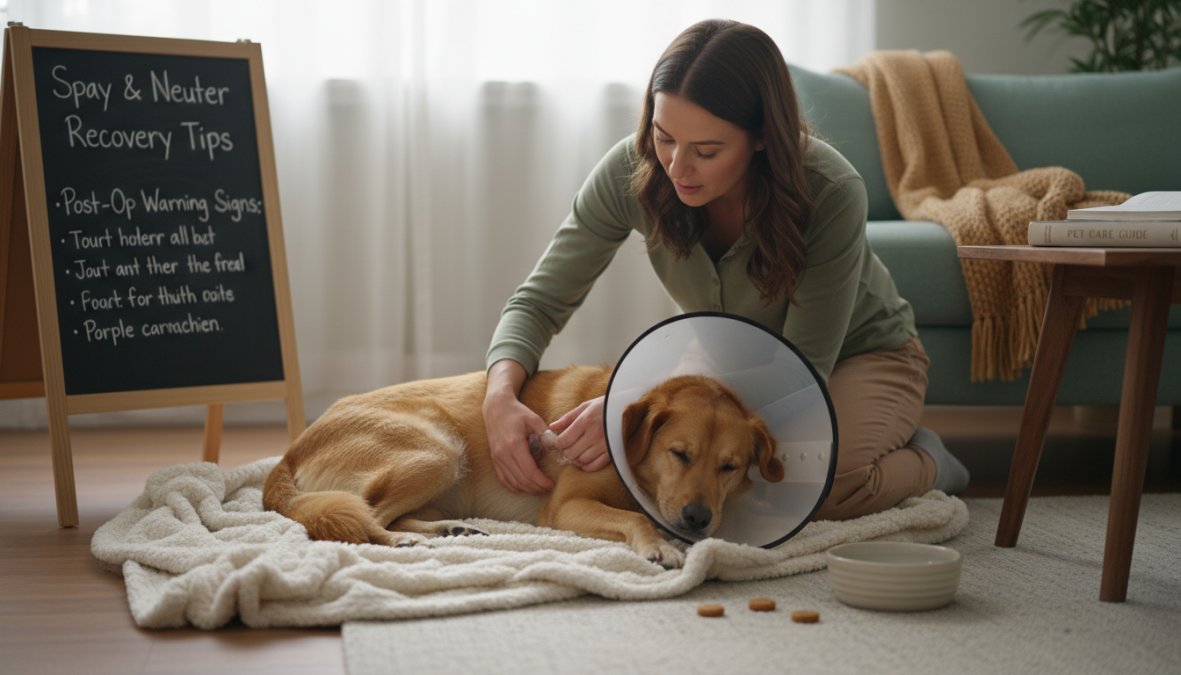
Recovery typically takes seven to ten days for the external incision to heal, though internal healing continues for several weeks. Spay and neuter recovery tips fall into two categories: what you actively do, and what you watch for.
Active recovery steps:
-
Restrict activity for a minimum of seven days. No running, jumping, or rough play.
-
Use an e-collar (cone) or surgical suit to prevent licking or chewing at the incision.
-
Check the incision site twice daily for the first five days.
-
Keep the incision dry. No baths until cleared by the clinic.
-
Administer all prescribed pain medication on schedule, even if your pet seems comfortable.
-
Provide a quiet, warm recovery space away from other pets and children.
Normal Recovery vs. Signs That Require Immediate Attention
Normal recovery includes mild swelling around the incision for the first 24-48 hours, some lethargy on surgery day, reduced appetite for 12-24 hours, and minor bruising near the surgical site.
Contact your clinic immediately if you observe:
-
Discharge from the incision (yellow, green, or bloody fluid)
-
Significant swelling or a lump forming under the incision
-
The incision opening or sutures pulling apart
-
Persistent vomiting after the first 24 hours
-
Pale or white gums
-
Extreme lethargy lasting beyond the first day
-
Difficulty breathing or obvious distress
-
Body temperature above 103.5°F
A common mistake is waiting to see if a concerning sign “gets better on its own.” In post-surgical patients, complications escalate faster than most owners expect. When in doubt, call the clinic.
Financial Assistance and Finding a Reputable Clinic in Manchester, NH
Affordability shouldn’t be a barrier to responsible pet ownership, and in Manchester, New Hampshire, it doesn’t have to be.
Financial assistance options to explore:
-
Local humane societies and shelters: Many New Hampshire shelters operate or partner with low-cost spay/neuter programs for income-qualifying pet owners
-
CareCredit and Scratchpay: Veterinary financing options that spread the cost over monthly payments with promotional interest rates
-
SNAP programs: Some national and regional Spay/Neuter Assistance Programs offer vouchers or subsidized services
-
Breed-specific rescue organizations: Many breed rescues maintain funds to help owners spay or neuter animals of their breed
For Manchester-area pet owners, CorePet is a locally owned surgery center focused exclusively in spay, neuter, and dental procedures. That focus matters: daily repetition builds procedural expertise, and modern surgical techniques with individualized care are the standard, not an upgrade. Pricing is available directly on the CorePet website so you can plan without surprise costs.
To find a reputable spay clinic near you, look for facilities that answer the safety checklist questions above, are transparent about their protocols, and have veterinarians, not just technicians, performing surgeries. Accreditation from the American Animal Hospital Association’s accreditation program is a strong quality signal, though not all high-quality clinics pursue formal accreditation.
Choosing a spay clinic is one of the most consequential decisions you’ll make for your pet’s long-term health. CorePet was built specifically to address the tension between cost and safety: a locally owned surgery center in Manchester, New Hampshire focused exclusively in spay, neuter, and dental procedures, using modern surgical techniques and equipment to deliver individualized care at reasonable costs. Book an appointment with CorePet and give your pet the safe, expert procedure they deserve.
Frequently Asked Questions
Why are some spay and neuter clinics so cheap?
Low-cost spay and neuter clinics reduce prices by specializing exclusively in sterilization procedures, allowing them to streamline workflows and reduce overhead. Many also receive grant programs, municipal funding, or nonprofit support tied to reducing pet overpopulation. The lower price does not automatically mean lower safety standards — it often reflects a high-volume, focused business model rather than a cut in surgical care quality.
What should I look for in a low-cost spay clinic to make sure it's safe?
When evaluating whether a low-cost spay is safe for your pet, look for licensed veterinarians performing all surgeries, dedicated anesthesia monitoring throughout the procedure, pre-surgical health screening, and transparent post-operative care instructions. Clinics that are AAHA accredited or Fear Free certified offer additional assurance. Ask about their anesthesia protocols, how they handle emergencies, and whether staff are trained in shelter medicine or surgical monitoring.
Are there extra risks for brachycephalic or high-risk breeds at low-cost clinics?
Yes, brachycephalic breeds like Bulldogs, Pugs, and French Bulldogs carry higher anesthesia risks due to their airway anatomy. Some high-volume low-cost clinics may not be equipped to manage these cases safely. Before booking, ask whether the clinic has experience with your specific breed and whether they conduct a breed-specific risk assessment. A reputable clinic will either confirm they can accommodate your pet safely or refer you to a more appropriate facility.
What are the most important spay and neuter recovery tips for the first 48 hours?
The first 48 hours after surgery are critical. Keep your pet in a quiet, warm space and restrict jumping, running, or rough play. Check the incision site twice daily for swelling, discharge, or redness. Prevent licking with an e-collar. Offer small amounts of water and food once your pet is fully alert. Follow all post-operative care instructions from your veterinarian. Contact the clinic immediately if you notice labored breathing, pale gums, or signs of pain that don't improve.
Do low-cost clinics use the same anesthesia as full-service veterinary hospitals?
Reputable low-cost spay and neuter clinics use the same classes of anesthesia as full-service hospitals, including pre-anesthetic sedation and inhalant gas anesthesia. The key difference lies in monitoring: quality clinics assign a dedicated technician to track vital signs throughout surgery. Always ask specifically about their anesthesia protocol, whether pre-surgical bloodwork is offered, and how they monitor pets during and after the procedure before booking.
This article was written using GrandRanker