Table of Contents
- Understanding Sexual Maturity in Rabbits
- Choosing the Right Age for Rabbit Neutering
- Health Benefits of Rabbit Neutering
- Rabbit Behavior After Neutering
Last Updated: July 23, 2026
Understanding Sexual Maturity in Rabbits
Sexual maturity arrives earlier in rabbits than many owners expect. Male rabbits typically reach sexual maturity between 3-6 months of age, while females can become fertile as early as 4-5 months. Hormonal changes drive mounting, spraying, and territorial aggression, behaviors that emerge long before rabbits reach full physical maturity.
At CorePet in Bedford, New Hampshire, we work with rabbit owners who are often surprised by how quickly their young rabbits develop reproductive behaviors. Recognizing the distinction between sexual maturity and physical maturity is critical when deciding on the right neutering age.
Many rabbit owners miss early signs of sexual maturity because they’re looking for obvious physical changes. Watch for behavioral shifts instead: increased marking, mounting behavior, or territorial aggression. These signals often appear 4-6 weeks before owners expect them.
Choosing the Right Age for Rabbit Neutering
The most widely recommended window for neutering is 4-6 months of age for both males and females, balancing health safety, behavioral prevention, and anesthesia tolerance.
At this age, rabbits are large enough that anesthesia calculations are more precise and safer than in younger animals. Their organs have developed sufficiently to handle surgical stress, yet they haven’t yet developed entrenched hormone-driven behaviors. Waiting until 8-12 months increases the risk that behavioral issues become permanent, even after neutering removes the hormonal driver.
Dwarf breeds present a special consideration. Smaller rabbits like Holland Lops and Lionheads may need to wait until 5-6 months to reach a safe surgical weight of 2-3 pounds. Larger breeds like Flemish Giants can be neutered as early as 4 months since they reach appropriate size faster. Your rabbit-focused veterinarian should evaluate your specific rabbit’s development, not just its age.
| Rabbit Type | Recommended Age | Weight Consideration | Behavioral Urgency |
|---|---|---|---|
| Dwarf breeds (under 3 lbs) | 5-6 months | Wait for 2-3 lbs minimum | Moderate, smaller size delays behaviors |
| Standard breeds (3-5 lbs) | 4-5 months | Most reach safe weight | High, behaviors emerge quickly |
| Large breeds (5+ lbs) | 4 months | Reach size early | High, early prevention is key |
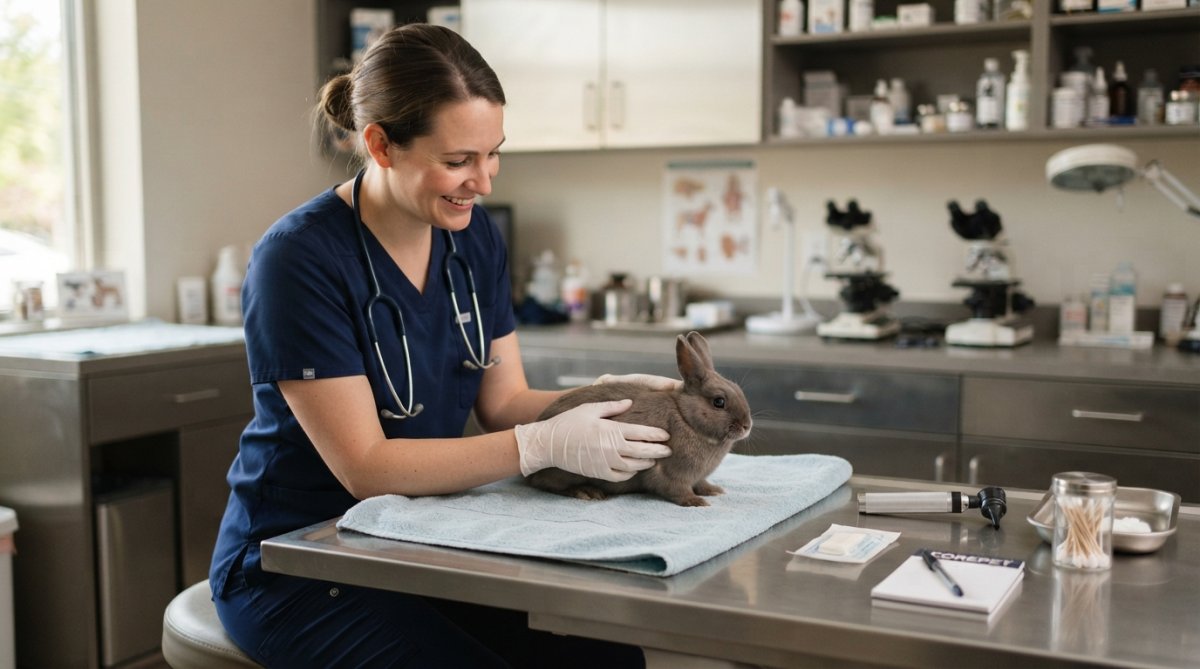
Delaying neutering past 6 months significantly increases the risk of uterine cancer in females and entrenched behavioral problems in both sexes. Hormonal imprinting, where behaviors become habitual rather than purely hormonal, is harder to reverse after 8 months of age.
Health Benefits of Rabbit Neutering
Neutering eliminates reproductive health risks that affect rabbits throughout their lives. In females, the most serious threat is uterine cancer, which develops in approximately 50-80% of unspayed rabbits over age 4. Spaying removes the uterus entirely, reducing that risk to near zero.
Males benefit from castration through elimination of testicular cancer risk and dramatic reduction in territorial aggression. Intact males often develop aggressive mounting behavior toward owners and other rabbits, making them difficult to handle and house with companions. Neutered males become calmer, more affectionate, and better suited to family life.
Both sexes experience improved litter box habits after neutering. Intact rabbits mark territory with urine and feces, a behavior driven entirely by reproductive hormones. Within 2-4 weeks of surgery, most rabbits show dramatic improvement in litter training.
Rabbit Behavior After Neutering
Behavioral changes begin within days of surgery and continue evolving for 4-6 weeks post-operatively. Most owners notice immediate personality shifts: reduced aggression, less spraying, and calmer demeanor.
Mounting behavior typically disappears within 1-2 weeks in males neutered before 6 months. Females stop cycling and the associated behavioral changes cease almost immediately after ovaries are removed. Litter box habits improve remarkably in most rabbits, as territorial marking is driven entirely by reproductive hormones.
Pain management during recovery is essential for proper healing and behavioral outcomes. A veterinary partner should provide pain medication for at least 5-7 days post-surgery. Recovery timeline typically spans 10-14 days for suture removal, though internal healing continues for 4-6 weeks.
The behavioral transformation after neutering is one of the most rewarding outcomes of the procedure. Rabbits become more social, more trainable, and infinitely easier to live with.
When to Consult a Veterinarian
Finding a rabbit-focused veterinarian is your first critical step. Not all vets have experience with exotic pets, and rabbits require focused knowledge for safe anesthesia and surgical technique. Ask prospective veterinarians directly about their rabbit surgery experience and anesthesia protocols before scheduling.
Your veterinarian should discuss pre-operative preparation at least 2 weeks before the planned surgery date. This includes pre-anesthetic blood work, fasting instructions (typically 4-6 hours for rabbits), and what to expect during recovery. Post-operative care instructions must be clear and specific, including pain medication administration, incision monitoring, activity restriction, and when to call with concerns.
Choosing the right age for rabbit neutering is one of the most important health decisions you’ll make for your pet. Rabbits neutered at 4-6 months experience the greatest health benefits and behavioral improvements with the lowest surgical risk. At CorePet in Bedford, New Hampshire, we focus on Spay Neuter Dental procedures, using advanced surgical techniques and modern equipment to ensure the highest medical standards for your rabbit. Our experienced team provides pre-operative blood work, pain management, and detailed recovery guidance to make the process safe and straightforward. Book an appointment with CorePet and give your rabbit the healthiest start to a long, happy life.
Frequently Asked Questions
What is the ideal age to neuter a rabbit?
Most rabbit-savvy veterinarians recommend neutering between 4 and 6 months of age, once testicles have fully descended in males. This timing allows rabbits to reach sexual maturity while capturing the full preventative health benefits of the procedure. However, some rabbits develop at different rates, so consulting your exotic veterinarian about your specific rabbit's breed and health status is essential for determining the best timing for neutering.
What are the main rabbit neutering benefits?
Neutering eliminates the risk of reproductive cancers, including uterine cancer in females, a common condition in unspayed rabbits. The procedure also reduces or eliminates hormone-driven behaviors like territorial aggression, spraying, and mounting. Neutered rabbits typically show improved litter box habits and become calmer, more affectionate house rabbits. Additionally, neutering contributes to long-term rabbit welfare and preventative medicine by reducing stress-related health issues.
How long does rabbit neutering recovery take?
Most rabbits show significant improvement within 7-10 days following surgery, though complete healing of the incision site takes 2-3 weeks. During the first week, limit activity, provide pain management as directed by your veterinarian, and monitor the incision for signs of infection. Full behavioral recovery, such as complete resolution of hormonal behaviors, may take several weeks to months. Your rabbit-savvy vet will provide specific post-operative care instructions tailored to your pet's needs.
Can rabbits be neutered at an older age?
Yes, rabbits can be neutered at older ages, though surgical risks and anesthesia complications increase slightly with age. Pre-anesthetic blood work becomes especially important for senior rabbits to assess organ function and anesthesia safety. Many veterinary partners successfully neuter rabbits well into their senior years. Discuss your older rabbit's specific health status with your exotic veterinarian to determine if neutering is appropriate and to ensure proper anesthesia protocols are in place.
This article was written using GrandRanker