Last Updated: August 15, 2026
Risks of Spay or Neuter Surgery in Rabbits
Rabbit surgery carries real risks that every owner should understand. Unlike dogs and cats, rabbits are uniquely sensitive to anesthesia, surgical stress, and post-operative complications. The good news: risks are manageable when you work with a veterinarian who has genuine rabbit surgery experience.
Quick Overview of Key Risks
Anesthesia complications, internal bleeding, gastrointestinal stasis, surgical site infections, and suture reactions represent the primary concerns. Pre-surgical health assessment through blood work identifies rabbits at higher risk before surgery begins.
Rabbit Anesthesia Safety and Pre-Surgical Concerns
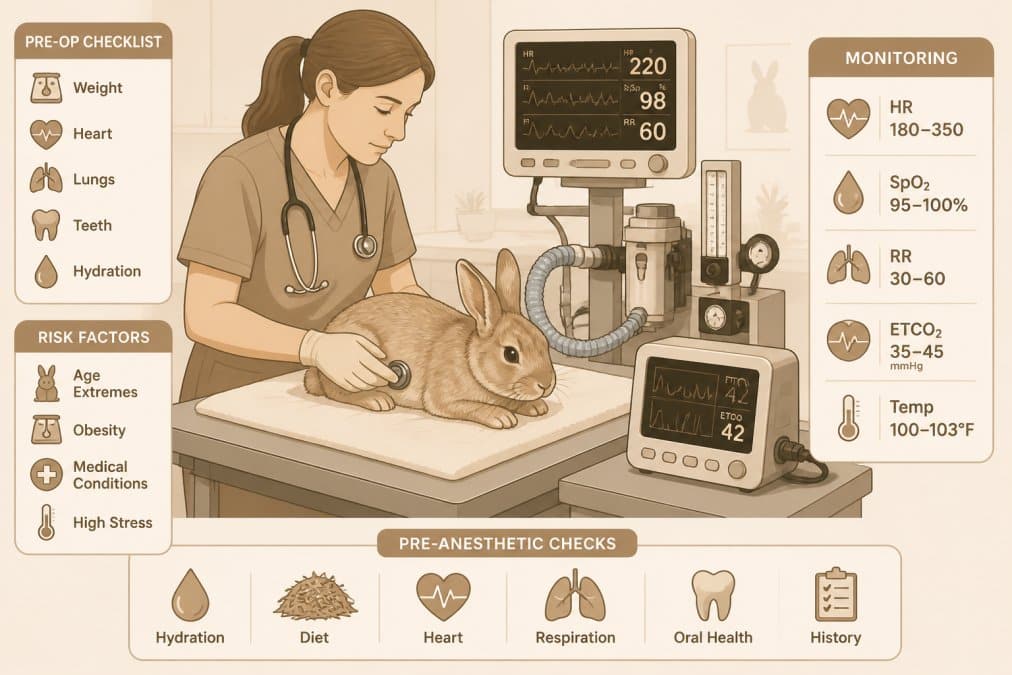
Rabbits metabolize drugs differently than dogs and cats and have smaller safety margins for dosing. Pre-anesthetic blood work is non-negotiable for rabbits over age 4 or those with any health history. Rabbits should fast for 2-4 hours before surgery, and intravenous fluids during surgery are essential to maintain blood pressure and prevent hypothermia. Ask your veterinary surgeon: “How many rabbit spay and neuter surgeries do you perform per month?” If the answer is fewer than 5-10, you’re working with someone who lacks the repetition needed for true expertise.
Common Surgical Complications and How to Recognize Them
Internal hemorrhage is the most serious immediate risk, with signs appearing within hours to days: lethargy, pale gums, rapid breathing, or a distended abdomen. Gastrointestinal stasis is the most common post-operative complication, occurring when anesthesia, pain, and stress slow or stop digestion, a rabbit in stasis stops eating and producing droppings, and this is life-threatening. If your rabbit hasn’t eaten or produced droppings within 12 hours of surgery, contact your veterinarian immediately.
Rabbit Spay Recovery Timeline and Post-Operative Care
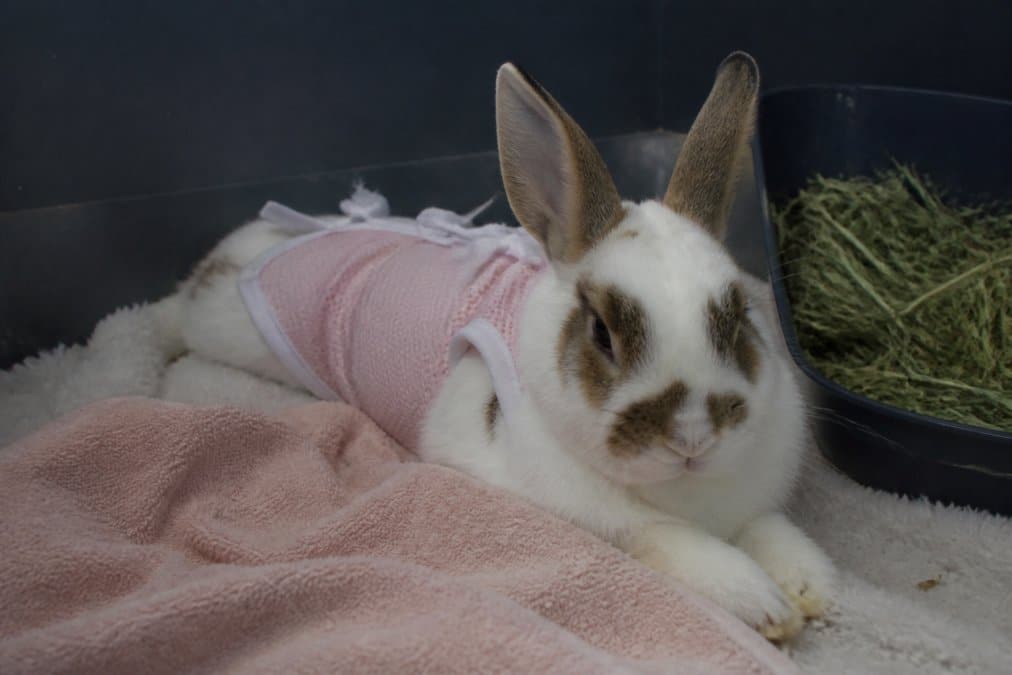
The first 24 hours after surgery are critical. Keep your rabbit in a quiet, dimly lit space with minimal stress and pain management through analgesics like buprenorphine or meloxicam for at least 3-5 days post-surgery. Most rabbits can resume light activity after 3-4 days, but avoid jumping or rough play for a full 10-14 days. A rabbit should resume eating hay within 12-24 hours of surgery, with suture removal typically happening 10-14 days post-surgery.
Choosing an Experienced Veterinary Surgeon
The single biggest factor in surgical success is surgeon experience with rabbit anatomy and physiology. A surgeon who has Rabbit Surgery experience develops pattern recognition that prevents complications. A surgical center that focuses on rabbit procedures develops expertise that general veterinary practices can’t match through volume alone. Services like Spay Neuter Dental represent the kind of focused surgical care that prioritizes rabbit-specific protocols and outcomes.
Pre-Surgery Preparation Checklist
|
Preparation Step |
Timeline |
|---|---|
|
Schedule pre-operative exam |
1-2 weeks before |
|
Bloodwork (CBC, biochemistry panel) |
3-7 days before |
Age Considerations and Health Status
Younger rabbits (under 4 years) typically recover faster with fewer complications. Older rabbits (5+ years) need more conservative anesthesia protocols and closer monitoring. Body condition score affects surgical risk, overweight rabbits have increased anesthesia complications and slower healing.
When to Contact Your Veterinarian After Surgery
Contact your surgical team immediately if your rabbit shows no appetite 24+ hours post-surgery, no droppings by day 2, worsening lethargy, difficulty breathing, pale gums, discharge or severe swelling at the incision, or signs of severe pain.
The bottom line: Rabbit surgery is safe when performed by a surgeon with genuine rabbit expertise, supported by proper pre-operative assessment, appropriate anesthesia protocols, and attentive post-operative care. Choosing a surgical center that focuses on rabbit procedures stacks the odds in your favor.
If you’re considering spay or neuter surgery for your rabbit, CorePet offers the surgical experience and individualized care that rabbit owners need. Book an appointment to discuss your rabbit’s specific health needs with a team that focuses exclusively on procedures with the greatest impact on animal health.
This article was written using GrandRanker