Table of Contents
- How to Manage Rabbit Post-Surgery Pain at Home: The First 48 Hours
- Recognizing Signs of Pain in Rabbits After Surgery
- Safe Pain Medication for Rabbits: Administration and Troubleshooting
- Monitoring Food and Water Intake Post-Surgery
- Maintaining a Quiet and Stress-Free Environment
- Rabbit Surgical Incision Care: Healing and Sutures
- When to Contact Your Veterinarian
- Rabbit Post-Op Recovery Timeline: What to Expect Week by Week
- Frequently Asked Questions
How to Manage Rabbit Post-Surgery Pain at Home: The First 48 Hours
The first 48 hours after your rabbit returns from surgery are critical. Rabbits are prey animals and naturally hide signs of distress, so pain can escalate quickly without close monitoring. Smooth healing often depends on what happens in those first two days at home.
Your rabbit’s surgical site needs protection, medication must be administered on schedule, and your environment must shift into quiet, stress-free mode immediately. This guide walks you through exactly what to do, what to watch for, and when to contact your veterinarian.
Recognizing Signs of Pain in Rabbits After Surgery
Rabbits don’t vocalize pain like dogs or cats do. Instead, they communicate through behavioral changes. A rabbit in pain may sit hunched in a corner, grind their teeth (bruxism), refuse to move, become unusually aggressive, or stop eating and drinking entirely, a warning sign demanding immediate attention.
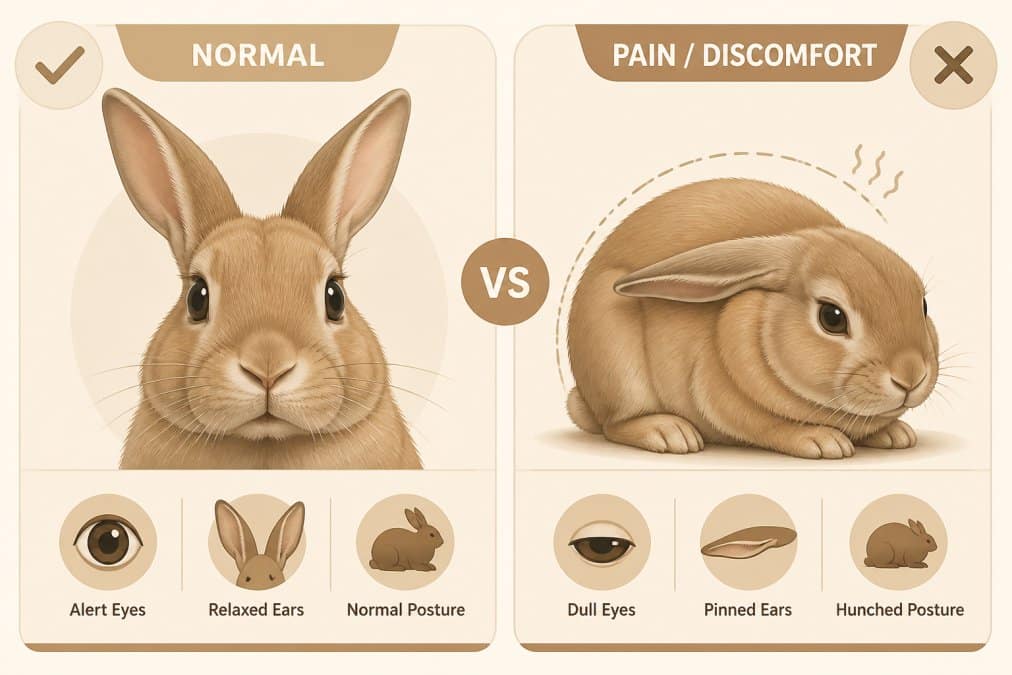
Watch for these specific pain indicators in the first 48 hours:
- Hunched posture: Tightly curled, unwilling to stretch or move
- Bruxism (teeth grinding): Audible grinding, often a sign of acute discomfort
- Reduced appetite: Refusing pellets, hay, or treats
- Lethargy: Sleeping more than usual or appearing unresponsive
- Incision swelling: Redness, warmth, or fluid discharge
- Behavioral changes: Aggression, hiding, or excessive grooming of the incision
Post-operative pain medication prescribed by your veterinarian is essential.
If [your rabbit](/blog/spay-vs-neuter-recovery-time-indoor-rabbits/) stops eating for more than 8-12 hours post-surgery, contact your veterinarian immediately. Gastrointestinal stasis is a life-threatening emergency in rabbits and is often triggered by pain and stress.
Safe Pain Medication for Rabbits: Administration and Troubleshooting
Your veterinarian will prescribe pain medication tailored to your rabbit’s weight and procedure. Common analgesics include meloxicam (an NSAID), tramadol, or buprenorphine. Write down the exact dosage, frequency, and timing before leaving the surgical center.
Administering medication to a rabbit requires patience. If your rabbit refuses oral medication, do not force it, stress can worsen pain and trigger GI stasis. Try these approaches:
Syringe feeding medication: Draw liquid medication into a syringe without the needle. Gently insert the syringe tip into the side of your rabbit’s mouth (between the teeth, not down the throat). Slowly push a small amount, allowing your rabbit to swallow naturally.
Mixing with food: Mix liquid medication with crushed banana, applesauce, or a favorite treat. However, if your rabbit detects the medication and refuses the food, you’ve lost that dose.
Long-acting injections: Some veterinarians offer long-acting pain injections lasting 48-72 hours, eliminating daily medication stress and ideal for anxious rabbits.
| Medication Approach | Best For | Success Rate |
|---|---|---|
| Oral liquid via syringe | Most rabbits, twice-daily dosing | 85-90% |
| Mixed with food | Rabbits that eat treats eagerly | 60-70% |
| Long-acting injection | Highly stressed rabbits, 48-72 hour coverage | 95%+ |
If your rabbit spits out medication or refuses food mixed with it, contact your veterinarian about alternative formulations. Never skip doses; inconsistent pain management leads to worse outcomes.
Keep a medication log. Write down the exact time you gave each dose, how much your rabbit ate afterward, and any behavioral changes. This helps your veterinarian adjust pain management if needed.
Monitoring Food and Water Intake Post-Surgery
A rabbit that stops eating is in crisis. Appetite is the single most reliable indicator of post-operative status. Monitor food and water intake obsessively for the first week, especially days 1-3.
Provide fresh hay (timothy or orchard grass) at all times. Hay stimulates gut motility and prevents GI stasis. If your rabbit won’t eat hay, offer small amounts of favorite greens like romaine lettuce, cilantro, or parsley.
Water consumption is equally critical. Dehydration slows healing and worsens pain perception. Provide water in a bowl (not a bottle) and check it multiple times daily. If your rabbit hasn’t drunk water in 12 hours, contact your veterinarian.
If food intake drops below 50% of normal, or if your rabbit produces no fecal pellets for 12+ hours, contact your veterinarian. These are signs of GI stasis requiring emergency care.
Maintaining a Quiet and Stress-Free Environment
Stress is a major driver of pain and GI stasis in rabbits. Your rabbit’s recovery depends on creating an environment where they feel safe and protected.
Set up a recovery space that is:
- Quiet: No loud noises, children running, or other pets nearby
- Dimly lit: Soft, indirect light reduces alertness and stress
- Temperature controlled: Keep the room between 65-75°F
- Confined but comfortable: Use a large enclosure (at least 3×4 feet) with soft bedding, hay, water, and a hiding spot
Minimize handling. Keep visits brief and gentle. Separate other pets completely for at least 5-7 days.
The quieter your rabbit’s environment, the faster they heal. Isolation during recovery is medical care.
Rabbit Surgical Incision Care: Healing and Sutures
Check your rabbit’s surgical incision daily at the same time, in good lighting.
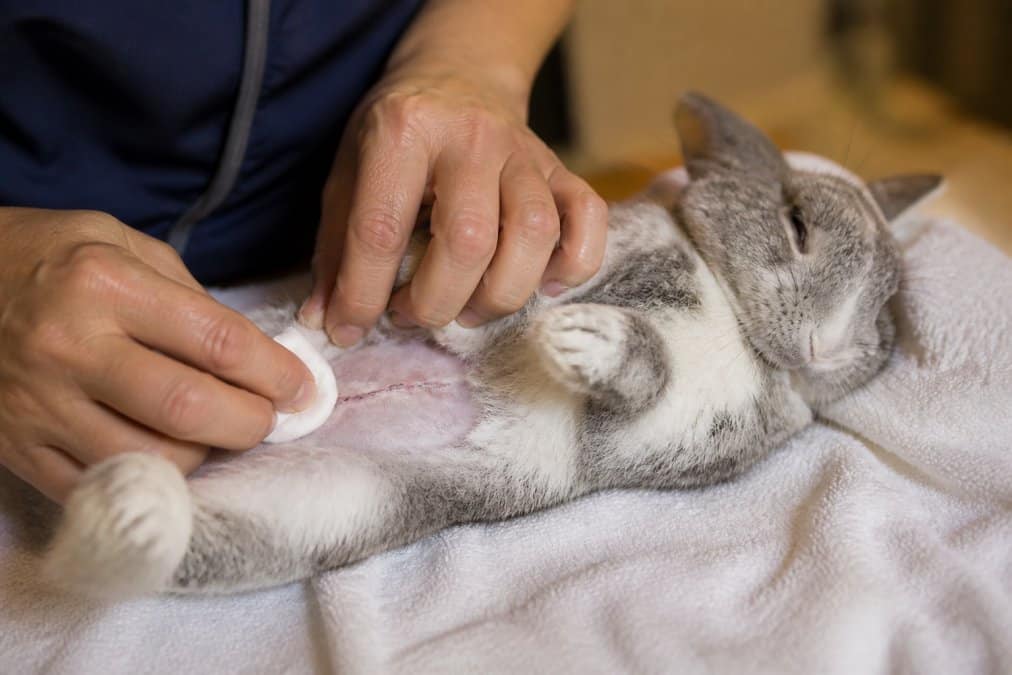
What normal healing looks like:
- Day 1-2: Incision may be slightly swollen and pink
- Day 3-5: Swelling decreases. Incision edges should be clean and aligned
- Day 7+: Incision begins to close. Scab formation is normal
Red flags requiring immediate veterinary attention:
- Discharge (pus, blood, or clear fluid)
- Separation of incision edges (gaping)
- Excessive swelling that worsens after day 2
- Heat radiating from the incision site
- Foul odor
- Rabbit chewing or pulling at sutures
If your rabbit is licking or chewing the surgical site, your veterinarian may recommend a protective collar (E-collar) or soft surgical suit designed for rabbits. Sutures or staples typically remain in place for 10-14 days. Keep the incision area dry and change bedding immediately if soiled.
When to Contact Your Veterinarian
Knowing when to call your veterinarian is the most important decision during post-operative recovery. When in doubt, call.
Contact your veterinarian immediately if:
- Your rabbit has not eaten or drunk water for 8+ hours
- No fecal pellets produced for 12+ hours
- Incision is bleeding, oozing, or gaping
- Swelling around the incision worsens after 48 hours
- Rabbit is unable to move rear legs or shows signs of paralysis
- Severe lethargy or unresponsiveness
- Difficulty breathing
- Seizures or loss of consciousness
- Temperature above 104°F
Contact within 24 hours if:
- Mild swelling that doesn’t worsen
- Slight decrease in appetite (eating 50-75% normal)
- Behavioral changes like hiding or reduced activity
- Questions about medication dosage or side effects
Most veterinarians schedule a post-operative check 7-10 days after surgery for suture removal and incision assessment.
Rabbit Post-Op Recovery Timeline: What to Expect Week by Week
Days 1-2 (Anesthesia Recovery):
Your rabbit will be groggy and may not eat immediately. Keep them warm, quiet, and monitored. Pain medication begins immediately.
Days 3-5 (Early Healing):
Your rabbit should begin eating small amounts of hay and greens. Movement increases slightly. Incision swelling peaks around day 3, then decreases.
Days 6-10 (Active Healing):
Appetite returns closer to normal. Your rabbit becomes more active. Encourage rest to protect the incision. Sutures are typically removed around day 10.
Days 11-14 (Late Healing):
Incision is mostly closed. Your rabbit can gradually return to normal activity. Pain medication may be discontinued if your veterinarian approves.
Weeks 3-4 (Full Recovery):
Most rabbits are fully recovered by week 3. Normal activity, diet, and social interaction resume.
| Recovery Phase | Duration | Key Milestones |
|---|---|---|
| Anesthesia Recovery | Days 1-2 | Pain medication starts, minimal eating |
| Early Healing | Days 3-5 | Appetite returns, incision swelling peaks |
| Active Healing | Days 6-10 | Increased movement, suture removal |
| Late Healing | Days 11-14 | Near-normal appetite and activity |
| Full Recovery | Weeks 3-4 | Return to normal life |
Recovery isn’t always linear. Age, overall health, and stress levels all affect healing speed. A 10-year-old rabbit may take 3-4 weeks to fully recover, while a 2-year-old recovers in 2 weeks.
Post-operative rabbit care demands attention, consistency, and a willingness to act quickly if problems arise. CorePet focuses on Spay Neuter Dental procedures, which means our team understands rabbit recovery protocols in depth. From pain management protocols to incision monitoring guidance, our experienced staff provides detailed post-operative instructions tailored to your rabbit’s specific procedure. Schedule your rabbit’s surgery consultation with CorePet in Bedford, New Hampshire, and get a complete recovery plan before your rabbit ever enters the surgical suite. Your rabbit’s comfort and safety depend on preparation.
Frequently Asked Questions
What are the signs that my rabbit is in pain after surgery?
Pain in rabbits after surgery often manifests as hunched posture, bruxism (teeth grinding), reduced appetite, lethargy, or reluctance to move. Some rabbits become unusually aggressive or withdraw completely. Watch for decreased fecal output, which may indicate GI stasis triggered by pain and stress. If your rabbit shows any combination of these signs, contact your veterinarian immediately to discuss pain management adjustments.
How long does it take for a rabbit to recover from surgery?
Most rabbits show initial improvement within 3-5 days post-surgery, though full recovery from spay or neuter typically takes 10-14 days. During the first 48 hours, focus on anesthesia recovery and pain management. By day 7, many rabbits return to near-normal eating and activity, but sutures usually remain in place until day 10-14. Always follow your veterinarian’s specific recovery timeline and activity restrictions for your rabbit.
What pain medication is safe to give my rabbit at home?
Your veterinarian will prescribe appropriate analgesics for your rabbit’s post-operative care. Common options include non-steroidal anti-inflammatory drugs or other pain relievers given orally or by injection. Never give over-the-counter pain medication intended for humans or other animals. Follow the exact dosage and schedule provided by your veterinarian, and contact them if your rabbit refuses medication or shows adverse reactions.
How do I know if my rabbit’s surgical incision is healing correctly?
A healing incision should appear clean, with edges that remain close together. Mild redness or slight swelling immediately after surgery is normal, but it should decrease daily. Watch for signs of infection such as discharge, foul odor, excessive swelling, or separation of the incision edges. If your rabbit licks or chews at the site, it may need an Elizabethan collar. Contact your veterinarian if you notice any concerning changes or if the incision fails to improve within 3-5 days.
This article was written using GrandRanker