Table of Contents
- Spay vs Neuter Recovery Time for Indoor Rabbits: Key Differences
- Rabbit Post-Operative Care: Pre- and Post-Surgery Preparation
- Rabbit Spay Complications: Signs and Monitoring
- Rabbit Pain Management After Surgery and Medication
Last Updated: July 24, 2026
Spay vs Neuter Recovery Time for Indoor Rabbits: Key Differences
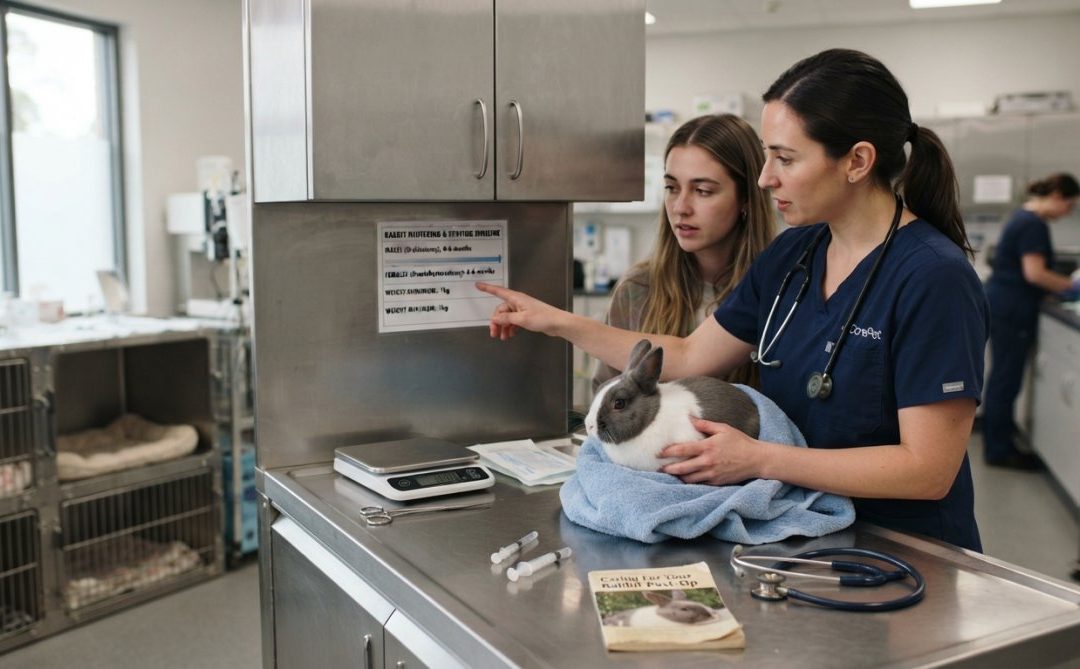
Understanding spay vs neuter recovery time for indoor rabbits is essential for any rabbit owner preparing their pet for surgery. At CorePet in Bedford, New Hampshire, we’ve guided hundreds of rabbit owners through post-operative care. A spay (ovariohysterectomy) removes the uterus and ovaries through an abdominal incision, making it more invasive than a neuter (castration), which removes only the testicles. Most rabbits undergoing a neuter show visible improvement within 5-7 days, with full healing by 10-14 days. Spayed rabbits typically need 10-14 days before noticeably improving, with complete recovery extending to 14-21 days.
Neuter recovery typically spans 10-14 days total; spay recovery extends 14-21 days. The difference lies in surgical invasiveness.
Rabbit Post-Operative Care: Pre- and Post-Surgery Preparation
Your veterinarian will recommend fasting your rabbit for 4-6 hours before surgery and water access until about 2 hours before, as dehydration during anesthesia can cause serious complications.
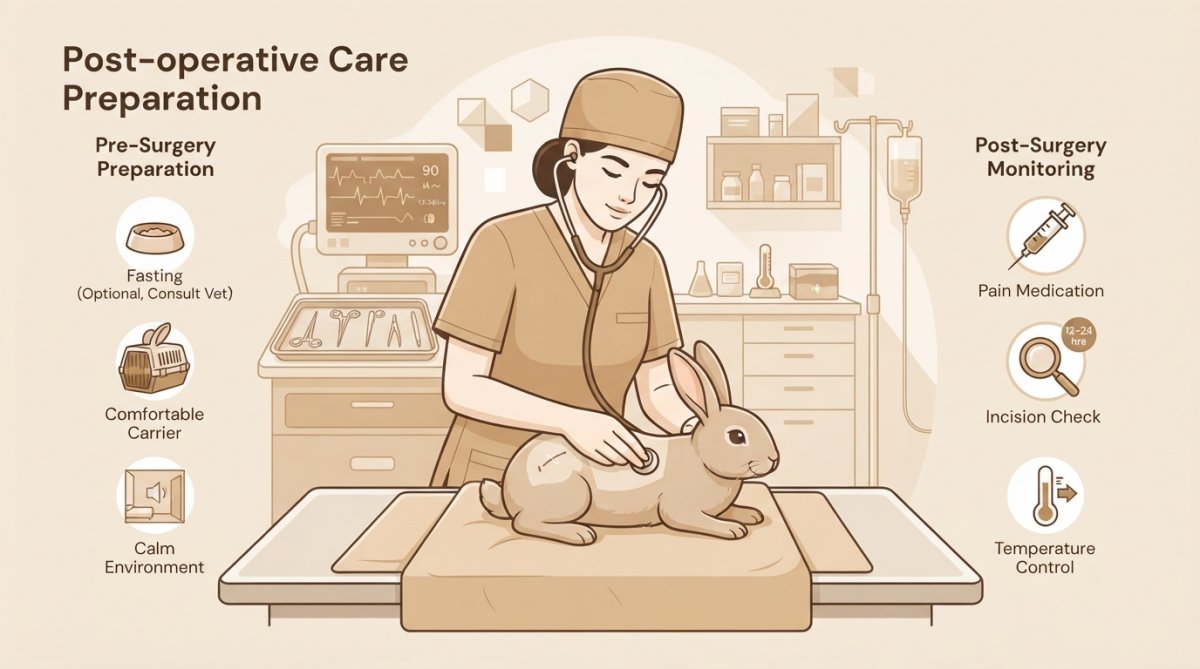
After surgery, prepare a quiet, dimly lit recovery space with soft bedding and minimal noise. Most rabbits regain full consciousness within 2-4 hours but may seem confused or uncoordinated. Keep handling to a minimum during the first 24 hours.
Pain management begins immediately post-surgery. Your veterinarian will likely send your rabbit home with pain medication, commonly buprenorphine or metacam, administered for 5-7 days. These medications are critical; rabbits in pain stop eating, which triggers gastrointestinal stasis, a life-threatening condition where the digestive system shuts down.
For the first 24 hours, offer small amounts of hay, fresh greens, and water. Monitor your rabbit’s fecal output closely; normal droppings should resume within 24-48 hours. Absence of fecal pellets, diarrhea, or mucus-covered stools warrant veterinary attention.
Spay vs Neuter Recovery: Comparing Surgical Outcomes for Indoor Rabbits
A neuter involves a small incision (0.5-1 inch) over each testicle or a single midline incision with minimal tissue trauma. A spay requires a 1-2 inch abdominal incision to access and remove the uterus and ovaries; deeper tissues are involved, more blood vessels are handled, and healing engages more of the body’s inflammatory response.
| Aspect | Neuter Recovery | Spay Recovery | Key Difference |
|---|---|---|---|
| Incision Size | 0.5-1 inch (small) | 1-2 inches (larger) | Spay involves deeper tissue trauma |
| Pain Duration | 5-7 days moderate pain | 7-10 days moderate to significant pain | Spay typically causes more discomfort |
| Full Healing | 10-14 days | 14-21 days | Spay takes 1-2 weeks longer |
| Suture Removal | 10-14 days | 14-21 days | Timing aligns with healing complexity |
| Activity Restriction | 10-14 days | 14-21 days | Longer confinement for spay |
| Complication Risk | Lower | Slightly higher | Abdominal surgery carries more variables |
Spayed rabbits need stricter activity restrictions because the abdominal incision is under tension every time your rabbit moves, jumps, or stretches. Excessive movement can disrupt healing, potentially leading to dehiscence (incision opening) or internal complications. Neutered rabbits, with smaller incisions in less-stressed areas, tolerate gentle movement sooner.
Ignoring pain medication schedules for spayed rabbits can trigger GI stasis within 24-48 hours. A rabbit in pain stops eating, the digestive system slows, and what begins as post-operative discomfort becomes a medical emergency.
Rabbit Spay Complications: Signs and Monitoring
Recognizing complications early separates routine recovery from emergencies. Spay surgery, being more invasive, carries higher complication risk than neuter procedures. Common complications include infection, hemorrhage, GI stasis, and incision dehiscence.
Infection typically emerges 3-7 days post-surgery. Watch for redness, swelling, warmth, or discharge from the incision site. Some rabbits develop fever (normal rabbit temperature is 101-103°F), lethargy, or loss of appetite. Contact your veterinarian same-day if you suspect infection.
Hemorrhage is rare but critical. Signs include pale gums, rapid or labored breathing, lethargy that worsens over hours, or abdominal distension. These are emergency signs requiring immediate veterinary care.
GI stasis remains the most common post-operative complication. The combination of anesthesia, pain, reduced movement, and stress disrupts normal intestinal motility. Early signs include reduced or absent fecal output, loss of appetite, lethargy, and tooth-grinding. Prevention through pain management, gentle movement, and encouraging eating is far more effective than treatment.
Monitor these vital signs daily:
- Appetite: Should normalize within 24-48 hours
- Fecal output: Should resume within 24-48 hours; normal pellets indicate healthy GI function
- Incision: Should show no redness, swelling, or discharge by day 3
- Behavior: Lethargy is normal immediately post-op but should improve daily
- Breathing: Should be normal and unlabored
Rabbit Pain Management After Surgery and Medication
Pain management is foundational to successful recovery. Rabbits in pain stop eating, triggering complications that transform routine surgery into a crisis.
Buprenorphine is the gold standard for post-operative pain in rabbits. This opioid provides potent, reliable pain relief lasting 6-12 hours per dose. Most rabbits receive buprenorphine every 8-12 hours for 5-7 days post-neuter, or 7-10 days post-spay.
Metacam (meloxicam) is an NSAID that reduces inflammation and provides moderate pain relief. It’s typically given once daily for 7-10 days. Metacam works best when combined with buprenorphine during the first week.
Administration tips that work:
- Timing: Give pain medication consistently; set phone reminders so you don’t miss doses
- Oral liquid: Mix with a small amount of fruit juice or vegetable puree; administer with a syringe slowly into the side of the mouth
- Observation: Watch for signs the medication is working; your rabbit should show increased appetite and movement within 2-4 hours of dosing
If your rabbit spits out oral medication, ask your veterinarian about compounding the medication into a flavored treat or switching to injections. A missed pain dose can trigger cascading complications within hours.
Restricting physical activity during recovery prevents incision stress and pain flare-ups. For neutered rabbits, confinement to a small enclosure (4-6 feet long) for 10-14 days is typically sufficient. For spayed rabbits, many veterinarians recommend stricter confinement for the first 7 days, then gradual expansion over days 8-14.
Provide timothy hay in abundance, fresh greens, and safe toys they can enjoy without excessive movement, such as soft chew toys, cardboard tunnels, or puzzle feeders.
Day-by-Day Recovery Timeline: What to Expect After Surgery
Day 0 (Surgery Day): Your rabbit returns home groggy and disoriented. Keep your rabbit in a quiet, dark space. Offer water but not food yet. Most rabbits regain full consciousness within 2-4 hours but remain drowsy.
Day 1: Your rabbit should be alert and interested in surroundings, though still moving slowly. Offer small amounts of hay and greens. Pain medication is critical today. Check the incision: it should be clean, dry, and closed. Some mild swelling is normal; significant swelling or discharge is not.
Day 2-3: Appetite should improve noticeably. Fecal output should resume; if your rabbit has produced no pellets by end of day 2, contact your veterinarian. Movement increases as pain decreases. Incision should show no increased redness or swelling.
Day 4-7: Appetite returns to near-normal. Fecal output should be completely normal. Movement becomes more natural. Pain medication continues; don’t discontinue early even if your rabbit seems comfortable.
Day 8-14 (Spay) / Day 10-14 (Neuter): Your rabbit should be acting almost completely normal. Appetite is full. Incision is nearly healed; sutures or staples are typically removed around day 10-14.
Day 15-21 (Spay Only): Complete return to normal behavior and activity. Incision is fully healed. Pain medication is discontinued.
If your rabbit deviates from this timeline, contact your veterinarian.
Wound Care and Incision Monitoring for Rabbit Surgery
Check the incision twice daily for cleanliness, closure, swelling, color, and any discharge. Any discharge after day 1 is abnormal.
If your rabbit is excessively licking or chewing the incision, a protective covering offers a soft, breathable alternative to traditional Elizabethan collars, covering the abdomen without restricting movement or causing stress.
Sutures or staples are typically removed 10-14 days post-surgery. Ask your veterinarian which type was used and when removal is scheduled. Until sutures are removed, keep the incision dry.
Activity restriction is your primary wound-care tool. A rabbit confined to a small enclosure cannot engage in the jumping and running that stress the healing incision. As your rabbit progresses through recovery, gradually expand their space and increase activity, watching the incision for any sign of increased redness, swelling, or discharge.
Preparing your indoor rabbit for spay or neuter surgery and managing recovery successfully requires understanding the differences between these procedures and following a structured post-operative care plan. CorePet in Bedford, New Hampshire focuses on surgical excellence and detailed post-operative guidance to ensure your rabbit heals smoothly. Our team provides clear pain management protocols, incision monitoring instructions, and activity restriction guidelines tailored to whether your rabbit undergoes a neuter or spay. When you choose Spay Neuter Dental services, you gain access to comprehensive surgical care designed specifically for your rabbit’s needs. The American Rabbit Breeders Association provides evidence-based rabbit care guidelines and veterinary research on rabbit anesthesia and recovery confirm that pain management and activity restriction are the two most critical factors in preventing post-operative complications. Schedule your rabbit’s surgery consultation with CorePet and receive a detailed recovery plan before your pet’s procedure, because informed, proactive care transforms surgery from a source of anxiety into a straightforward path to your rabbit’s long-term health.
The House Rabbit Society’s surgical recovery guide offers additional resources for rabbit owners navigating post-operative care.
Frequently Asked Questions
How long does spay vs neuter recovery take for indoor rabbits?
Neuter recovery typically takes 7-10 days for male rabbits, while spay recovery for females usually requires 10-14 days due to the more invasive surgical procedure. Both procedures involve anesthesia and post-operative monitoring. Your rabbit-savvy veterinarian can provide specific timelines based on your rabbit's age, health, and the surgical technique used. Most rabbits resume normal activity gradually over these periods, though full healing of internal tissues takes longer.
What are the signs my rabbit is recovering well from spay or neuter surgery?
A rabbit recovering well will show increasing appetite within 24-48 hours, return to normal fecal output, and gradual reduction in lethargy. The incision should appear dry without excessive swelling or discharge. Your rabbit should begin grooming normally and show interest in their environment. Pain should decrease noticeably each day. If your rabbit remains lethargic, refuses food, or shows labored breathing, contact your veterinarian immediately. Monitoring these signs daily helps catch complications early.
What should I feed my rabbit after spay or neuter surgery?
Start with small amounts of hay and fresh greens immediately after surgery if your rabbit shows interest. If appetite is poor, Oxbow Critical Care can provide essential nutrients via syringe feeding. Gradually reintroduce pellets over 3-5 days as appetite improves. Avoid sudden diet changes. Fresh water should be available at all times. If your rabbit hasn't eaten within 24 hours, contact your veterinarian, GI stasis is a serious post-operative complication in rabbits and requires prompt intervention.
How do I prevent my rabbit from licking or damaging the surgical incision?
Limit jumping and running for the full recovery period to reduce incision stress. Use a soft protective garment like the MPS Protective Pet Shirt or a soft recovery collar to prevent overgrooming. Monitor the incision daily for signs of damage, swelling, or discharge. Keep your rabbit in a quiet, confined space with minimal environmental hazards. If your rabbit is excessively grooming the area despite protection, contact your veterinarian, they may recommend additional pain management or alternative protective devices.
What's the difference between spay and neuter recovery for rabbits?
Spay (removal of uterus and ovaries) is a more invasive abdominal surgery than neuter (removal of testicles), resulting in longer recovery, typically 10-14 days versus 7-10 days. Female rabbits experience greater post-operative pain and require closer incision monitoring. Both procedures involve anesthesia risks and require exercise restriction, but spay carries a slightly higher complication risk due to the larger surgical site. Pain management and dietary support are equally important for both, though females may need more intensive monitoring of the abdominal incision.
This article was written using GrandRanker