Table of Contents
- What Is Professional Dog Teeth Cleaning?
- Signs of Periodontal Disease in Dogs
- Veterinary Dental Anesthesia Safety
- At-Home Dog Dental Care Tips
Last Updated: August 26, 2026
What Is Professional Dog Teeth Cleaning?
Professional dog teeth cleaning is a veterinary procedure that removes plaque and tartar buildup from a dog’s teeth and below the gumline. Unlike at-home brushing, this deep cleaning reaches areas that regular care cannot access, addressing early periodontal disease before it progresses.
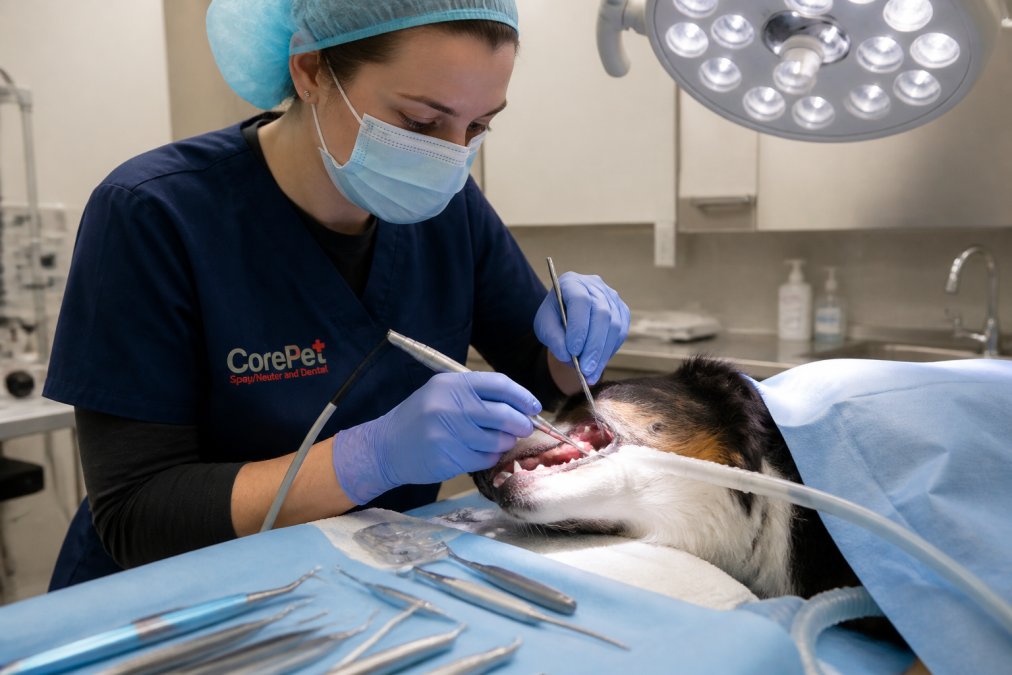
The procedure includes a complete oral examination where the veterinarian assesses each tooth and uses dental radiographs to evaluate health below the gumline. An ultrasonic scaler removes hardened calculus and plaque from both supragingival (above the gum) and subgingival (below the gum) surfaces. After scaling, teeth are polished to smooth enamel and reduce future plaque accumulation. For dogs with advanced periodontal disease, tooth extraction may be necessary if decay has compromised the root structure.
CorePet focuses exclusively on dental procedures for dogs, cats, and rabbits, using modern surgical techniques and equipment to ensure the highest standards. The entire process requires anesthesia to keep your dog still and pain-free while the veterinary team works thoroughly.
Signs of Periodontal Disease in Dogs
Many dog owners don’t recognize early warning signs of dental problems until disease progresses significantly. Bad breath, medically called halitosis, is often the first indicator of oral health issues. This odor develops when bacteria colonize the gumline and break down tooth structure.
Other common signs include red or swollen gums, visible tartar buildup (brown or yellow crusty deposits), difficulty eating, and excessive drooling. Some dogs show reluctance to play with toys or avoid hard treats. In advanced stages, you might notice loose or missing teeth, facial swelling, or discharge from the nose or mouth.
Gingivitis, inflammation of the gums, often precedes serious periodontal disease. Caught early, gingivitis is reversible with professional cleaning and improved home care. If left untreated, it progresses to periodontitis, where infection extends below the gumline and damages bone supporting the tooth. Regular dental checkups allow your veterinarian to identify problems before they become severe. clean dog toys.
Small breeds like Chihuahuas, Yorkshire Terriers, and Dachshunds develop periodontal disease more frequently than larger dogs (peer-reviewed research). Senior dogs over seven years old also face higher risk. Preventative dental care becomes especially important for these groups.
Veterinary Dental Anesthesia Safety
Anesthesia is necessary for professional dog teeth cleaning because it keeps your dog still, allows safe cleaning below the gumline, and prevents stress during the procedure. Modern protocols have made dental anesthesia remarkably safe for healthy dogs.
Before anesthesia, your veterinarian will conduct pre-anesthetic blood work to assess kidney and liver function and perform a physical examination to check vital signs and heart rate.
During the cleaning, anesthetic monitoring continues throughout. A veterinary technician tracks heart rate, blood pressure, oxygen saturation, and body temperature. Recovery typically takes 2-4 hours after the procedure, during which your dog awakens gradually in a supervised setting (avma.org).
Post-procedure discomfort is usually mild. Many dogs feel relief once infected or damaged tooth tissue is removed. Pain medication is provided to manage soreness, and most dogs return to normal eating within a few days.
At-Home Dog Dental Care Tips
Brushing your dog’s teeth is the single most effective way to prevent plaque and tartar buildup between professional cleanings. Daily brushing is ideal, though three to four times per week provides meaningful benefit (aaha.org). Use a soft-bristled toothbrush designed for dogs and canine toothpaste; human toothpaste contains fluoride and xylitol, which are toxic to dogs.
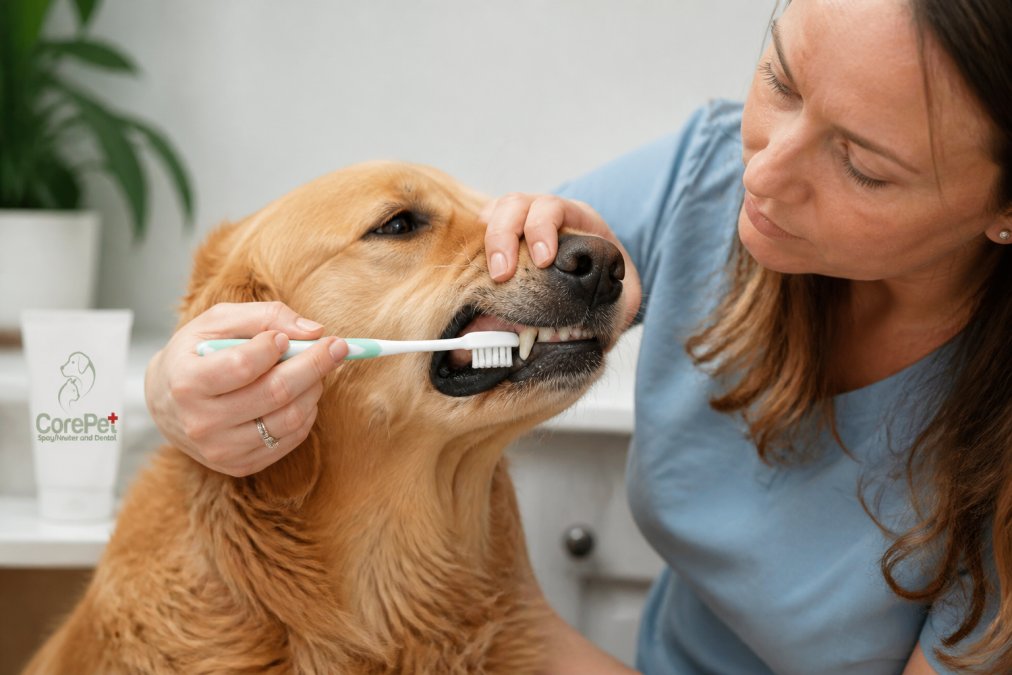
Start slowly if your dog isn’t accustomed to tooth brushing. Let your dog taste the toothpaste first, then gently touch the toothbrush to the outer surfaces of the teeth. Most dogs adapt within a few days when introduced calmly. Focus on the outer surfaces where plaque accumulates most.
Dental chews and toys can supplement brushing but shouldn’t replace it. However, no chew completely prevents plaque formation; brushing remains the gold standard for home care.
Hard kibble creates more friction against teeth than wet food, potentially reducing plaque slightly. Some prescription dental diets are formulated with texture and ingredients specifically designed to support oral health, though these work best alongside regular brushing.
Regular veterinary dental checkups, ideally annually or twice yearly for senior dogs or breeds prone to dental disease, catch problems early. Your veterinarian will monitor gum health, assess tartar accumulation, and recommend professional cleaning before serious periodontal disease develops.
Frequently Asked Questions
What are the signs that my dog needs a professional dental cleaning?
Common signs include bad breath (halitosis), visible tartar or plaque buildup on teeth, red or swollen gums, difficulty eating, drooling, or behavioral changes like pawing at the mouth. If your dog shows any of these signs, a veterinary examination is important to assess whether professional cleaning is needed.
Is anesthesia safe for dog teeth cleaning?
Modern veterinary anesthesia is considered safe when proper protocols are followed. Pre-anesthetic blood work, vital sign monitoring during the procedure, and appropriate anesthetic selection based on your dog's age and health status all contribute to safety. Your veterinarian will discuss anesthesia risks and benefits specific to your pet before the procedure.
How can I maintain my dog's oral health between professional cleanings?
Regular at-home care is essential. Brush your dog's teeth several times a week using a soft-bristled toothbrush and canine toothpaste. Offer dental chews, provide a balanced diet, and schedule routine veterinary checkups. These preventative measures help reduce plaque and tartar buildup and can extend the time between professional cleanings.
Professional dog teeth cleaning addresses problems that at-home care cannot reach, protecting your dog from pain and tooth loss. If your dog shows signs of dental disease or hasn’t had a professional cleaning, scheduling a consultation with a veterinary team focused on dental health is an important step. CorePet provides comprehensive dental procedures for dogs in New Hampshire, combining advanced surgical techniques with individualized care to keep your dog’s teeth healthy and strong.
This article was written using GrandRanker