Last Updated: November 12, 2026
Quick Summary
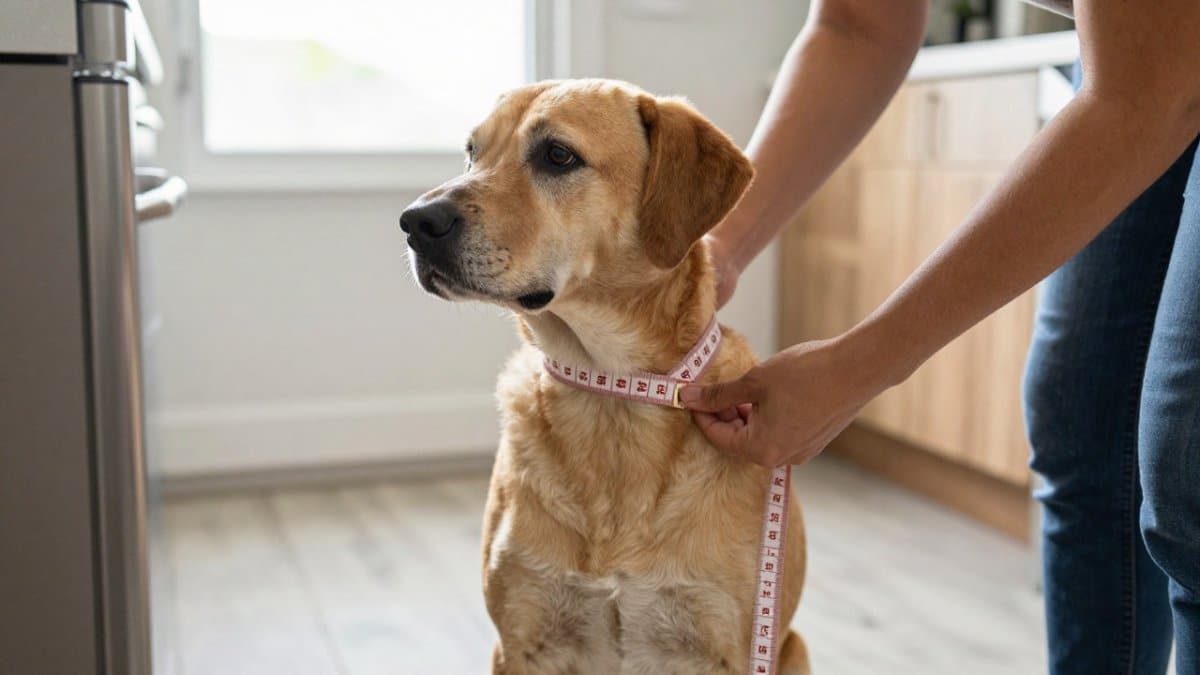
To measure a dog for a recovery collar, wrap a soft tape around the neck at the collar line, keeping one finger’s width of space, then compare the inch measurement to the cone maker’s size chart. Also measure from the collar line to the tip of the nose, since this sets how far the cone reaches.
- Keep one finger’s width of space when wrapping the soft tape around the neck.
- Record the neck measurement in inches.
- Measure from the collar line to the tip of the nose.
- Use the cone maker’s size chart, since sizing can vary between manufacturers.
- Choose a deeper cone if unsure, because a short cone lets the dog reach the incision.
Table of Contents
- How to Measure Your Dog’s Neck for a Recovery Collar
- Dog Cone Size Chart and How a Dog Cone Should Fit
- Checking Fit, Choosing a Soft Cone for Dogs, and Booking Your Next Step
- Frequently Asked Questions
How to Measure Your Dog’s Neck for a Recovery Collar
A recovery collar, often called an e-collar or cone, works best when it fits. Start with the neck, then check the length.
Welfare Implications of Elizabethan Collar Use on Dogs and Cats, a 2020 study indexed by PubMed Central found that owners report welfare concerns with these collars. That makes a good fit even more important.
- Wrap a soft measuring tape around the neck at the collar line, keeping one finger’s width of space.
- Note the number in inches, then measure from the collar line to the tip of the nose.
The steps below cover the basic neck measurement for a recovery collar.
| Step | What to do | Note |
|---|---|---|
| Measure neck | Wrap a soft tape at the collar line | Keep one finger’s width of space |
| Record neck size | Note the number in inches | Use the cone maker’s size chart |
| Measure nose length | Measure from the collar line to the nose tip | Sets how far the cone reaches |
Dog Cone Size Chart and How a Dog Cone Should Fit
Use your measurements with the cone maker’s size chart, since sizing can vary between manufacturers.
A dog cone should fit in these ways:
- The rim sits snug around the neck but lets two fingers slide under.
- The cone reaches several inches past the nose, keeping the muzzle fully inside.
- The dog can eat and drink without the cone touching the food.
Watch out: A cone that is too short lets the dog reach the incision. Choose a deeper cone rather than a shallower one.
Checking Fit, Choosing a Soft Cone for Dogs, and Booking Your Next Step
After you put the cone on, check for rubbing at the neck and make sure the dog can lie down and get up. If the cone seems too stiff, a soft cone for dogs may suit your pet better, though it may not stop chewing as well as rigid cones. Ask your veterinarian which type fits your dog’s surgery. If you are weighing where to have the procedure and recovery handled, you can compare low-cost surgery options. If your dog is recovering from a procedure like a Spay Neuter Dental visit, your veterinary team can also confirm how long the collar should stay on.
If you have questions about your dog’s recovery, book a consultation with CorePet to talk through sizing and aftercare. You can also review Pet Anesthesia Recovery: What to Expect After Surgery and signs of infection after dog spay to know what to watch for.
Frequently Asked Questions
How should a dog recovery collar fit?
A recovery collar should fit snugly enough that you can slide two fingers between the collar and your dog’s neck, but not so loose that it slips or so tight that it restricts breathing. The cone should extend several inches past the nose so your dog cannot reach the incision or wound. Check the fit after putting it on, and again during the day, since collars can shift. If your dog seems distressed, has trouble eating or drinking, or the collar rubs the skin, contact your veterinarian for guidance on adjusting it or choosing another option.
How far past a dog’s nose should a recovery collar extend?
A recovery collar should extend several inches past the tip of your dog’s nose so the muzzle stays fully inside the cone and your dog cannot reach the surgical site or wound. Measure from the collar line to the nose tip when you are choosing a size, and compare that measurement with the manufacturer’s size chart. Because cone depth varies between brands, follow the specific product’s guidance and ask your veterinarian if you are unsure about fit.
What should I do if my dog’s recovery collar is too big or too small?
If the collar is too big, it may slip backward or let your dog reach the wound, so check the fit and consider a smaller size according to the size chart. If it is too small, it can press on the neck and make your dog uncomfortable. Do not force a poor fit. Measure again using a flexible tape at the neck, and contact your veterinarian or regular veterinary team for help choosing the right size or an alternative.