Table of Contents
- Why Anesthesia Concerns Matter: Understanding the Gold Standard
- How to Brush Cat Teeth at Home: Step-by-Step Training
- Best Cat Dental Treats and Water Additives
- Anesthesia-Free Cat Dental Cleaning Risks and Realistic Limitations
Alternatives to Anesthesia for Cat Teeth Cleaning
Last Updated: July 7, 2026
When your cat’s breath smells like a gym locker and their teeth look like they’ve been through a grinder, you know something needs to change. Many cat owners ask: "Isn’t there something safer than putting my cat under anesthesia?" The answer is nuanced. While professional dental cleaning under anesthesia remains the gold standard in veterinary medicine, there are legitimate alternatives worth exploring, some work better than others.
The biggest mistake cat owners make is treating all alternatives as equal. Water additives, dental treats, and brushing are three completely different interventions with different timelines and effectiveness levels.
Why Anesthesia Concerns Matter: Understanding the Gold Standard
Professional dental cleaning under anesthesia allows veterinarians to perform subgingival scaling, cleaning below the gum line where plaque and tartar cause periodontal disease. Without anesthesia, a veterinarian cannot safely access those areas or take dental radiographs to identify hidden problems like tooth resorption or early-stage infections.
Anesthesia carries real risks for older cats and those with kidney or heart disease. Pre-anesthetic blood work can catch many issues, but it’s not foolproof. Some cat owners reasonably ask: "What if we skip anesthesia entirely?"
Anesthesia-free scaling removes visible tartar from the crown while leaving dangerous buildup below the gum line untouched.
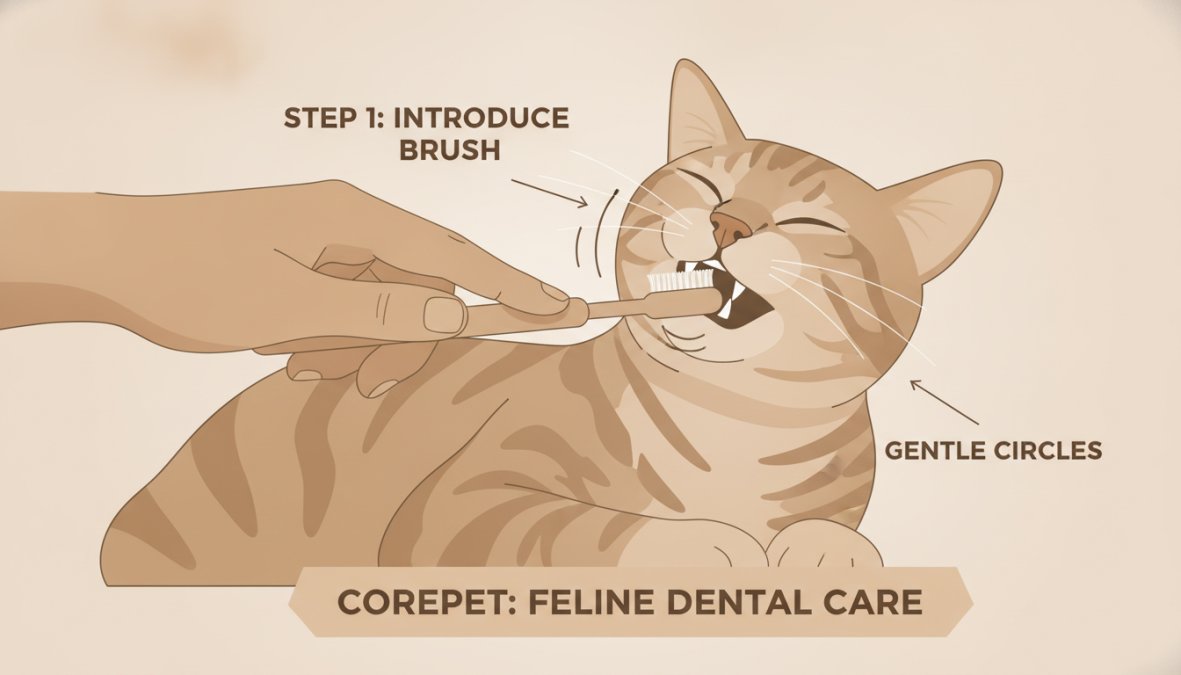
How to Brush Cat Teeth at Home: Step-by-Step Training
Most guides say "just brush your cat’s teeth daily," which is correct but useless without a training method.
Step 1: Start with your finger (Days 1-3)
Wet your pinky finger and let your cat lick it. Do this for 30 seconds, twice daily to normalize mouth contact.
Step 2: Add flavor (Days 4-7)
Use Virbac C.E.T. Enzymatic Toothpaste on your finger. Gently rub along the outer surfaces of upper teeth. Keep sessions to 15-20 seconds.
Step 3: Introduce the brush (Days 8-14)
Use a soft-bristled cat toothbrush with the same enzymatic toothpaste. Brush only outer surfaces at a 45-degree angle. If your cat tolerates 10 seconds, that’s a win.
Step 4: Increase duration (Weeks 3-4)
Aim for 30 seconds of brushing on upper teeth only.
| Training Phase | Duration | Daily Frequency | Success Rate |
|---|---|---|---|
| Finger desensitization | 30 seconds | 2x daily | 80% |
| Flavored toothpaste introduction | 15-20 seconds | 2x daily | 60% |
| Soft brush introduction | 10-15 seconds | 1x daily | 40% |
| Sustained brushing routine | 30+ seconds | Daily | 15% |
Most cats never progress past Step 2. By the time you reach consistent brushing, you’re working with a small subset of naturally cooperative felines.
Best Cat Dental Treats and Water Additives
When brushing fails, dental treats and water additives become your primary line of defense.
Dental Treats: The Easiest Entry Point
Feline Greenies Dental Treats are VOHC (Veterinary Oral Health Council) accepted for tartar reduction. The crunchy texture creates mechanical abrasion as your cat chews. Hill’s Prescription Diet t/d Dental Care works similarly as a complete diet with a specialized kibble matrix. Both are VOHC accepted. Results take 4-8 weeks to show.
Water Additives: The Passive Approach
Oxyfresh Pet Dental Water Additive uses Oxygene technology to neutralize bacteria in the mouth. It’s tasteless and odorless, requiring no cooperation. However, it cannot remove existing tartar, only prevent new buildup and reduce bacteria causing bad breath. Water additives work best as maintenance tools for cats with relatively clean teeth.
Water additives work best for prevention, not treatment. If your cat already has visible tartar buildup, a water additive alone will not remove it.
Seaweed-Based Supplements: The Slow Burn
PlaqueOff Powder for Cats uses natural seaweed to reduce plaque and tartar from the inside out. Results typically take 4-12 weeks. One caution: PlaqueOff contains iodine, so cats with thyroid issues should not use it without veterinary approval.
Anesthesia-Free Cat Dental Cleaning Risks and Realistic Limitations
Anesthesia-free dental cleaning (NADS) involves scaling visible tooth surfaces without anesthesia. The appeal is obvious; the reality is complicated.
What NADS Cannot Do
Anesthesia-free scaling cannot access the subgingival space below the gum line, where periodontal disease actually develops. Tartar below the gum line causes gingivitis, periodontal pockets, and eventual tooth loss. Without anesthesia, a technician cannot safely explore these areas or take radiographs.
The result is cosmetic improvement without medical benefit. Your cat’s teeth look cleaner and bad breath improves temporarily, but underlying periodontal disease continues progressing.
The Stress Factor
Anesthesia-free scaling requires the cat to remain still while someone works inside their mouth. This is stressful for most cats and can cause mouth aversion, making cats reluctant to eat or allow any mouth handling afterward.
When NADS Makes Sense
For cats with mild tartar and no periodontal disease, NADS can provide temporary cosmetic improvement. For cats with significant dental disease, it’s largely ineffective. NADS is not a replacement for professional cleaning under anesthesia.
Anesthesia-free scaling removes what you can see but leaves what matters most, the tartar and bacteria below the gum line where periodontal disease develops.
The Decision Framework: Which Alternative Actually Works for Your Cat
If your cat has minimal tartar and you want prevention:
Start with daily brushing if your cat cooperates, or a water additive if they don’t. Add dental treats as a secondary measure.
If your cat has moderate tartar and won’t tolerate brushing:
Combine a dental treat with a water additive and a seaweed supplement. This multi-pronged approach takes 8-12 weeks but often shows meaningful improvement.
If your cat has significant tartar and visible gingivitis:
Alternatives to anesthesia reach their limits. Professional cleaning under anesthesia becomes the realistic option.
If your cat has health conditions that make anesthesia risky:
Work with your veterinarian to assess whether the anesthetic risk exceeds the risk of untreated periodontal disease. Modern monitoring makes anesthesia safer than it was five years ago.
Alternatives to anesthesia for cat teeth cleaning work best for cats that don’t need them yet. For cats with advanced dental disease, these are maintenance tools, not solutions.
If your cat’s dental health is declining despite home care efforts, professional intervention becomes necessary. Spay Neuter Dental focuses exclusively on dental procedures for cats, using modern surgical techniques and advanced equipment. Whether your cat needs professional cleaning, extractions, or extraction-free management, getting a clear diagnosis is the first step. Book an appointment with Spay Neuter Dental in Bedford, New Hampshire to discuss your cat’s specific situation and explore options that match their health status and temperament.
Frequently Asked Questions
What are the main risks of anesthesia-free dental cleaning for cats?
Anesthesia-free dental scaling (NADS) cannot effectively remove tartar below the gum line or address periodontal disease. Without sedation, cats cannot remain still for thorough subgingival scaling, and the procedure may cause stress, pain, and incomplete cleaning. Professional veterinary cleaning with anesthesia is considered the gold standard because it allows safe access to all tooth surfaces and dental radiographs to assess hidden disease.
How can I brush my cat's teeth at home to prevent dental disease?
Start by letting your cat become comfortable with mouth handling through short, positive sessions. Use enzymatic toothpaste formulated for cats, never human toothpaste. Gently brush the outer surfaces of teeth in circular motions, focusing on the gum line where plaque accumulates. Aim for daily brushing, though 3-4 times weekly still provides significant benefit. Keep sessions brief (30 seconds) and reward your cat to build positive associations.
What are the best dental treats and water additives for cats?
Look for products with VOHC (Veterinary Oral Health Council) acceptance for tartar and plaque control. Dental diets like Hill's t/d and Royal Canin Feline Dental use specialized kibble texture to mechanically clean teeth. Treats like Feline Greenies provide crunchy texture for passive cleaning. Water additives such as Oxyfresh and Vet Aquadent FR3SH help reduce bacteria and freshen breath. Enzymatic products like Virbac C.E.T. toothpaste and PlaqueOff powder offer systemic support when brushing isn't feasible.
When should my cat see a veterinarian for professional dental cleaning instead of relying on alternatives?
Professional cleaning is essential if your cat shows signs of periodontal disease: bad breath (halitosis), red or bleeding gums, loose teeth, or behavioral changes like reduced appetite. Dental radiographs can reveal hidden disease below the gum line and assess for tooth resorption. If your cat has moderate to severe tartar buildup, gingivitis, or periodontal pockets, at-home alternatives alone cannot address these conditions. A veterinarian in Bedford, New Hampshire can evaluate your cat's individual needs and recommend the appropriate care level.
Is there a cost-effective way to manage my cat's dental health long-term?
Preventative care is far more cost-effective than treating advanced dental disease. Daily brushing with enzymatic toothpaste and VOHC-accepted treats or water additives help slow plaque and tartar buildup, reducing the need for frequent professional cleanings. Regular dental check-ups allow early detection of problems before they require extractions or complex treatment. Investing in at-home maintenance now prevents expensive emergency procedures later and keeps your cat healthier overall.
This article was written using GrandRanker