Table of Contents
- Why Does My Dog Have Bad Breath: Common Causes
- Dog Bad Breath Home Remedies: What Actually Works
- How to Clean Dog Teeth at Home: Step-by-Step Guide
- When to See a Vet for Dog Bad Breath
Why Does My Dog Have Bad Breath: Causes & Solutions
Last Updated: July 2, 2026
Bad breath in dogs isn’t just unpleasant, it’s often a signal that something needs attention, whether that’s oral hygiene, diet, or an underlying health condition. Most cases are preventable with the right approach.
The most overlooked cause of bad breath in dogs is biofilm buildup on the teeth. Unlike plaque that forms above the gumline, biofilm develops beneath the surface and creates an ideal environment for bacteria to thrive. Daily brushing targets this before it becomes a serious problem.
Why Does My Dog Have Bad Breath: Common Causes
The most frequent culprit is periodontal disease, which affects a significant portion of dogs over age three. Plaque and tartar accumulate on the teeth, creating an environment where bacteria multiply and release sulfur compounds that produce foul odor.
Systemic health problems also cause halitosis. Kidney disease produces ammonia-scented breath, while liver disease creates a musty or sweet-smelling odor. Diabetes and oral tumors can similarly affect breath quality.
Diet plays an underestimated role. Dogs fed primarily wet food don’t benefit from the natural abrasive action of chewing harder kibble. Fish-based proteins and some grain-free formulas can intensify odor. Food sensitivities may trigger gingivitis, creating an environment where bacteria thrive.
Age and breed matter too. Younger dogs typically have fresher breath, while smaller breeds like Chihuahuas develop dental problems earlier due to crowded teeth.
If your dog’s breath suddenly worsens or you notice facial swelling or jaw swelling, these are signs of serious infection or abscess requiring immediate veterinary attention.
Dog Bad Breath Home Remedies: What Actually Works
Water additives containing chlorhexidine or enzymes reduce odor-causing bacteria without requiring brushing. Add to your dog’s water bowl daily for fresher breath within a week or two.
Dental chews with the VOHC (Veterinary Oral Health Council) seal have been tested and proven to reduce plaque and tartar. Standard rawhide chews don’t qualify.
Diet modification from wet to dry kibble increases mechanical cleaning during chewing. Adding raw vegetables like carrots or apples provides natural cleaning action.
Oral probiotics introduce beneficial bacteria that compete with odor-causing pathogens. Choose products formulated specifically for canine oral health.
Coconut oil has mild antimicrobial properties, though results are mixed and it’s not a substitute for brushing.
| Remedy | Ease of Use | Effectiveness | Best For |
|---|---|---|---|
| Water additives | Very easy | Moderate | Mild odor, prevention |
| VOHC dental chews | Very easy | Moderate to high | Dogs who like to chew |
| Dry kibble diet | Easy | Mild to moderate | Overall oral health |
| Oral probiotics | Easy | Mild to moderate | Supporting other treatments |
| Coconut oil | Easy | Mild | Mild cases, gum health |
Home remedies work best as preventive measures or for mild cases. If your dog has visible tartar buildup or swollen gums, professional cleaning becomes necessary.
How to Clean Dog Teeth at Home: Step-by-Step Guide
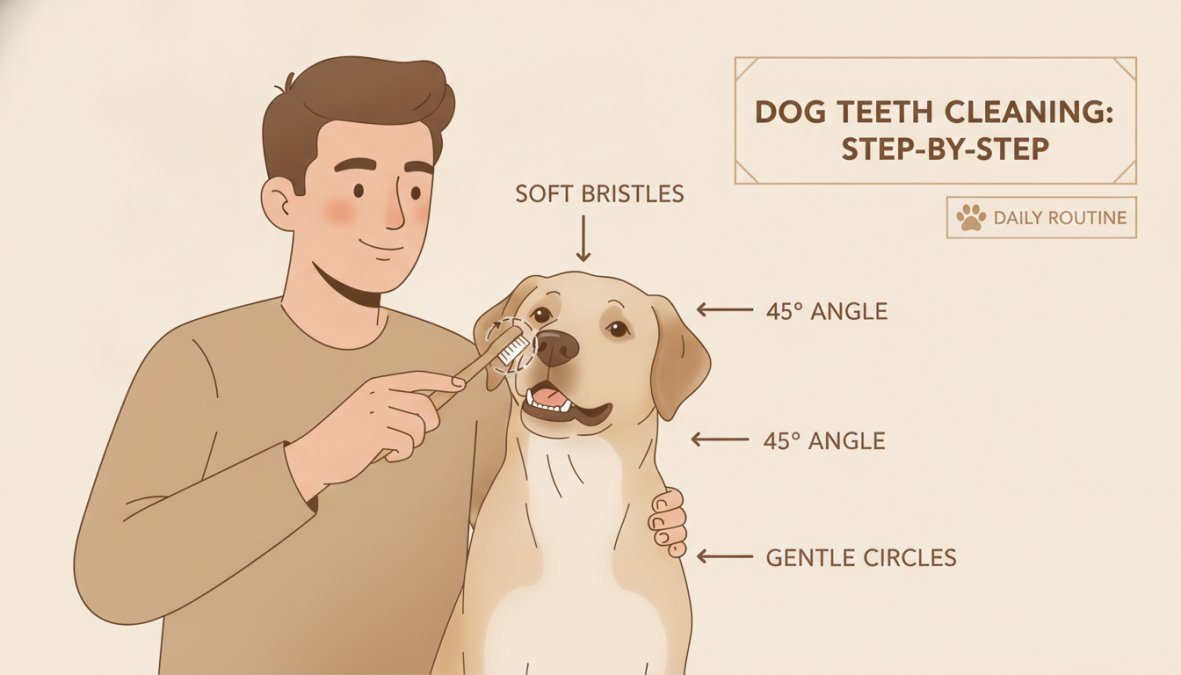
Brushing is the gold standard for preventing bad breath and periodontal disease.
Step 1: Choose the right tools
Purchase a dog-specific toothbrush with soft bristles and dog toothpaste in flavors like chicken or peanut butter. Human toothpaste contains fluoride and xylitol, both harmful to dogs.
Step 2: Introduce the toothpaste
Let your dog lick a small amount from your finger to familiarize them with the taste.
Step 3: Desensitize the mouth
Gently lift your dog’s lip and touch their teeth and gums with your finger for 30 seconds or less.
Step 4: Introduce the brush
Apply toothpaste to the brush and gently brush the outer surfaces of the back teeth for 5-10 seconds. The outer surfaces accumulate most plaque.
Step 5: Establish a routine
Brush at the same time daily for 2-3 minutes using gentle circular motions. Consistent daily brushing reduces plaque significantly within 2-3 weeks.
If your dog refuses brushing, don’t force it. Combine water additives, dental chews, and diet modifications instead. These alternatives won’t replace brushing but can still reduce bad breath meaningfully.
When to See a Vet for Dog Bad Breath
Schedule a dental examination if: your dog’s breath suddenly worsens; you notice visible tartar buildup; gums appear swollen, red, or bleeding; your dog shows reluctance to eat; or bad breath accompanies excessive drooling or facial swelling.
Seek immediate attention if: your dog has a swollen face or jaw (sign of abscess); excessive drooling or difficulty swallowing; visible pus or discharge; or loose or missing teeth.
Professional dental cleaning removes plaque and tartar from above and below the gumline under anesthesia. For dogs with significant disease, extractions may be necessary. Many veterinary clinics offer Spay Neuter Dental services that include comprehensive dental care alongside other procedures. After cleaning, maintaining oral hygiene at home prevents rapid reaccumulation. Most dogs benefit from follow-up cleaning every 12-24 months.
Professional dental cleaning is a medical procedure that removes infection and prevents disease progression. If your dog has visible tartar or bad breath unresolved by home remedies, a veterinary exam is the next step.
Bad breath in your dog doesn’t have to be permanent. Whether dealing with mild odor from dietary factors or serious periodontal disease, addressing the root cause improves your dog’s comfort and long-term health. If home remedies haven’t resolved the issue or you’ve noticed signs of oral disease, book a veterinary appointment to explore professional cleaning options and prevent future complications.
Frequently Asked Questions
What does it mean when a dog has really bad breath?
Bad breath in dogs, medically known as halitosis, often signals underlying oral health problems like plaque buildup, tartar accumulation, or periodontal disease. However, it can also indicate systemic issues such as kidney disease, liver disease, or diabetes. While some odor is normal, persistent or foul-smelling breath warrants veterinary evaluation to rule out serious conditions affecting your dog's overall health.
Can bad breath in dogs be a sign of kidney disease?
Yes, halitosis can be associated with kidney disease in dogs. When kidneys aren't functioning properly, waste products accumulate in the bloodstream, sometimes creating a distinctive urine-like or ammonia smell on the breath. If your dog has bad breath along with increased thirst, frequent urination, or lethargy, consult your veterinarian promptly for diagnostic testing and evaluation.
How can I get rid of my dog's bad breath naturally?
Natural remedies include regular tooth brushing with enzymatic toothpaste, offering dental chews that mechanically clean teeth, adding water additives designed to reduce bacteria, and adjusting diet to include foods that support oral health. Some owners find success with raw carrots or appropriate chew toys. However, if bad breath persists despite home care, professional dental cleaning may be necessary to address underlying plaque, tartar, or biofilm buildup.
How often should I brush my dog's teeth?
Ideally, brush your dog's teeth daily to prevent plaque and tartar accumulation. If daily brushing isn't feasible, aim for at least 3-4 times per week. Consistent brushing significantly reduces the risk of periodontal disease, gingivitis, and the bacteria that cause halitosis. Start slowly if your dog is new to tooth brushing, using positive reinforcement and dog-specific toothpaste to build a comfortable routine.
This article was written using GrandRanker