Table of Contents
- Understanding the Pet Dental Cleaning Timeline
- Dog Teeth Cleaning Procedure Steps and What to Expect
- Signs Your Pet Needs a Dental Cleaning
- Frequently Asked Questions
Last Updated: September 23, 2026
Understanding the Pet Dental Cleaning Timeline
A pet dental cleaning timeline explains the complete process from pre-appointment preparation through post-operative recovery, helping pet owners understand what to expect and ensure proper aftercare.
The dental cleaning process typically spans 4 to 8 hours at the surgical facility, depending on the pet’s age, oral health status, and any complications discovered during examination.
CorePet focuses on delivering comprehensive dental care with modern surgical techniques and advanced equipment, explaining every step so pet owners know what to expect.
Dog Teeth Cleaning Procedure Steps and What to Expect
The procedure begins with a pre-operative assessment including physical examination and medical history review to ensure the pet is healthy enough for sedation.
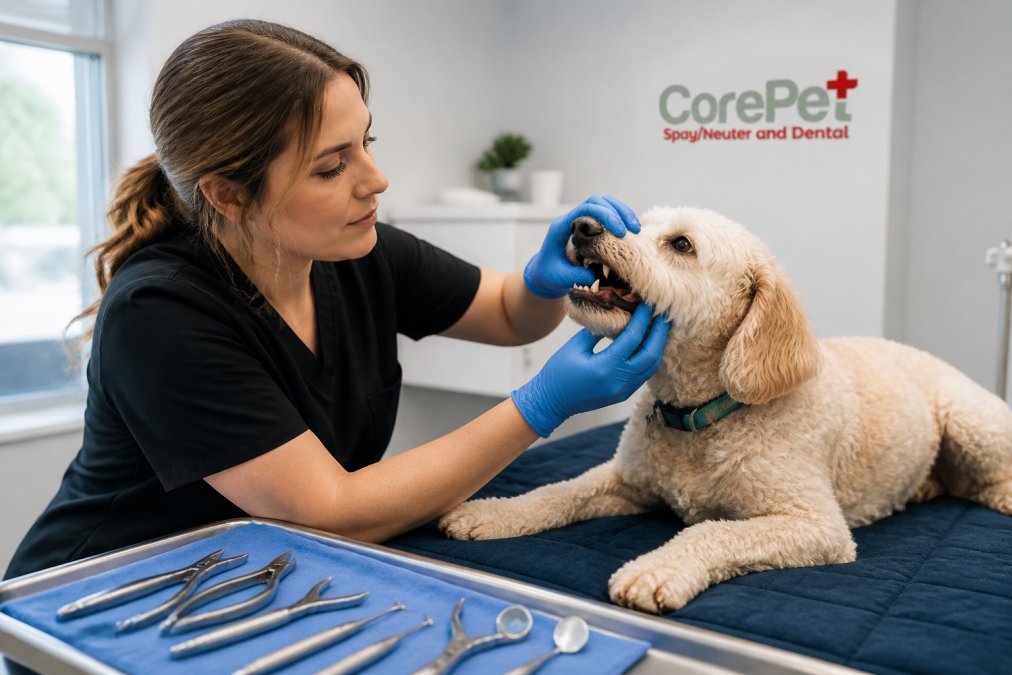
On the day of surgery, the pet receives pre-anesthetic medication followed by intravenous anesthesia, with continuous vital sign monitoring. The veterinary team performs an oral examination using dental probing to assess periodontal disease and plaque accumulation.
The cleaning involves scaling to remove tartar and root planing to smooth tooth surfaces. Extractions are performed if necessary during the same appointment.
After scaling and root planing, teeth are polished. The entire pet dental cleaning timeline typically takes 30 to 60 minutes, with continuous monitoring of vital signs.
Recovery typically lasts 1 to 2 hours, during which the pet gradually regains consciousness and is monitored until fully alert and able to stand safely.
Signs Your Pet Needs a Dental Cleaning
Signs include persistent halitosis, visible tartar, reluctance to eat, red or swollen gums, and excessive drooling. Some pets show no symptoms until disease is advanced, making regular veterinary dental assessments essential.
Early intervention through home brushing extends the time between professional cleanings. CorePet assesses each pet individually to recommend an appropriate cleaning schedule based on oral health status and risk factors.
Pet dental care requires home maintenance and professional intervention. Regular brushing, dental chews, and professional cleanings keep pets’ mouths healthy. CorePet’s focus on advanced dental techniques and individualized care helps pet owners in New Hampshire maintain their animals’ oral health. Book an Appointment to discuss your pet’s dental timeline.
Frequently Asked Questions
How long will my pet be at the clinic for a dental cleaning?
Most pets spend 2-4 hours at the clinic for a dental cleaning. This includes pre-operative assessment, anesthesia administration, the actual cleaning procedure, monitoring during recovery, and post-operative observation. The exact time depends on your pet’s health status, the extent of tartar buildup, and whether extractions are needed.
What are the signs your pet needs a dental cleaning?
Common signs include halitosis (bad breath), visible tartar or plaque accumulation on teeth, swollen or bleeding gums, difficulty eating, drooling, or behavioral changes. Periodontal disease develops gradually, so regular oral health assessments help catch problems early. If you notice any of these signs, contact your veterinarian for an evaluation to determine if a professional cleaning is needed.
How long does recovery take after a pet dental cleaning?
Most pets recover from anesthesia within 24 hours, though full recovery varies by individual. You may notice grogginess, reduced appetite, or mild swelling for the first day. Your veterinary team will provide detailed post-operative care instructions specific to your pet’s needs.