Table of Contents
- Dog Spay Recovery Timeline: What to Expect Week by Week
- Mental Stimulation for Dogs on Crate Rest
- Signs of Infection After Dog Neuter: When to Call Your Vet
- Creating a Safe Recovery Environment
- Leash Walking Protocols and Activity Restriction
- Diet, Water, and Medication After Surgery
- Post-Operative Grooming and Hygiene
- Managing High-Energy Breeds in Small Spaces
- When to Call Your Veterinarian
- Follow-Up Appointments and Long-Term Recovery
- Frequently Asked Questions
Last Updated: September 15, 2026
Dog Spay Recovery Timeline: What to Expect Week by Week
The first 24 to 48 hours after a spay are most critical. Post spay neuter care tips for active dogs begin with one hard rule: no running, jumping, or rambunctious play for at least 10 to 14 days, even if your dog acts normal by day three.
Most complications trace back to letting an energetic dog dictate the pace of recovery. The AVMA pet owner resources on postoperative care reinforce that confinement and leash walking are non-negotiable early on.
Dog spay recovery timeline at a glance:
| Phase | Typical Timeframe | Activity Level |
|---|---|---|
| Immediate post-op | First 24-48 hours | Strict crate rest, sedation likely |
| Early healing | Days 3-7 | Short leashed potty breaks only |
| Mid-recovery | Days 8-10 | Gentle leash walking, still confined |
| Recheck window | Days 10-14 | Veterinarian assesses incision site |
| Return to normal | Week 2+ | Gradual increase per veterinary instructions |
By day three, many dogs want to bounce off the walls, but energy is a poor indicator of healing.
Skipping the e-collar “because she looks miserable” is the most common cause of surgical site infection. A single lick can introduce bacteria and undo days of healing. Keep the Elizabethan collar or recovery suit on until your veterinarian clears it.
Mental Stimulation for Dogs on Crate Rest
Mental stimulation for dogs on crate rest replaces physical activity with brain work: frozen stuffed toys, snuffle mats, puzzle feeders, and short training sessions.
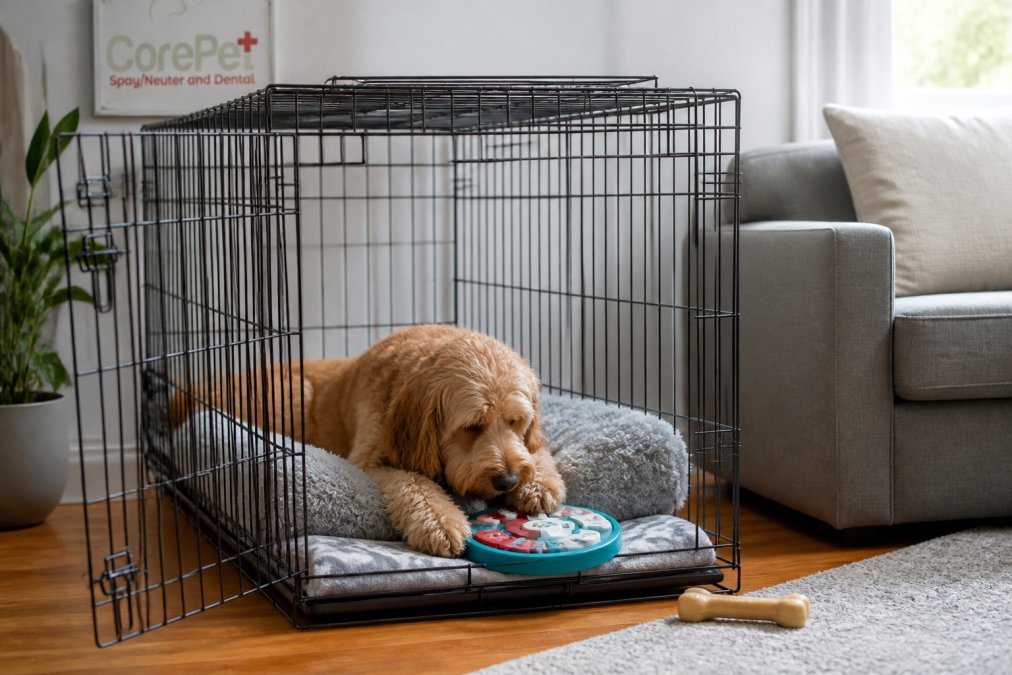
Rotate five to ten minutes of enrichment several times a day: freeze a stuffed toy with yogurt or broth, hide kibble in a snuffle mat, and swap toys daily.
For high-energy breeds in small apartments, this rotation matters more than any single toy; boredom leads to pacing that jeopardizes the incision.
Freeze enrichment toys the night before. A frozen puzzle lasts three to four times longer than a room-temperature one, which buys you quiet stretches during the hardest days of confinement.
Signs of Infection After Dog Neuter: When to Call Your Vet
Signs of infection after dog neuter include redness, swelling, discharge, foul odor, or a gaping incision. Call your veterinarian if you see any of these, or if your dog shows lethargy, refuses food, vomits, or runs a fever.
Normal healing looks slightly pink and mildly swollen for a few days. Warning signs include increasing redness or heat, yellow or green discharge, bleeding that will not stop, or a sudden drop in appetite.
The FDA’s guidance on pet medications and postoperative care notes that pain management and monitoring go hand in hand after surgery. If your dog seems painful despite medication, that is a reason to call, not to wait.
A single concerning sign, such as discharge or a gaping incision, is enough to justify a call. You never need a full checklist to reach out.
Creating a Safe Recovery Environment
A safe recovery space is small, quiet, and boring in the best way: a crate or exercise pen away from stairs, jumpable furniture, and other pets, with soft bedding and easy water access.
Homes often have hardwood floors that make traction tricky for a wobbly dog just out of anesthesia. Add non-slip rugs along the path to the door for the first 48 hours.
Set up a crate sized so your dog can stand and turn, non-slip rugs, a water bowl within reach, a fitted e-collar or recovery suit, medications, and your vet’s number nearby.
Keep the incision clean and dry, and do not bathe your dog until your veterinarian approves it.
Leash Walking Protocols and Activity Restriction
Diet, Water, and Medication After Surgery
Post-Operative Grooming and Hygiene
Managing High-Energy Breeds in Small Spaces
Do not use a laser pointer or fetch games to “tire out” a dog on crate rest. Both trigger sudden sprints and turns that stress the surgical site, even indoors.
When to Call Your Veterinarian
Follow-Up Appointments and Long-Term Recovery
Frequently Asked Questions
What happens if my dog is too active after spaying or neutering?
Too much activity can pull sutures, cause swelling, or lead to a seroma (fluid pocket) at the incision site. It also raises the risk of surgical site infection. If your dog runs, jumps, or plays roughly, check the incision for redness, discharge, or opening. Call your veterinarian if you see any of these signs. Strict activity restriction for 10 to 14 days is standard for most dogs.
How long after spay can my dog be active again?
Most veterinarians recommend restricting activity for 10 to 14 days after a spay. After that, gradual leash walks are usually fine. Full off-leash running and jumping typically wait until your vet clears your dog at the follow-up appointment. The dog spay recovery timeline depends on your dog’s age, size, and how well the incision heals. Always follow your vet’s specific instructions.
How do I keep a high-energy dog calm during crate rest?
Use food puzzles, frozen stuffed toys, and short training sessions to provide mental stimulation for dogs on crate rest. Rotate toys to keep them interesting. Cover the crate with a light sheet to reduce visual triggers. You can also practice calm behaviors like ‘settle’ or ‘stay’ for a few minutes at a time. These activities tire your dog without physical exertion.
What are the signs of infection after dog neuter surgery?
Watch for redness, swelling, warmth, or discharge at the incision site. Other signs of infection after dog neuter include lethargy, loss of appetite, fever, or a bad smell from the incision. Some swelling and mild redness are normal in the first 48 hours, but worsening symptoms need veterinary attention. Call your vet if you notice any of these changes.