Last Updated: October 25, 2026
Quick Summary
Getting a rabbit to eat is the most important part of rabbit spay aftercare, and eating should begin within 24 hours because gut movement depends on fiber intake. Offer only familiar foods, starting with grass hay available at all times, then small amounts of familiar leafy greens, limited pellets, and fresh water. Never introduce a new vegetable, treat, or pellet brand during the first week of recovery.
- Keep grass hay available at all times because it drives gastrointestinal motility.
- Refresh the water bowl or bottle several times daily and offer both.
- Call the veterinarian if the rabbit has not eaten within the 12 to 24 hour window.
- Check the incision twice daily in good light for redness, swelling, discharge, or separation.
- Keep the rabbit in a low-sided pen with soft bedding and no ramps.
Table of Contents
- What to Feed a Rabbit After Surgery
- Rabbit Not Eating After Surgery: What to Do
- Rabbit Surgery Recovery Timeline and Incision Care
- Frequently Asked Questions
What to Feed a Rabbit After Surgery
Getting a rabbit to eat is the most important part of rabbit spay aftercare; the House Rabbit Society advises eating should begin within 24 hours because gut movement depends on fiber intake. Offer only familiar foods.
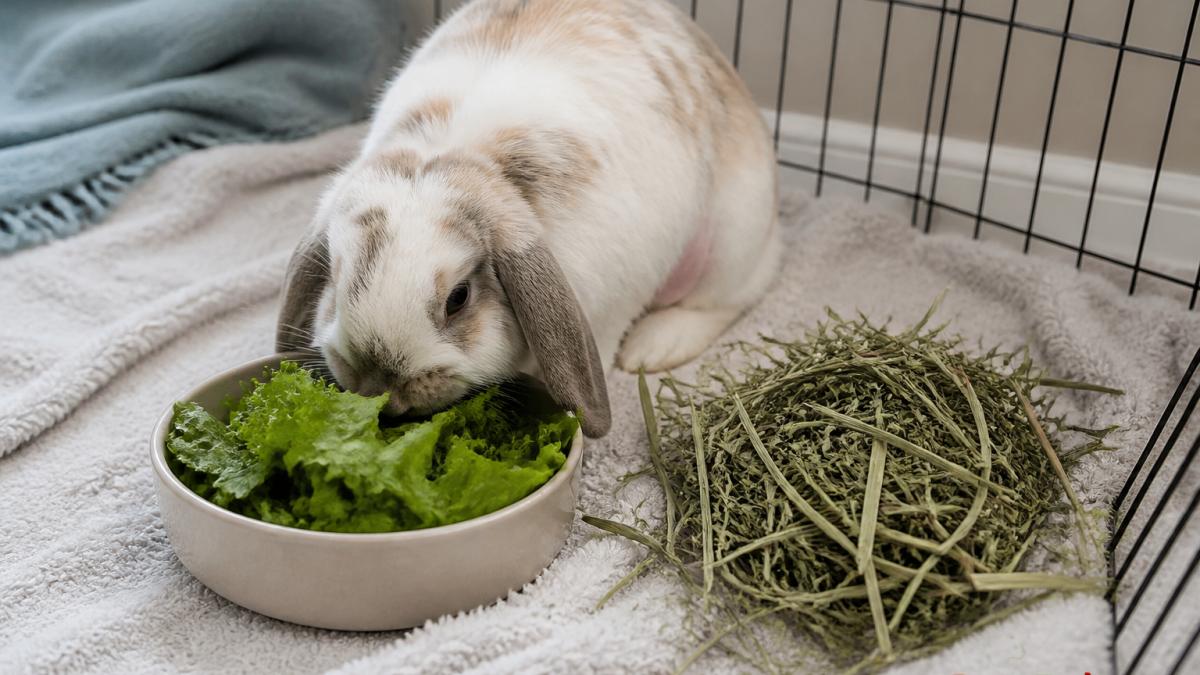
Fresh hay comes first. Keep grass hay available at all times; it drives gastrointestinal motility.
Leafy greens next. Offer small amounts of familiar leafy vegetables, rinsed and shaken dry; CorePet’s rabbit spay aftercare guidance notes favorite greens often restart appetite best.
Pellets in limited amounts. Keep pellets available but do not push them; a rabbit filling up on pellets eats less hay.
Water matters as much as food. Refresh the bowl or bottle several times daily, and offer both.
Never introduce a new vegetable, treat, or pellet brand during the first week of recovery.
For the surgical side, read this guide on whether rabbit spay surgery is safe, and the case for why spaying female rabbits matters.
Rabbit Not Eating After Surgery: What to Do
A rabbit that refuses food after surgery needs intervention within hours. VCA Animal Hospitals describes a 12 to 24 hour window for resuming eating, drinking, urinating, and defecating; if the rabbit has not eaten by then, call the veterinarian.
- Offer favorite greens by hand. A rabbit may ignore a bowl but take a leaf offered directly.
- Warm the food slightly. Anesthesia lowers body temperature, so warmed greens or critical care may appeal more.
- Reduce stress. Quiet, dim lighting, familiar smells, minimal handling.
- Try syringe feeding with a recovery-style critical care product, following the veterinarian’s instructions.
- Call the veterinarian if the rabbit has not eaten within the window, or is lethargic, pressing its abdomen to the floor, or producing no fecal pellets.
A rabbit that stops eating and producing fecal pellets shows slowed gut movement, which can progress to gastrointestinal stasis, a genuine emergency. Understanding the risks of spay or neuter surgery in rabbits helps owners tell normal grogginess from a complication. Eating and fecal output are the signals, not comfort.
Rabbit Surgery Recovery Timeline and Incision Care
Recovery follows a predictable arc, and knowing each stage makes it easier to spot when something is off.
| Timeframe | What to Expect | What to Do |
|---|---|---|
| First 12-24 hours | Groggy, quiet, limited interest in food | Offer familiar greens and hay often; keep warm and quiet |
| Days 1-3 | Appetite returning, first fecal pellets | Check the incision twice daily; restrict jumping and climbing |
| Days 3-7 | Eating near normal, more active | Keep activity restricted; keep the incision clean and dry |
Check the incision twice daily in good light for redness, swelling, discharge, or separation; it should look dry and closed. Keep the rabbit in a low-sided pen with soft bedding and no ramps for the period the veterinarian specifies.
For a comparison, this breakdown of spay versus neuter recovery time for indoor rabbits sets out the differences, and surgical safety standards for rabbit spays covers procedure standards.
Never clean the incision with anything the veterinarian has not approved, and never let a rabbit lick the site unchecked.
Rabbits hide discomfort well, so recovery depends on observation rather than assumption. CorePet is a locally owned surgery center in New Hampshire focused exclusively on spay, neuter, and dental procedures for dogs, cats, and rabbits, with modern surgical techniques and individualized care. If a rabbit is due for a spay or an owner has questions about recovery, CorePet’s team can walk through the procedure, the aftercare plan, and what to watch for. Book an Appointment and give a rabbit the calm, well-monitored recovery it deserves.
Frequently Asked Questions
How soon should a rabbit eat after spay surgery?
Most veterinarians want a rabbit eating again within 12 to 24 hours of surgery. Offer fresh hay and a small amount of your rabbit’s favorite leafy greens as soon as you get home. If your rabbit has not eaten anything by the next morning, call your veterinarian. A rabbit that stops eating can develop slowed gut movement, which is a serious concern after anesthesia.
What should I feed my rabbit after spay surgery?
Start with unlimited grass hay, which keeps gut movement going and should make up most of the diet. Add fresh leafy greens like romaine, parsley, or cilantro to encourage eating. Hold off on sugary treats and new foods. Pellets can stay in the bowl in normal amounts. If your rabbit refuses everything, ask your vet about syringe feeding a recovery food.
How can I tell if my rabbit’s spay incision is healing properly?
Check the incision daily for redness, swelling, discharge, or gaps in the line. A small amount of crusting is normal in the first few days. Keep your rabbit from licking or chewing at the site, and limit jumping and climbing. Call your veterinarian if the incision looks worse, feels hot, or if your rabbit seems painful. Bring your rabbit in for the scheduled recheck.