Table of Contents
Last Updated: June 20, 2026
Recognizing the 8 signs your pet is in pain after surgery can be the difference between a smooth recovery and a serious complication. Animals, especially cats, are wired to hide pain as a survival instinct, so knowing the specific signals matters more than relying on general intuition.
8 Signs Your Pet Is in Pain After Surgery
Post-surgical pain in pets is real, common, and often underestimated by owners. Dogs and cats express discomfort differently, which is why knowing the specific behavioral and physical signals matters.
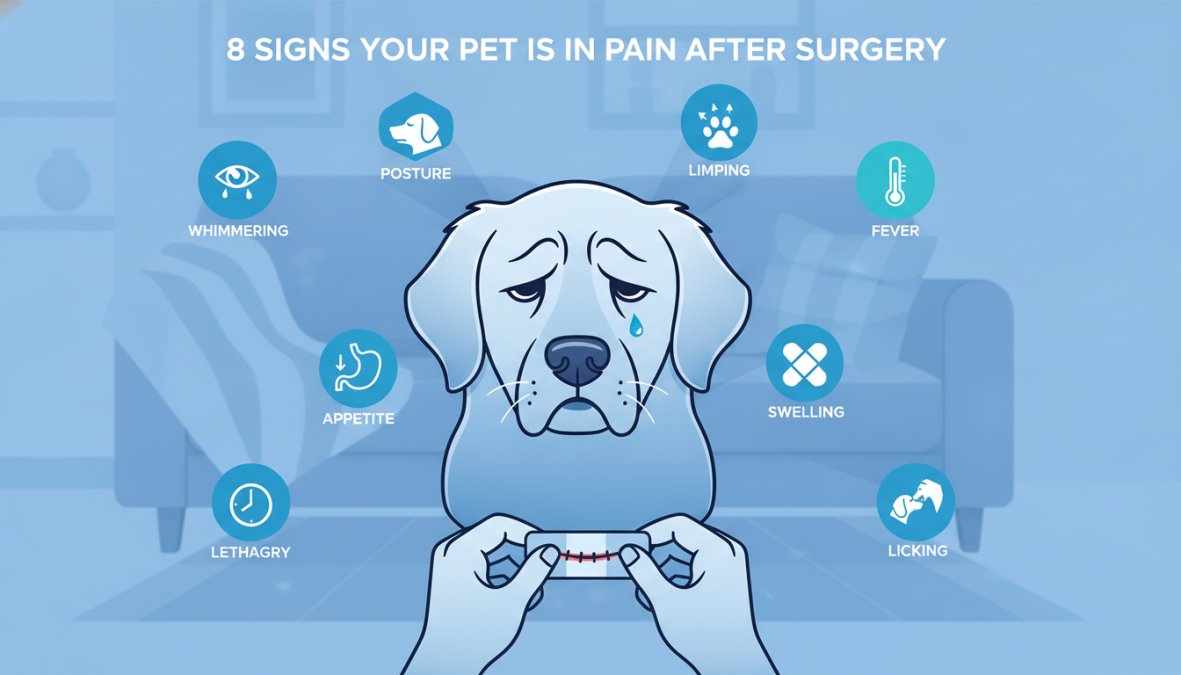
Here are the 8 signs your pet is in pain after surgery to monitor closely:
1. Vocalizing or Crying Whimpering, whining, growling, or hissing when touched or moved is a direct pain signal. Cats rarely vocalize from discomfort unless it is significant, so any unusual sounds deserve immediate attention.
2. Guarding the Incision Site A pet that flinches, snaps, or pulls away when you approach the surgical area is demonstrating guarding behavior, the body’s protective response to sensitivity around the incision.
3. Restlessness or Inability to Settle A pet that cannot find a comfortable position or keeps shifting its weight is likely experiencing unmanaged pain. Restlessness persisting beyond 24 hours post-surgery signals pain.
4. Lethargy Beyond Expected Recovery Some lethargy is normal for the first 24 to 48 hours. Lethargy extending past two days or deepening rather than improving signals that pain or a complication is interfering with recovery.
5. Appetite Loss Skipping one meal after surgery is expected. Refusing food or water for more than 24 hours warrants a call to your veterinary surgeon.
6. Panting or Rapid Breathing Panting in dogs when they are not hot or recently exercised is a classic pain response. In cats, any open-mouth breathing is a red flag.
7. Hiding or Withdrawal Cats that hide after surgery are not simply being shy. Hiding is a documented feline pain behavior. Dogs may also withdraw, refusing to interact with family members they normally greet.
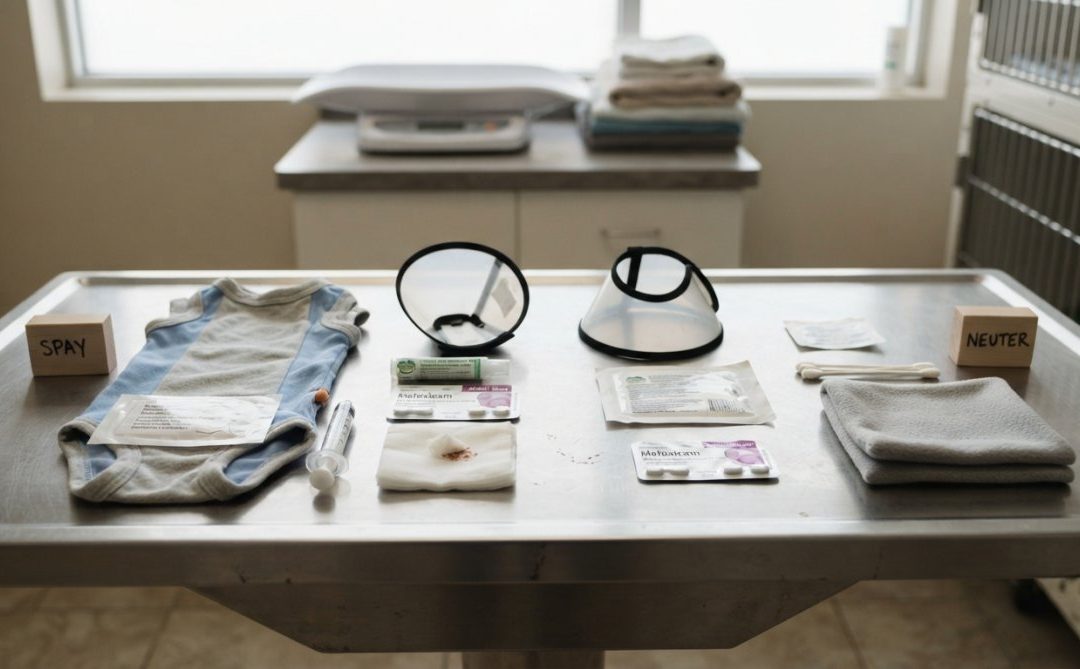
8. Licking, Chewing, or Pawing at the Surgical Area This is both a pain sign and a complication risk. A pet focused on its sutures or staples is likely experiencing discomfort. An e-collar or recovery suit prevents access to the wound while you address the underlying issue.
Normal vs. Abnormal Post-Surgery Recovery
The biggest mistake owners make is expecting their pet to bounce back within 24 hours, leading to panic over normal symptoms or complacency about genuine warning signs.
What is normal in the first 24 to 72 hours after surgery:
-
Mild lethargy and reduced activity
-
Decreased appetite for up to one meal
-
Slight swelling or bruising around the incision site
-
Grogginess from anesthesia recovery
-
Reluctance to jump or climb stairs
What is abnormal and requires veterinary contact:
-
Discharge from the incision site that is yellow, green, or foul-smelling
-
Sutures or staples that appear to be pulling apart
-
Significant swelling that worsens after 48 hours
-
A fever (rectal temperature above 103.5°F)
-
Pale or white gums, indicating circulatory distress
-
Limping that worsens rather than gradually improving after orthopedic surgery
According to the American Veterinary Medical Association’s post-operative care guidelines, monitoring vital signs, hydration, and behavioral changes in the first 72 hours is the most critical window for catching complications early. If a symptom is improving day over day, it is likely normal. If stable or worsening, treat it as abnormal until your veterinarian confirms otherwise.
Post-Surgery Pet Care Tips for Pain Management
Managing your pet’s pain after surgery requires an active approach to environment, medication, and monitoring.
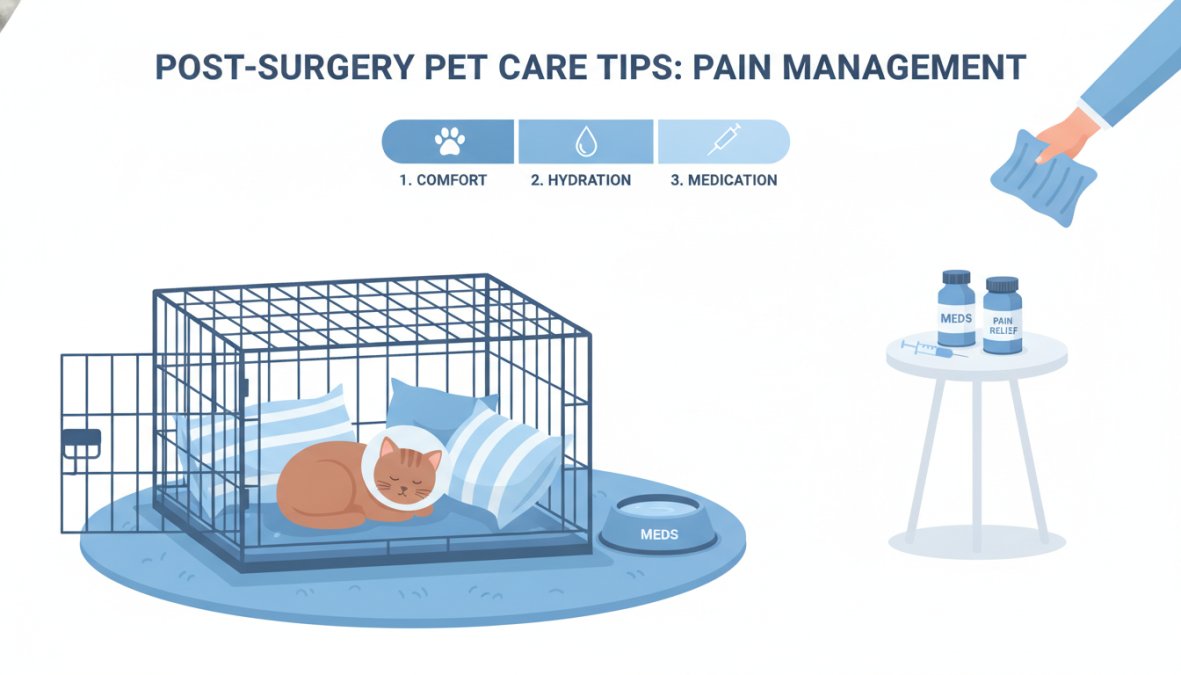
Follow the medication schedule exactly. Pain management medications are dosed based on your pet’s weight and procedure type. Skipping doses because your pet “seems fine” is a common error. Pain is easier to prevent than to catch up on once it escalates.
Set up a proper recovery environment. Crate rest limits movement and prevents your pet from jumping or running, which stresses the surgical site. Use soft bedding, keep the area quiet, and maintain a consistent temperature. For dogs recovering from orthopedic procedures, a mobility harness provides full-body support during bathroom breaks, and a ramp prevents jumping onto furniture.
Protect the incision site. The e-collar remains the most reliable tool for preventing licking and chewing. If your pet struggles with a hard plastic cone, softer alternatives are available.
Monitor hydration actively. A pet that is not drinking is at risk for complications. Offer fresh water frequently and note how much your pet drinks each day.
According to the Merck Veterinary Manual’s section on post-operative analgesia, multimodal pain management, combining medication with environmental and behavioral support, produces better recovery outcomes than medication alone.
How Long Does Pain Last After Pet Surgery?
Pain duration depends on the procedure type, your pet’s age, and how well post-operative care protocols are followed.
For routine soft tissue procedures such as Spay Neuter Dental surgeries, most pets experience the sharpest discomfort in the first 48 to 72 hours. Behavioral changes should resolve within three to five days, with full recovery typically occurring within ten to fourteen days.
Orthopedic surgery follows a longer timeline. Pain and limping may persist for several weeks, with gradual improvement expected over six to twelve weeks. Crate rest and restricted activity are non-negotiable during this window.
Dental procedures typically produce the shortest recovery period. Most pets return to normal eating behavior within two to three days, though sensitivity at the extraction site may linger for up to a week.
A practical monitoring checklist for the first week:
-
Medication administered on schedule
-
Incision site checked twice daily for discharge, swelling, or separation
-
Food and water intake logged each day
-
E-collar or recovery suit confirmed in place when unsupervised
-
Activity restricted to leash walks for bathroom breaks only (dogs)
-
Behavioral changes noted and compared to the previous day
-
Veterinary follow-up appointment confirmed
According to the Cornell University College of Veterinary Medicine’s guide to home care after surgery, consistent daily observation by the owner is the single most effective tool for catching complications before they become emergencies.
If your pet’s pain signs are not improving by day five, or if any abnormal signs appear at any point, contact your veterinarian without waiting. Early intervention produces better outcomes than a cautious wait-and-see approach.
Frequently Asked Questions
How do I know if my dog is in pain after surgery?
Common signs your dog is in pain after surgery include excessive vocalizing, restlessness, loss of appetite, guarding the incision site, limping, panting, and hiding. Dogs may also show behavioral changes like reluctance to move or difficulty sleeping. Monitor your pet closely during the first 7-10 days of recovery, as pain typically decreases over time. If pain persists or worsens, contact your veterinarian immediately.
What are common signs of pain in cats after surgery?
Cats often mask pain differently than dogs. Watch for hiding, withdrawal from family, reduced appetite, excessive grooming of the incision site, hissing or snapping when touched, and unusual vocalizing. Cats may also show decreased activity and reluctance to use the litter box. Because cats are subtle about pain, any behavioral change warrants a call to your veterinarian. Post-surgery pet care tips should include extra monitoring for these subtle signs.
When should I call my vet after my pet's surgery?
Contact your veterinarian immediately if you notice signs of infection after pet surgery, such as discharge from the incision site, excessive swelling, redness, or heat around the wound. Also call if your pet shows severe pain unrelieved by medication, inability to eat or drink, vomiting, difficulty breathing, or collapse. Don't wait—early intervention prevents complications. Your vet can assess whether additional pain management or treatment is needed.
How long does pain typically last after pet surgery?
Most pets experience acute post-operative pain for 7-10 days after surgery, which gradually improves with proper pain management. Soft tissue surgery pain usually resolves faster than orthopedic surgery pain. How long does pain last after pet surgery depends on the procedure type and individual healing. Pain should decrease noticeably each day. If pain persists beyond two weeks or worsens, contact your veterinarian for assessment and adjusted pain management strategies.
Can I give my pet human pain medication after surgery?
No—never give human pain medication to your pet without explicit veterinary approval. Many common pain relievers, including ibuprofen and acetaminophen, are toxic to dogs and cats. Your veterinarian will prescribe species-appropriate pain medication tailored to your pet's weight and surgical procedure. Always follow the prescribed dosage and schedule exactly. If your pet shows signs of medication side effects or inadequate pain relief, contact your vet immediately rather than adjusting doses yourself.
This article was written using GrandRanker