Table of Contents
Last Updated: June 20, 2026
How to Keep Your Dog Calm After Neuter Surgery: First Steps
Knowing how to keep your dog calm after neuter surgery is critical for a smooth, complication-free recovery. Most complications stem not from the procedure itself, but from dogs that move too much, too soon. Post-surgical care means controlling the physical space, limiting movement, and keeping stress low.
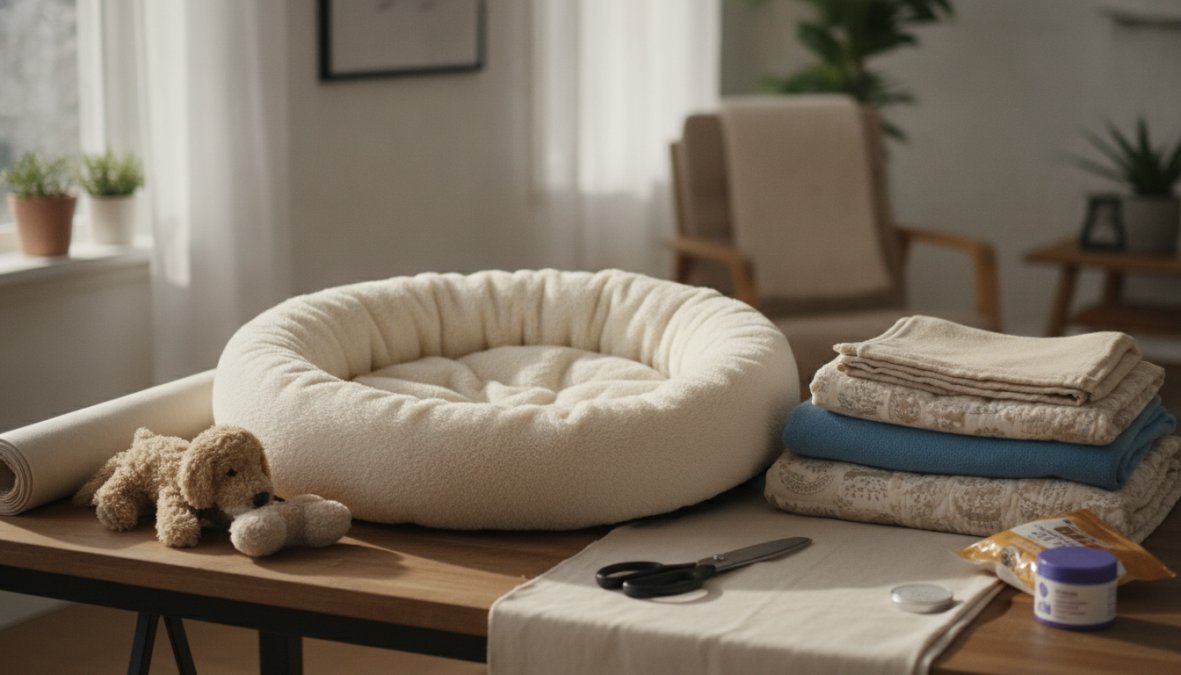
Immediate steps upon arriving home:
-
Set up a crate in a quiet room away from children, other pets, and foot traffic before leaving for the clinic.
-
Use a familiar blanket or worn T-shirt inside to reduce anxiety through scent.
-
Keep the Elizabethan collar (E-collar) on from the moment you leave the vet clinic.
-
Offer water and a light meal only if the veterinarian has cleared it.
-
Dim lights and keep noise levels low for the first evening.
The crate is your most effective tool for preventing re-injury during post-op recovery. According to the American Veterinary Medical Association’s guidance on post-surgical recovery, restricting physical activity immediately after surgery is the primary factor in preventing wound dehiscence and post-operative infection.
Dog Neuter Recovery Timeline: What to Expect
Recovery follows a predictable arc, but most owners underestimate how long restricted activity actually lasts.
Hours 1 through 24: Sedation and anesthesia effects linger. Your dog may seem disoriented or unusually quiet. This is normal. Do not interpret stillness as a sign that activity can resume, the incision is at its most vulnerable.
Days 2 through 4: Dogs often feel significantly better by day two, precisely when overactivity risk spikes. A dog that is eating and alert is not a dog that has healed internally.
Days 5 through 10: Visible healing begins. The incision should appear closed and dry. Swelling should reduce noticeably. Short leash walks for bathroom breaks are generally permitted, but running, jumping, and stairs remain restricted.
|
Recovery Phase |
Activity Level |
Key Watchpoints |
|---|---|---|
|
Hours 1-24 |
Complete rest |
Sedation effects, appetite |
|
Days 2-4 |
Crate rest only |
Overactivity risk peaks |
|
Days 5-10 |
Short leash walks |
Incision closure, swellin |
Mental Stimulation for Dogs on Restricted Activity
Mental stimulation is the most underused tool in post-surgical recovery and directly addresses the anxiety that makes confined dogs destructive. According to the American Kennel Club’s enrichment guidelines for dogs, mental engagement can reduce stress behaviors as effectively as moderate physical exercise, without risks to healing tissue.
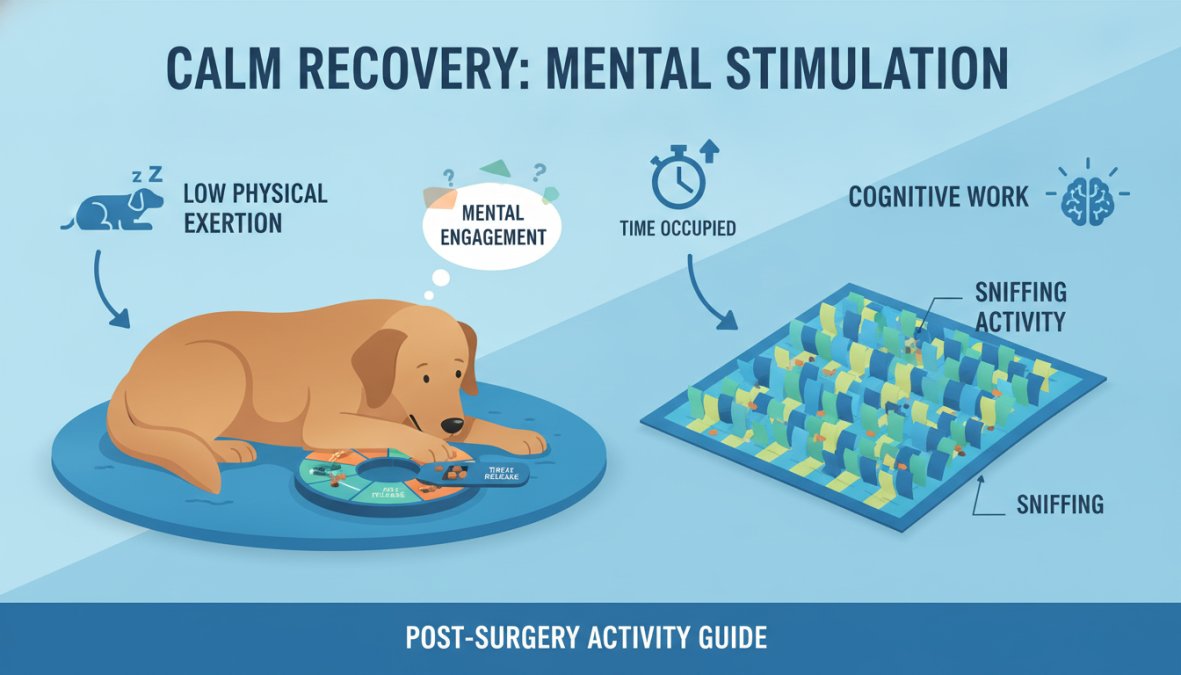
Effective enrichment activities:
-
Snuffle mats: Scatter kibble into a textured mat. A 10-minute session is cognitively equivalent to a 20-minute walk.
-
Frozen Kongs: Fill with wet food, pumpkin puree, and kibble, then freeze. Provides 20 to 40 minutes of engagement.
-
Muffin tin puzzle: Place treats in a muffin tin and cover cups with tennis balls. Your dog removes balls to access rewards.
-
Scent games: Hide treats around the confinement area for nose work.
-
Training sessions: Short, 5-minute obedience sessions using verbal cues keep the mind engaged without movement.
How to Stop Your Dog From Licking the Neuter Incision
Licking introduces bacteria from the mouth directly into healing tissue. Even brief licking can cause the incision to reopen or develop infection. Signs of infection include spreading redness, worsening swelling after day two, cloudy or odorous discharge, and heat at the incision site. Contact your veterinarian immediately if any occur.
The Elizabethan collar remains the most reliable barrier, though alternatives exist for dogs that find it distressing.
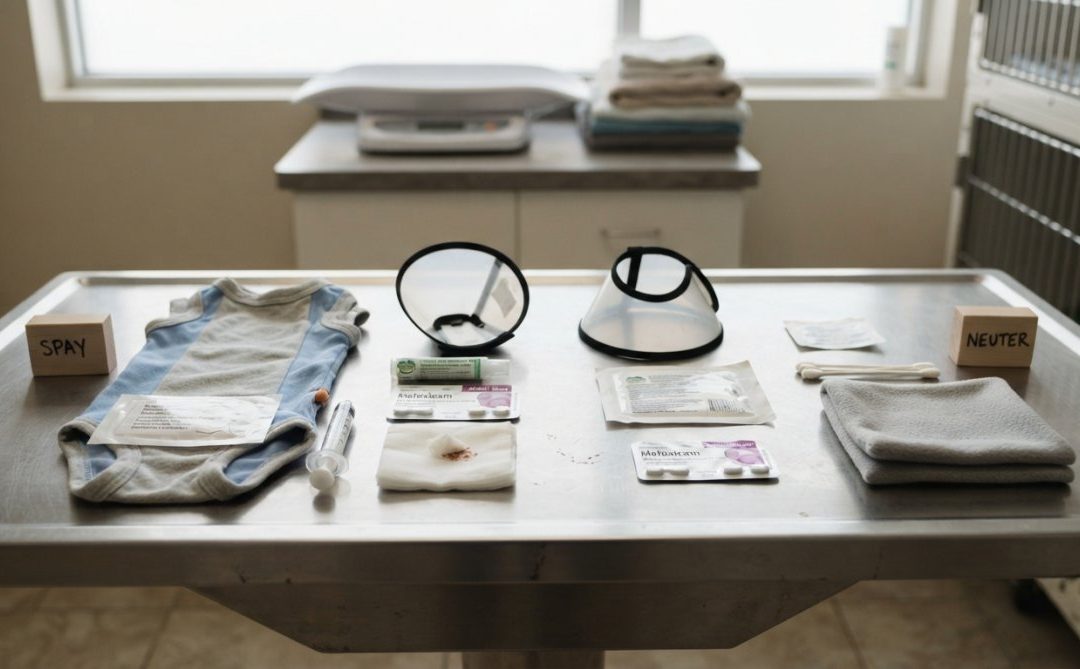
Alternatives to the standard E-collar:
-
Inflatable recovery collars: Less restrictive, prevent licking without blocking vision. Less effective for very flexible spines.
-
Recovery suits: Cover the incision entirely. Particularly useful for brachycephalic breeds and at night.
-
Bitter spray deterrents: Applied around (not on) the incision, these create aversive taste association. Use as a secondary layer, not standalone.
Ensure the E-collar fits correctly, you should fit two fingers between collar and neck. Loose collars allow dogs to maneuver around them.
According to veterinary post-operative care guidelines from the Veterinary Information Network, incision licking is responsible for a significant proportion of post-surgical complications requiring follow-up treatment.
Breed-specific considerations: Brachycephalic breeds like bulldogs struggle with standard E-collars; recovery suits work better. Long-snouted breeds like collies can reach around inflatable collars, making traditional cones more reliable.
In multi-pet households, separate the recovering dog from housemates during unsupervised periods, other animals may attempt to groom the incision site.
Recovery monitoring checklist:
-
Incision checked morning and evening daily
-
No spreading redness beyond immediate edges
-
Swelling decreasing or stable after day two
-
No cloudy, yellow, or odorous discharge
-
Sutures or staples intact with no visible gaps
-
Dog not showing pain when incision area is touched
-
E-collar or recovery suit worn at all times except supervised meals
-
Veterinarian contacted if any item fails
Post-surgical recovery is where the outcome of a neuter procedure is won or lost, and it is entirely in your hands. If you are preparing for an upcoming procedure or have questions about post-op protocols for your dog, cat, or rabbit in the Bedford, New Hampshire area, CorePet’s Spay Neuter Dental services are built around modern surgical techniques and individualized care that extends through your recovery plan. Book an appointment with the CorePet team to discuss your pet’s specific needs.
Frequently Asked Questions
How long does a dog need to stay calm after neuter surgery?
Most dogs need restricted activity for 7-14 days post-op, with the most critical period being the first 24-48 hours. Your veterinarian will provide specific recovery timeline guidance based on your dog's age and health. During this time, avoid running, jumping, and stairs. Leash walking at a slow pace may be permitted after the first few days, but always follow your veterinarian's instructions. Complete healing of the incision typically takes 2-3 weeks, though internal sutures dissolve on their own.
What happens if my dog runs around after being neutered?
Excessive activity can tear internal stitches, delay healing, and cause serious complications like bleeding or infection at the incision site. High-energy dogs are particularly at risk during post-surgical care. Even brief bursts of running or jumping can disrupt the surgical site. This is why confinement strategies—such as crate rest, baby gates, and leash-only walks—are essential. If your dog breaks activity restrictions, contact your veterinarian immediately to assess for potential damage.
How can I keep my dog calm and mentally stimulated without physical exercise after surgery?
Mental enrichment is crucial for keeping dogs calm during restricted activity. Use puzzle toys, sniff games, and lick mats to engage their mind without physical exertion. Hide treats in towels, offer long-lasting chews, or create DIY enrichment with cardboard boxes and treats. Interactive games like 'find it' (on a small scale) tire the brain without stressing the incision. Calming pheromones and sedatives prescribed by your veterinarian can also help. For high-energy dogs, these mental activities often work better than physical exercise for reducing anxiety.
What are the warning signs of infection after neuter surgery?
Watch for redness, swelling, discharge (especially pus or blood), or foul odor at the incision site. Other signs include fever, lethargy, loss of appetite, or excessive licking and chewing at the surgical area. Some mild swelling and discoloration are normal in the first few days, but increasing swelling or discharge warrants immediate veterinary attention. Monitor the incision daily and contact your veterinarian if you notice any concerning changes. Early detection of complications prevents serious infection and ensures proper post-op recovery.
This article was written using GrandRanker