Last Updated: November 1, 2026
Quick Summary
Ask your vet what the pre-operative exam includes, whether pre-surgical blood work is recommended, and how anesthetic risk is assessed for your dog. For dog spay surgery, also confirm the pain management plan, what the surgical estimate covers, fasting and water restriction timing, and who to call after hours.
- A pre-operative exam covers health history, vital signs, and often blood work.
- Blood work flags hidden problems before anesthesia.
- Confirm which pain medication goes home with your dog.
- Get fasting and water restriction timing in writing.
- Ask what warning signs should trigger a call, including incision problems and lethargy.
Table of Contents
- Questions to Ask Before Pet Surgery: Your Pre-Spay Checklist
- Dog Spay Surgery Preparation: Fasting, Water, and Home Setup
- Dog Spay Aftercare Instructions and Recovery Time
- Frequently Asked Questions
Questions to Ask Before Pet Surgery: Your Pre-Spay Checklist
A written list helps structure the pre-surgery consult. This guide covers the questions to ask your vet before dog spay surgery, from exam findings to aftercare planning.
A pre-operative exam is the health check your vet runs before scheduling a dog spay surgery, covering health history, vital signs, and often blood work. That visit is your best chance to ask direct questions.
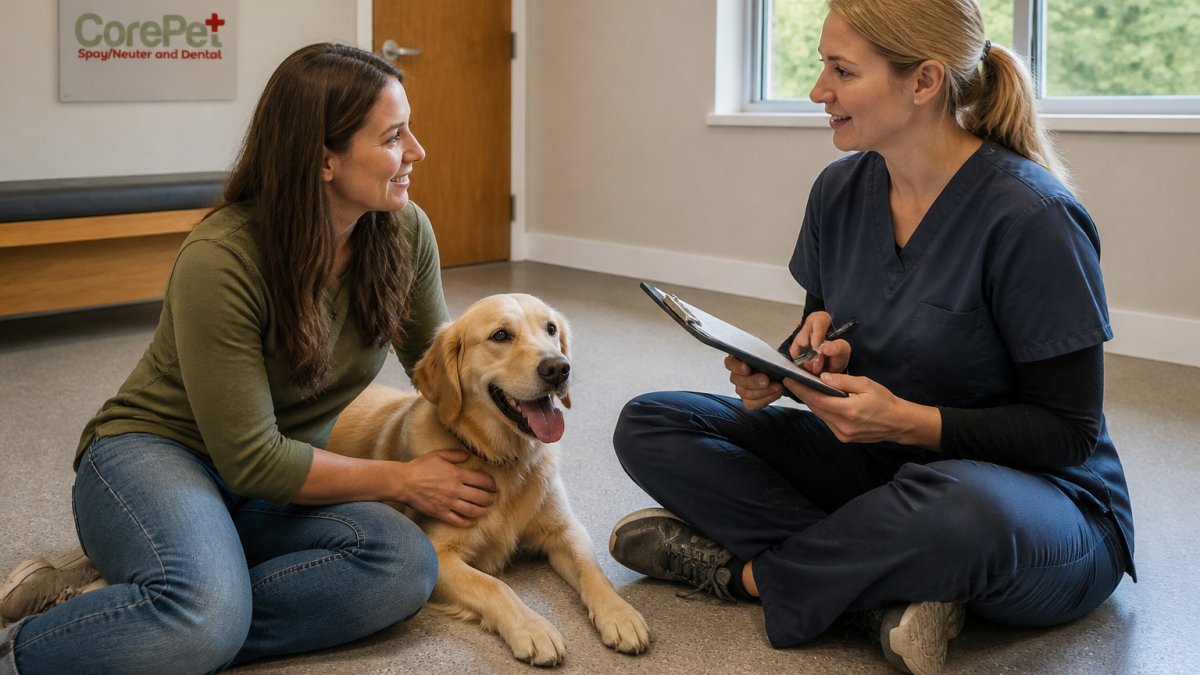
- What does the pre-operative exam include? Ask whether the health assessment covers vital signs, a heart check, and pre-anesthetic testing.
- Is pre-surgical blood work recommended for my dog? Blood work flags hidden problems before anesthesia.
- How is anesthetic risk assessed for my dog’s age, breed, and size? Ask who monitors anesthesia and how.
- What pain management plan is in place? Confirm which pain medication goes home with your dog.
- What exactly does the surgical estimate cover? Ask if anesthesia, blood work, pain medication, and the surgical procedure are bundled or added on.
- What are the fasting and water restriction instructions? Get the exact timing in writing.
- Who do I call after hours if something looks wrong? Get a real phone number, not a general line.
The American Veterinary Medical Association’s client resources on surgery explains why a pre-operative exam and health history matter before any surgical procedure. Read it before your appointment so the questions land.
One more question most owners forget: what warning signs should trigger a call? Ask about incision problems, lethargy, and appetite changes, and write the answers down.
Here are the seven questions to bring to your pre-surgery consult, each with what to confirm.
| Question | What to confirm |
|---|---|
| What does the pre-operative exam include? | Vital signs, heart check, pre-anesthetic testing |
| Is pre-surgical blood work recommended? | Blood work flags hidden problems before anesthesia |
| How is anesthetic risk assessed? | Who monitors anesthesia and how |
| What pain management plan is in place? | Which pain medication goes home with your dog |
| What does the surgical estimate cover? | Anesthesia, blood work, pain medication, procedure bundled or added |
| What are the fasting and water restriction instructions? | Get the exact timing in writing |
| Who do I call after hours? | Get a real phone number, not a general line |
Dog Spay Surgery Preparation: Fasting, Water, and Home Setup
Follow pre-operative instructions exactly, because fasting rules protect your dog during anesthesia. Call and confirm the timing rather than guessing.
Fasting means withholding food for the window your vet sets; water restriction is separate, and many vets allow water later than food. Never withhold food or water on your own schedule.
For a full walkthrough, read how to prepare your dog for surgery and whether your pet can eat before anesthesia.
Build a recovery area before surgery day: a quiet room away from stairs and other pets, a low washable bed, food and water within reach, a cone or recovery suit ready, and a note with medication instructions and the clinic’s number.
Dog Spay Aftercare Instructions and Recovery Time
Aftercare follows a simple rule: rest, watch the incision, and give medication exactly as directed. Ask your vet for the activity restriction window before surgery day.
Incision care means keeping the site clean and dry and stopping your dog from licking it. Check the incision daily and call your vet if you see swelling, discharge, spreading redness, or a gap in the line. The FDA’s guidance on safe medication use in animals is a useful reference for storing and giving pain medication correctly.
Give pain medication on schedule, even if your dog seems fine; skipping doses slows healing.
For a step-by-step plan, use these dog spay aftercare instructions. If the incision looks off, review the signs of infection after dog spay, and consider e-collar alternatives for dogs who fight the cone.
Letting your dog run, jump, or climb stairs too early can reopen the incision, so keep activity restricted for the entire window your vet gives you. Book the follow-up appointment before you leave the clinic.
Frequently Asked Questions
What should I ask my vet before my dog is spayed?
Ask about pre-anesthetic blood work, the anesthesia protocol, and how your dog will be monitored during dog spay surgery. Confirm what pain medication is sent home and get written dog spay aftercare instructions. Ask for a written estimate that clearly lists what is included and what would be an add-on. Also ask who to call after hours if the incision looks red or your dog refuses food.
Can my dog have water on the day of surgery?
Ask your vet what food and water restrictions apply before anesthesia. Follow your clinic’s exact dog spay surgery preparation instructions, because fasting rules vary by age and health. Do not guess. If your dog accidentally eats, call the clinic before drop-off; the procedure may need to be rescheduled for safety.
How long does dog spay surgery recovery time take?
Ask your vet how long activity should be restricted while the incision heals. Expect some drowsiness after surgery, then a gradual return to normal energy. Keep your dog leashed for walks and use a cone or recovery suit to protect the incision. Call your vet if you see swelling, discharge, or a sudden drop in appetite. Full dog spay surgery recovery time depends on your dog’s age, size, and overall health.
Spay surgery raises real questions, and the right clinic answers them before you ask. CorePet is a locally owned surgery center in New Hampshire focused on spay, neuter, and dental procedures, with modern equipment and individualized care at reasonable costs. Ask about the pre-operative exam, anesthesia monitoring, and what the estimate includes. Get started with CorePet and book an appointment with a team that walks you through every step.