Last Updated: November 4, 2026
Quick Summary
Choose a puppy toothbrush by size and bristle softness first: a compact head fits your puppy’s small mouth, while soft bristles protect young gums and enamel. A finger brush gives the most control for beginners, and a small handled brush works once your puppy accepts brushing.
- Veterinary teams rank brush size as the top factor for puppies and small-breed dogs.
- Soft bristles are the safe default for tender gums.
- Recheck the brush fit every few weeks through teething.
- Keep first brushing sessions under a minute and end on a calm note.
- Never use human toothpaste, and brush daily if possible.
Table of Contents
- Choosing the Right Puppy Toothbrush by Size and Bristle
- Finger Toothbrush for Dogs vs. a Handled Brush
- How to Brush Puppy Teeth Step by Step
- Getting a Puppy Comfortable With Toothbrushing
- When to Pause and Call a Vet
- Frequently Asked Questions
Choosing the Right Puppy Toothbrush by Size and Bristle
Start with puppy toothbrush size and bristle softness: a compact head fits your puppy’s small mouth, while soft bristles protect young gums and enamel. Veterinary teams rank brush size as the top factor for puppies and small-breed dogs (PetMD’s vet-verified dog toothbrush guide), and soft bristles are the safe default for tender gums (Ark Naturals guide to choosing a dog toothbrush). Recheck the fit every few weeks through teething.
| Brush Type | Best For | Watch For |
|---|---|---|
| Finger brush | Puppies new to brushing | Short reach on back teeth |
| Small handled brush | Puppies used to handling | Head must fit the mouth |
| Angled brush | Reaching back teeth | Less control for nervous puppies |
A human toothbrush only works as a backup: soft-bristled, flat-headed, and sized to the puppy’s mouth. For a wider plan, these reasons to choose professional pet dental care explain when a clinic visit makes sense.
Finger Toothbrush for Dogs vs. a Handled Brush
A finger toothbrush for dogs gives the most control for beginners, since you can feel where you are cleaning; VCA Animal Hospitals notes many owners find finger brushes easiest for starting a routine (VCA Animal Hospitals toothbrush guide). Handled brushes reach back teeth more easily once a puppy accepts brushing, but nervous puppies can jerk away from a longer handle. If a finger brush is not working, consider alternatives to traditional dental cleaning for small dogs.
How to Brush Puppy Teeth Step by Step
Brush in short, calm sessions built over one to two weeks; rushing the first attempt creates a puppy that fights the brush.
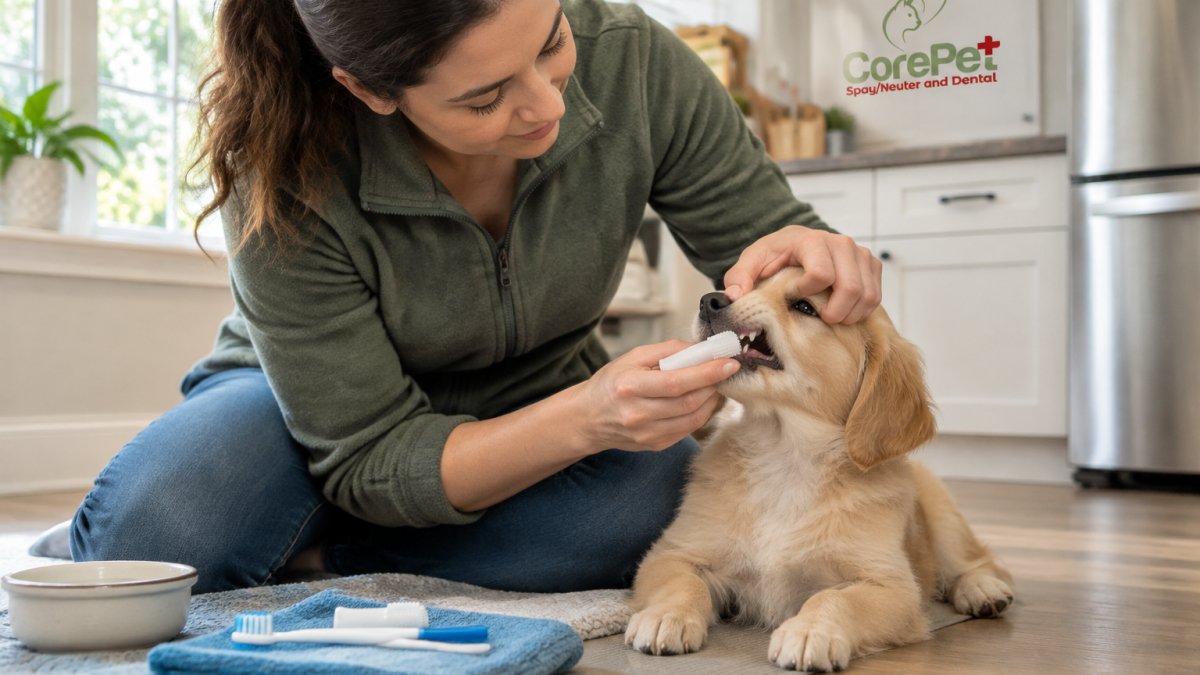
Let the puppy taste pet-safe toothpaste, rub a finger along the gums, then use the finger brush on front teeth. Lift the lip for back teeth, switch to a handled brush slowly, and brush daily if possible. Never use human toothpaste. A 2021 study in the NCBI comparison of dog dental home care methods supports the core point: home brushing keeps plaque in check between professional cleanings. For technique and frequency, see this guide on dog teeth cleaning.
Getting a Puppy Comfortable With Toothbrushing
Puppies accept brushing through gradual introduction, not force; a treat after each session teaches the puppy that the brush predicts something good. Keep sessions under a minute at first and end on a calm note. If a puppy panics, freezes, or snaps, stop and try again the next day.
When to Pause and Call a Vet
Pause home brushing and call a clinic if you notice bleeding gums that do not settle, loose teeth, persistent bad breath, or a puppy that refuses to eat. CorePet is a locally owned surgery center in New Hampshire focused on spay, neuter, and dental procedures for dogs, cats, and rabbits.
Frequently Asked Questions
At what age should you start brushing your puppy’s teeth?
Start as soon as your puppy comes home, usually around eight weeks. Begin with short sessions where you simply lift the lip and touch the gums, then add a soft puppy toothbrush once your puppy stays calm. Gradual introduction and positive reinforcement are generally recommended over forcing a full brushing on day one. Puppies lose baby teeth and grow adult ones, so keep the pressure light and stop if the gums look sore.
Is a finger toothbrush for dogs better than a handled toothbrush for puppies?
A finger toothbrush for dogs gives you more control and feel inside a small mouth, which is why many owners start there. Finger brushes can give owners more dexterity during early training. A handled brush with a compact head and soft bristles reaches the back teeth better once your puppy accepts the routine. Many owners use both: finger brush first, then a small handled or angled brush as the puppy grows.
What should I check for dog toothpaste safety before brushing?
Only use toothpaste made for dogs. Human toothpaste can contain fluoride and xylitol, which dogs should not swallow. Pet-safe toothpaste comes in flavors like poultry or peanut butter that make brushing easier. Check the label for the ingredient list and avoid anything with xylitol. If your puppy has a health condition or is on medication, ask your veterinarian before starting, and pause brushing and call your vet if you see bleeding gums or swelling.
A puppy’s first toothbrush shapes how the whole routine goes. Start with the right size, soft bristles, and a slow introduction, and most puppies settle into brushing within a couple of weeks. If dental concerns come up along the way, CorePet offers focused dental care with modern equipment and individualized attention. Get started with CorePet and give your puppy a calmer path to better oral health.