Last Updated: October 27, 2026
Quick Summary
To safely transport your rabbit to the vet, use a hard-sided carrier with a solid floor and secure door, buckle it level on the back seat, and keep it covered with a light towel. Successful rabbit transport means a quiet cabin, a steady driver, and never leaving your rabbit in a parked car.
- Choose a hard-sided carrier with room to turn around and a top-opening lid for vet visits.
- Line the carrier with a towel, add hay, and skip the water bottle during travel.
- Train your rabbit to enter the carrier days ahead and never chase it in.
- Stop every hour or so on longer trips to check breathing and offer water.
- Carry the carrier level and keep it covered in the waiting room.
Table of Contents
- Step 1: Choose the Best Rabbit Carrier for Vet Visits
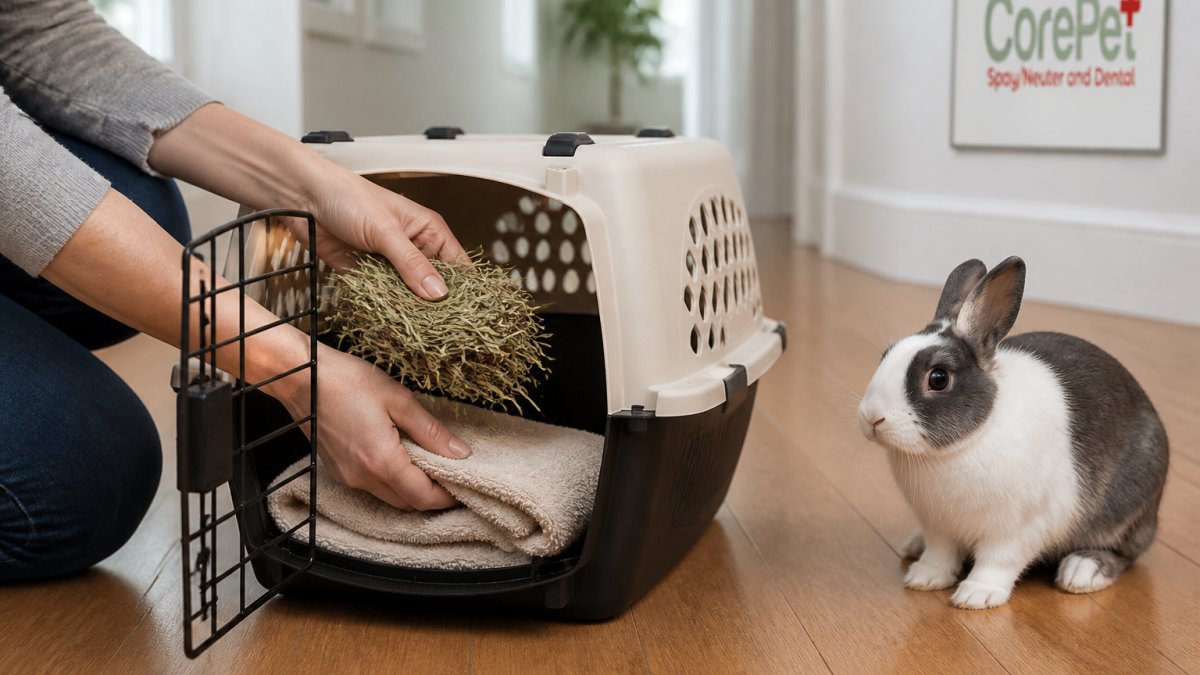
- Step 2: Set Up Your Rabbit Travel Carrier for Comfort and Safety
- Step 3: Secure the Carrier in Your Vehicle for Rabbit Transport
- Step 4: Train Your Rabbit to Enter the Carrier Before Vet Day
- Step 5: Keep Your Rabbit Calm in the Car
- Step 6: Plan for Temperature, Ventilation, and Long-Distance Travel
- Step 7: Handle Arrival and the Trip Home Safely
- Frequently Asked Questions
Step 1: Choose the Best Rabbit Carrier for Vet Visits
The best rabbit carrier for vet visits is hard-sided, with a secure door, room to turn around, and a solid floor. Avoid kitten-sized carriers, rabbits need room to stand and lie flat, but too large a carrier lets them slide during braking. For a vet visit, a top-opening carrier lets clinic staff lift your rabbit out safely. See safe spay surgery for rabbits in NH.
Step 2: Set Up Your Rabbit Travel Carrier for Comfort and Safety
Line the carrier with a towel for traction, add a handful of hay, and include something that smells like home. For more on keeping your rabbit comfortable during recovery, see how to manage rabbit post-surgery pain at home safely. Skip the water bottle, it leaks and most rabbits won’t drink while moving. Offer water before you leave and on arrival.
Step 3: Secure the Carrier in Your Vehicle for Rabbit Transport
Buckle the carrier on the back seat or wedge it on the floor behind a front seat. If your rabbit is heading in for a spay, you can review the surgical safety standards for rabbit spays the clinic follows. Rabbit transport goes wrong when the carrier moves, a loose carrier tips on turns and terrifies your rabbit. Keep it level, never stacked or on a lap, out of direct sun and away from cold vents. Cabin travel is fine; cargo areas are not.
Once the carrier is secure, contact the clinic to confirm your appointment time.
Step 4: Train Your Rabbit to Enter the Carrier Before Vet Day
Start carrier training days before the appointment. Leave the carrier open with a treat inside and let your rabbit explore on its own schedule, one that has napped in it loads far easier. Never chase a rabbit into a carrier. If your rabbit freezes, lift it with one hand under the chest and one under the hindquarters, then lower it in rear-first.
Step 5: Keep Your Rabbit Calm in the Car
Keeping a rabbit calm in the car comes down to a covered carrier, a quiet cabin, and a steady driver. Drape a light towel over part of the carrier, leaving ventilation open, and talk softly. Feed and water before loading, not during. Travel stress shows as fast breathing, thumping, or a rabbit that won’t move on arrival.
Step 6: Plan for Temperature, Ventilation, and Long-Distance Travel
Most rabbits handle an hour or two in a ventilated carrier with a comfortable cabin. Temperature is the risk most owners miss: a rabbit in a hot car overheats quickly, and cold drafts are just as bad. In New Hampshire, summer errands and winter cold both matter. Never leave a rabbit in a parked car, even briefly. For a longer trip, stop every hour or so to check breathing and offer water from a shallow dish.
Here are the key travel limits and checks the article sets out for a safe trip.
| Item | Value | Note |
|---|---|---|
| Typical trip most rabbits handle | An hour or two | In a ventilated carrier with a comfortable cabin |
| Check interval on longer trips | Every hour or so | Check breathing and offer water from a shallow dish |
| Parked car | Never, even briefly | A rabbit in a hot car overheats quickly |
| Cold drafts | Just as bad as heat | Summer errands and winter cold both matter in New Hampshire |
Step 7: Handle Arrival and the Trip Home Safely
At the clinic, carry the carrier level and keep it covered in the waiting room, never a high counter. Tell staff your rabbit is inside before you open it. The ride home matters as much as the ride in: a rabbit waking from anesthesia needs a warm, quiet carrier, a smooth drive, and a recovery space ready at home. Watch your rabbit for the first few hours after a procedure.
Frequently Asked Questions
How do I secure a rabbit carrier in the car?
Place the carrier on the back seat and thread a seat belt through the handle or around the carrier’s base to hold it firmly. The carrier should sit level and not slide when you brake. Avoid placing it on a passenger’s lap or in the cargo area. For extra stability, wedge it between the seat and the front seat back, or use a non-slip mat underneath.
Should I put hay and a litter box in my rabbit’s carrier?
Yes, a thin layer of hay gives your rabbit something familiar to nibble and helps reduce stress during rabbit transport. Skip a full litter box, which can slide and spill. A towel or blanket on the bottom provides traction so your rabbit’s feet do not slip. Keep the setup simple and secure so nothing shifts during the drive.
How long can a rabbit safely travel in a carrier?
Most healthy rabbits handle a car trip of one to two hours well for a vet visit. Offer hay and check on your rabbit during breaks, and never leave a rabbit in a parked car in warm or cold weather. For longer trips, plan rest stops and talk with your veterinarian about how to keep your rabbit hydrated and comfortable.
Transporting a rabbit to the vet is a skill, and most of it happens before the engine starts: the right carrier, a calm setup, and a secure spot in the car. CorePet focuses on spay, neuter, and dental surgery for rabbits, with modern equipment and a team that works with these patients regularly. If your rabbit needs a procedure, get started with CorePet and book a visit to confirm what to expect on the day.