Table of Contents
Last Updated: May 27, 2026
Getting your dog spayed is one of the most responsible decisions you can make as a pet owner, and an affordable dog spay is more accessible than most people realize. CorePet has helped hundreds of pet owners navigate the process of finding quality, low-cost sterilization care without sacrificing safety or compassion. Below, we’ll show you exactly how to find a clinic, what to expect on surgery day, and how to support your dog through a smooth recovery. But first, here’s what most guides get wrong: the cheapest option and the best value option are rarely the same thing.
Spaying is a surgical procedure that removes a female dog’s reproductive organs, eliminating the ability to reproduce and reducing the risk of several serious health conditions. Understanding what separates a trustworthy low-cost clinic from a risky one is the knowledge that actually saves you money and stress in the long run.
Why an Affordable Dog Spay Is Worth Every Penny
The case for spaying your dog goes far beyond convenience. Sterilization is one of the highest-impact interventions in companion animal health, and the benefits compound over your dog’s lifetime.
Health Benefits for Your Dog
Spaying eliminates the risk of pyometra, a life-threatening uterine infection that commonly affects unspayed females and frequently requires emergency surgery. It also significantly reduces the risk of mammary tumors, particularly when the procedure is performed before your dog’s first or second heat cycle. According to the American Veterinary Medical Association’s pet health resources, spayed females also avoid the physical stress of repeated pregnancies and the hormonal fluctuations associated with heat cycles.
Beyond disease prevention, many pet owners notice behavioral changes after spaying. Territorial behavior and marking behavior linked to hormonal cycles tend to decrease. Dogs are generally calmer and less prone to roaming, which reduces the risk of accidents and injuries.
Key TakeawaySpaying before the first heat cycle offers the greatest long-term health benefit. The longer you wait, the more the protective effect against mammary tumors diminishes.
Fighting Pet Overpopulation in Your Community
Pet overpopulation is a genuine crisis in most communities across the United States. Animal shelters are strained, and millions of companion animals are euthanized each year because there simply aren’t enough homes. Spay and neuter programs are the most effective tool for building a no-kill community over time.
Every dog spayed removes the potential for dozens of unplanned litters over a lifetime. That math adds up fast at a community level. When pet owners access affordable dog spay services, they’re not just making a personal health decision. They’re participating in a public health solution.
When to Spay a Dog: Timing That Affects Cost and Safety
The right age to spay a dog depends on breed, size, and individual health factors. For most small to medium breeds, veterinarians typically recommend spaying between five and six months of age. For large and giant breeds, many licensed veterinarians now suggest waiting until twelve to eighteen months, when skeletal development is more complete.
Timing matters for cost too. A dog in heat or a pregnant dog requires more complex surgery, which takes longer and carries higher anesthetic risk. Many low-cost clinics charge additional fees for dogs in heat or with a cryptorchid condition (undescended testicles in males, though this applies to neuter procedures). Scheduling during a routine window keeps the procedure straightforward and the cost predictable.
The common advice to “wait until after the first heat” is increasingly outdated for small breeds. Current guidance from veterinary organizations supports early spaying for most dogs, and the evidence on mammary tumor prevention strongly favors earlier intervention.
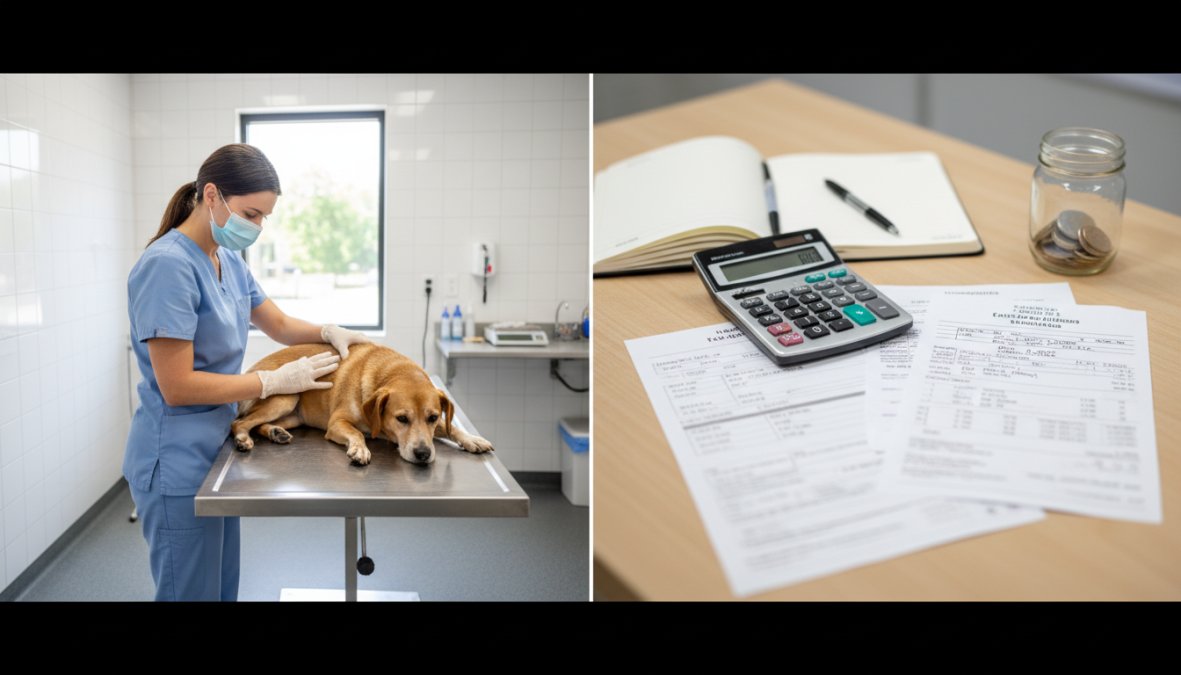
A licensed veterinarian in scrubs gently examining a calm dog on a stainless steel exam table inside a clean, modern veterinary clinic, with bright overhead lighting and organized medical equipment visible in the background
The Five Questions to Ask Any Clinic Before You Book
These questions are not meant to be adversarial. They are the questions a well-informed pet owner asks, and a clinic with strong safety standards will welcome them.
1. Who performs the surgery, and what are their credentials? A licensed veterinarian must perform the procedure. Ask specifically whether the surgeon is a licensed DVM and whether they have additional surgical training or experience. At high-volume clinics, it is also reasonable to ask how many spay procedures the surgical team performs per week, volume is a legitimate proxy for consistency.
2. Is a dedicated anesthesia monitor assigned to each patient? In a well-run surgical suite, a veterinary technician is assigned specifically to monitor the anesthetized patient throughout the procedure, not splitting attention between the surgical field and the anesthesia equipment. This is a meaningful safety distinction, particularly at high-volume clinics where multiple procedures may run simultaneously.
3. What pain management protocol is used before, during, and after surgery? Modern veterinary surgical standards include pre-operative pain management (administered before the procedure begins, not just after), intraoperative pain control, and a post-operative protocol that sends the dog home with appropriate medication. A clinic that provides only post-operative pain medication, or that treats pain management as an optional add-on, is operating below current standards of care.
5. What is the protocol if a complication occurs during or after surgery? This question reveals more about a clinic’s safety culture than almost any other. A well-prepared clinic will have a clear answer: an on-site protocol for intraoperative emergencies, and a defined referral relationship with a 24-hour emergency facility for post-operative complications. A vague answer, “we handle it”, is not sufficient.
Watch OutA low price is not a red flag on its own. A low price combined with vague answers to any of the five questions above is. The clinics that cut corners on safety are rarely the ones that advertise it, they are the ones that become evasive when asked direct questions about their protocols.
Eligibility Requirements and Zip Code Restrictions
Many subsidized programs restrict access based on zip code eligibility, household income, or pet ownership status. Some programs are limited to residents of specific counties or cities. Others prioritize community cats, feral animals, or pets belonging to households below a certain income threshold.
Before booking, confirm:
-
Whether your zip code qualifies for the subsidized rate
-
Whether your dog’s age, weight, or breed affects eligibility
-
Whether proof of residency or income documentation is required at check-in
-
Whether the subsidized rate applies to the base procedure only, or also to add-ons like blood work and vaccinations
Watch OutShowing up without required documentation can result in rescheduling or being charged the full rate. Call ahead and ask exactly what you need to bring on surgery day. Confirm the documentation requirements in writing if possible, policies change, and a phone confirmation from a front desk staff member is not always reflected in what happens at check-in.
Affordable Dog Spay Pricing: What’s Included and What’s Not
Pricing for an affordable dog spay varies depending on the provider type, your location, and your dog’s size and health status. CorePet publishes its pricing directly on its website, which is the clearest way to compare actual costs rather than estimates.
As a general framework, here’s how to think about what’s typically included versus what may be billed separately:
|
Service Item |
Typically Included |
Often Add-On |
|---|---|---|
|
Surgical procedure |
Yes |
– |
|
General anesthesia |
Yes |
– |
|
Basic anesthesia monitoring |
Yes |
– |
|
Pre-surgical exam |
Varies |
Sometimes |
|
Post-operative pain medication |
Varies |
Often extra |
|
E-collar (cone) |
Varies |
Often extra |
|
Rabies vaccination |
No |
Add-on |
|
DHPP or FVRCP vaccination |
No |
Add-on |
|
Microchip |
No |
Add-on |
|
Flea preventative |
No |
Add-on |
|
Blood work / pre-anesthetic panel |
No |
Add-on |
Common Add-On Costs to Budget For
The base surgery fee is rarely the final number. A realistic budget for an affordable dog spay should account for several common additions.
Pre-anesthetic blood work is one of the most important add-ons to consider, especially for dogs over five years old or those with unknown health histories. It screens for organ function issues that could make anesthesia riskier. Many clinics offer this as optional, but skipping it on an older dog is a gamble that can cost far more if complications arise.
If your dog isn’t current on vaccinations, most clinics require proof of a current rabies vaccination before surgery. DHPP (for dogs) is also commonly required. Budget for these if your dog is overdue.
A booking deposit is standard at many clinics and is typically applied toward the final bill. Confirm the refund policy if you need to reschedule.
Spay and Neuter Financial Assistance Beyond the Clinic
The clinic’s posted price is only one variable in what you’ll actually pay. For pet owners who earn too much to qualify for income-restricted programs but still find the surgery cost a genuine hardship, a second tier of financial tools exists, and most guides never mention it. Understanding how each option works, not just that it exists, is what lets you actually use them.
Veterinary Financing: CareCredit and Scratchpay
CareCredit is a healthcare credit card accepted at a large number of veterinary practices, including many spay and neuter clinics. It offers promotional financing periods, commonly six, twelve, or eighteen months, during which no interest accrues if the balance is paid in full before the period ends. If the balance is not paid in full by the end of the promotional window, deferred interest is applied retroactively to the original purchase amount, which can be a significant surprise. Use CareCredit only if you have a realistic plan to pay the balance before the promotional period closes.
Scratchpay operates differently. It functions more like a personal installment loan than a revolving credit line, with fixed monthly payments and a clear payoff date. Approval decisions are typically fast, and Scratchpay is often available at clinics that do not accept CareCredit. For pet owners with limited or damaged credit, Scratchpay’s approval criteria tend to be more accessible than traditional credit cards.
Both options can be applied for online before your appointment, so you arrive knowing your approved amount rather than discovering a financing gap at check-in.
Pro TipIf your clinic accepts both CareCredit or Cherry, compare the actual APR and promotional terms for your specific approval before choosing. The promotional rate that looks better on the surface may carry a higher deferred interest penalty if you miss the payoff window.
Stacking Multiple Sources
Nothing prevents you from combining assistance sources. A common pattern is to apply for a grant program first, use that approval to reduce the financed amount, and then put the remainder on a short-term CareCredit promotional period. Even a partial grant that covers the add-on costs, blood work, vaccinations, the e-collar, meaningfully reduces the amount that needs to be financed.
Key TakeawayThe pet owners who pay the least for a spay are rarely the ones who found the cheapest clinic. They are the ones who started the financial research four to six weeks before the appointment and combined two or three assistance sources. Start early, apply broadly, and confirm what each program will and will not cover before surgery day.
How to Prepare Your Dog for Surgery: A Pre-Op Checklist
Preparation directly affects surgical outcomes. A well-prepared dog is safer under anesthesia and recovers faster. Here’s a practical checklist for the days leading up to surgery.
Pre-Surgery Preparation Checklist:
-
Confirm your appointment date, drop-off time, and pick-up window
-
Verify vaccination records are current (rabies, DHPP or FVRCP)
-
Ask the clinic whether a pre-anesthetic blood panel is recommended or required
-
Withhold food after midnight the night before surgery (water is typically fine until a few hours before)
-
Do not apply flea preventative or topical medications within 48 hours of surgery
-
Bring a copy of vaccination records to drop-off
-
Confirm payment method accepted (cash, card, Care Credit)
-
Arrange transportation for pick-up (your dog will be groggy and should not be left alone in a car)
-
Prepare a quiet recovery space at home with clean bedding before you leave
Vaccination and Fasting Requirements
Most clinics require proof of current rabies vaccination before performing any surgical procedure. This is both a legal requirement in most states and a basic safety standard. If your dog’s rabies vaccination is expired, schedule that appointment first and allow a few days before surgery.
Fasting is critical for anesthesia safety. A dog with food in its stomach during general anesthesia risks aspiration, which can be fatal. Follow the clinic’s specific fasting instructions exactly. Most require no food after midnight, but some have different protocols for puppies or very small dogs.
Anesthesia Safety: What Pet Owners Should Know
Anesthesia is the aspect of spay surgery that makes most pet owners nervous. The fear is understandable, but modern anesthesia protocols in the hands of a licensed veterinarian carry very low risk for healthy dogs.
Risk increases with age, obesity, brachycephalic breeds (flat-faced dogs like Bulldogs and Pugs), and underlying health conditions. This is why pre-anesthetic blood work matters. It identifies kidney or liver function issues that affect how a dog metabolizes anesthetic drugs.
Ask your clinic:
-
What monitoring equipment is used during surgery (pulse oximeter, ECG, capnography)?
-
Is a veterinary technician dedicated to anesthesia monitoring throughout the procedure?
-
What is the protocol if a dog shows an adverse reaction?
A clinic that answers these questions clearly and confidently is one worth trusting. Vague or dismissive answers are a red flag.
Pro TipAsk specifically whether the clinic uses isoflurane or sevoflurane gas anesthesia. Both are modern, well-tolerated options. Older protocols using injectable anesthesia alone carry higher risk for longer procedures.
Dog Spay Recovery Tips: A Day-by-Day Home Care Guide
Recovery is where most complications actually occur, and most of them are preventable with attentive home care. Dog spay recovery tips are only useful if you understand the reasoning behind them.

A medium-sized dog wearing a protective cone collar resting comfortably on a soft dog bed at home, with a concerned owner sitting on the floor nearby watching attentively in warm indoor lighting
The incision site is the primary concern during recovery. A spay involves opening the abdominal cavity, which means the incision goes through skin, muscle, and internal tissue. That heals from the inside out, and disrupting that process, through excessive movement, licking, or moisture, causes the most common complications.
Days 1-3: Immediate Post-Op Care
Your dog will come home groggy, disoriented, and possibly nauseous from anesthesia. This is normal. The priority in the first 72 hours is rest, hydration, and preventing interference with the incision site.
What to expect:
-
Lethargy and sleepiness for 12-24 hours post-surgery
-
Reduced appetite for the first day (offer small amounts of water and bland food)
-
Mild shivering or whining as anesthesia wears off
-
Swelling or slight redness around the incision site (normal in small amounts)
What to do:
-
Keep the e-collar (cone) on at all times, including during sleep
-
Restrict activity to short, leashed bathroom walks only
-
Administer post-operative pain medication exactly as prescribed
-
Keep the incision dry (no baths, no swimming)
-
Check the incision site twice daily for signs of infection
Call the clinic immediately if you see:
-
Excessive swelling, discharge, or opening of the incision
-
Pale gums or extreme lethargy beyond 24 hours
-
Vomiting that persists beyond the first day
-
Bleeding from the incision site
Days 4-14: Monitoring the Incision Site
This is the stage where most pet owners make mistakes. The dog feels better, starts acting more like herself, and the temptation to ease restrictions becomes strong. Resist it.
Internal sutures are still healing through day 14. The external incision may look closed and healed by day 7, but the deeper tissue layers are not. Allowing jumping, running, or rough play during this window risks reopening the incision internally, which is a veterinary emergency.
According to veterinary surgical care guidelines from the American Animal Hospital Association, most dogs can return to normal activity levels after the two-week mark, pending a post-operative check confirming the incision has healed properly.
Days 4-14 checklist:
-
Continue e-collar use until cleared by your veterinarian
-
Limit activity to leashed walks only (no running, jumping, or stairs if possible)
-
Check incision once daily for swelling, discharge, or suture separation
-
Keep the incision dry and clean
-
Return for a post-operative recheck if one was scheduled (highly recommended)
-
Transition back to regular food gradually if appetite was reduced
A normal healing incision will show a thin, closed line with minimal surrounding redness by day 10. Some bruising is normal. Green or yellow discharge, a foul smell, or a gap in the incision are not normal and require same-day veterinary attention.
Watch OutRemoving the e-collar early is the most common mistake during spay recovery. Even one hour of licking can introduce bacteria to the incision site or pull out sutures. Keep the cone on until your vet confirms the incision is fully healed.
The two-week recovery window moves quickly. A dog that comes through surgery well and receives attentive home care is typically back to full activity by week three.
Finding an affordable dog spay that doesn’t cut corners on safety is genuinely possible, but it requires knowing what to look for and asking the right questions. CorePet was built specifically for this: a locally owned surgery center that focuses exclusively on spay, neuter, and dental procedures, using modern surgical techniques and equipment to deliver safe, individualized care at reasonable costs. There’s no guesswork about what’s included, and the surgical team performs these procedures every day. Book an appointment with CorePet and give your dog the care she deserves, at a price that makes sense.
Frequently Asked Questions
How much does it cost to spay a dog without insurance?
The cost of an affordable dog spay varies widely depending on your location, the dog's size and weight, and the type of provider. Low-cost clinics and non-profit spay and neuter centers typically charge significantly less than full-service private practices. Add-on services like pre-surgical bloodwork, microchipping, rabies vaccination, or post-operative pain medication can increase the total. Check CorePet's pricing page for current rates and what's included in the surgery fee.
Are low-cost spay and neuter clinics safe for dogs?
Yes, reputable low-cost spay and neuter clinics are generally safe. They employ licensed veterinarians who follow the same surgical sterilization standards as full-price practices. The key is to verify that the clinic uses proper anesthesia protocols, modern equipment, and employs credentialed staff. Ask whether a veterinarian — not just a technician — performs the surgical procedure and monitors anesthesia throughout the surgery drop-off and recovery period.
What is the best age to spay a dog?
The recommended age to spay a dog depends on breed and size. Smaller breeds are often spayed around six months of age, while larger and giant breeds may benefit from waiting until twelve to eighteen months to allow proper physical development. Spaying before the first heat cycle can reduce the risk of certain reproductive organ conditions. Your veterinarian can give individualized guidance based on your dog's breed, weight, and overall pet health.
What should I expect during dog spay recovery?
Dog spay recovery typically takes ten to fourteen days. The first few days require strict rest, limited activity, and monitoring the incision site for swelling or discharge. Your dog may receive post-operative pain medication to manage discomfort. An e-collar prevents licking the wound. Avoid baths and strenuous exercise until the vet clears your pet. Following dog spay recovery tips closely — including keeping the area clean and dry — significantly reduces the risk of complications.
Where can I find spay and neuter financial assistance?
Beyond low-cost clinics, spay and neuter financial assistance is available through local humane societies, animal services departments, breed-specific rescue organizations, and national programs. Some pet owners qualify for income-based subsidies or vouchers that cover part or all of the surgical procedure cost. Microchip registration programs and local no-kill community initiatives sometimes bundle financial aid with sterilization services. Searching by zip code eligibility on your county's animal services website is a good starting point.