Table of Contents
- What Is Rabbit Spaying (Ovariohysterectomy) and Why It Matters
- What to Expect During Rabbit Spaying: Surgery Day Walkthrough
- Rabbit Spay Recovery Time: What the Timeline Looks Like
- Post-Operative Care for Rabbits: A Step-by-Step Protocol
- What to Expect During Rabbit Spaying Recovery: GI Stasis Warning Signs
- Rabbit Spay Complications: Risks, Red Flags, and When to Call Your Vet
- Financial Planning: Understanding the Cost of Rabbit Spaying
- Conclusion
Last Updated: May 23, 2026
Rabbit spaying is one of the most consequential health decisions you will make for your doe, yet most owners walk into surgery day with little more than a vague sense of what happens next. Understanding what to expect during rabbit spaying, from the pre-surgical preparation through the final suture check, transforms that anxiety into confidence. This guide from CorePet covers every stage of the process in practical detail, including the recovery logistics that most veterinary guides skip entirely. Below, we walk through surgery day, post-op care protocols, GI stasis warning signs, and how to set up a recovery environment that actually works.
Here is what most guides get wrong: they focus almost entirely on the "why" of spaying and leave owners unprepared for the "how." The real challenge is not convincing you that spaying is worthwhile. The real challenge is getting your rabbit safely through recovery.
What Is Rabbit Spaying (Ovariohysterectomy) and Why It Matters
Ovariohysterectomy is the complete surgical removal of a female rabbit’s uterus and both ovaries. The name breaks down simply: ovario (ovaries) + hyster (uterus) + ectomy (surgical removal). It is not a variation of the procedure performed on dogs and cats, it is a categorically different surgery performed on an animal with distinct anatomy, a unique digestive physiology, and a reproductive system that creates serious disease risk at a much younger age than most owners realize.
Understanding what makes rabbit spaying different from other species is not just academic. It directly affects which clinic you should choose, what questions to ask before surgery, and why the stakes of getting this wrong are higher than for routine small animal procedures.
The Rabbit Reproductive System: Why the Anatomy Creates Urgency
The rabbit uterus is bicornuate, meaning it has two fully separate uterine horns, each connecting independently to the cervix. This is anatomically distinct from the human or feline uterus and means the surgeon must locate, ligate, and remove both horns completely during the procedure. A partial removal, leaving one horn, would leave residual hormonal tissue and ongoing disease risk.
Rabbits are induced ovulators, meaning they do not have a fixed estrous cycle the way dogs and cats do. Instead, ovulation is triggered by the physical act of mating. This means a doe is reproductively available at almost any time, can become pregnant within hours of contact with an intact buck, and carries a gestation period of approximately 28 to 32 days. A single unspayed doe can produce multiple litters per year under the right conditions.
The combination of continuous hormonal activity and a uterus that is essentially always in a state of reproductive readiness creates a specific and well-documented disease risk that accelerates with age.
The Disease Risk Timeline: Why Age Matters More Than Most Owners Know
The most important fact about uterine adenocarcinoma, the malignant cancer of the uterine lining that is the leading cause of death in intact does, is how early and how predictably it develops.
According to House Rabbit Society guidelines on reproductive health, the risk of uterine adenocarcinoma increases substantially after age two and continues climbing. Some estimates from rabbit welfare organizations suggest the majority of unspayed does over four years old show some degree of uterine pathology, ranging from benign cysts to active malignancy.
This is not a disease that develops slowly and gives owners time to notice symptoms and respond. Uterine adenocarcinoma in rabbits can metastasize to the lungs and other organs before any external signs are visible. By the time a doe shows obvious symptoms, bloody urine, lethargy, a palpable abdominal mass, the disease may already be advanced.
The practical implication: spaying at six months eliminates this risk entirely. Spaying at three years reduces it but does not eliminate the possibility that early pathology is already present. Spaying at five years or later is still worthwhile for quality of life and behavioral reasons, but the primary preventive window has passed.
Recommended spay age: Most exotic veterinarians recommend spaying between four and six months of age, after the rabbit has reached physical maturity but before the uterus has been exposed to years of hormonal cycling. Some practitioners prefer to wait until six months to ensure the rabbit’s skeletal development is complete before placing her under anesthesia.
Why Rabbit Surgery Is Not the Same as Cat or Dog Surgery
This distinction matters for every owner choosing a clinic. Rabbit anesthesia carries a higher inherent risk than routine canine or feline anesthesia for several interconnected reasons:
1. Respiratory sensitivity. Rabbits have a relatively small lung capacity and are obligate nasal breathers. Anesthetic agents that cause even mild respiratory depression require more careful dosing and more attentive monitoring than in dogs or cats.
2. Cardiovascular fragility under stress. Rabbits are prey animals with a strong physiological stress response. The act of being handled, transported, and placed in an unfamiliar environment before surgery elevates cortisol and can affect cardiac stability under anesthesia. Experienced exotic anesthetists account for this in their pre-medication protocols.
3. Gastrointestinal sensitivity. Unlike dogs and cats, rabbits cannot vomit. Their gastrointestinal tract requires continuous motility to function safely. Any disruption, including the stress of surgery, the effects of anesthetic agents, or inadequate pain management post-operatively, can trigger GI stasis, the most common and most dangerous post-operative complication in rabbits. This is covered in detail in the GI stasis section below.
4. Temperature regulation. Rabbits lose body heat rapidly under anesthesia and require active warming during and after the procedure. A clinic without appropriate warming equipment for small exotic patients is a meaningful risk factor.
A veterinarian who performs rabbit spays regularly will have specific answers to questions about their anesthetic protocol, monitoring equipment, and warming procedures. A clinic that adapts its standard canine or feline protocol without rabbit-specific modifications is not the right choice for this procedure.
Health and Behavioral Benefits: The Full Picture
Eliminating the uterus and ovaries removes the risk of uterine adenocarcinoma and pyometra entirely. Pyometra, a life-threatening bacterial infection of the uterus, is another common consequence of leaving a doe intact and typically presents as a surgical emergency with a much higher risk profile than an elective spay in a healthy young rabbit.
False pregnancies, in which hormonal fluctuations cause a doe to pull fur, build nests, and become aggressive without any actual pregnancy, are also eliminated after spaying. These cycles are stressful for the rabbit and disruptive to bonded pairs.
Behavioral changes after spaying are significant and well-documented among rabbit owners. Hormone-driven behaviors, territorial urine spraying, aggression toward bonded companions, mounting, and persistent digging, typically reduce measurably within four to six weeks of surgery as circulating reproductive hormones clear the system. Bonding with other rabbits, whether a neutered male or another spayed female, becomes more stable once hormonal fluctuations are removed.
The procedure also supports broader rabbit welfare. Preventing unwanted pregnancies reduces the number of kits entering already-strained rescue systems, a consideration that matters to many owners beyond the individual health benefits for their own doe.
Spaying between four and six months eliminates uterine adenocarcinoma and pyometra risk entirely. The disease risk accelerates sharply after age two, making early spaying the most effective preventive intervention available for intact does. Rabbit surgery requires a clinic with specific exotic animal anesthetic experience, this is not a procedure to route through a general practice without confirming their rabbit-specific protocols.
What to Expect During Rabbit Spaying: Surgery Day Walkthrough
Surgery day follows a predictable sequence when you work with an experienced exotic veterinarian. Knowing the stages in advance removes the guesswork and helps you ask the right questions at drop-off.
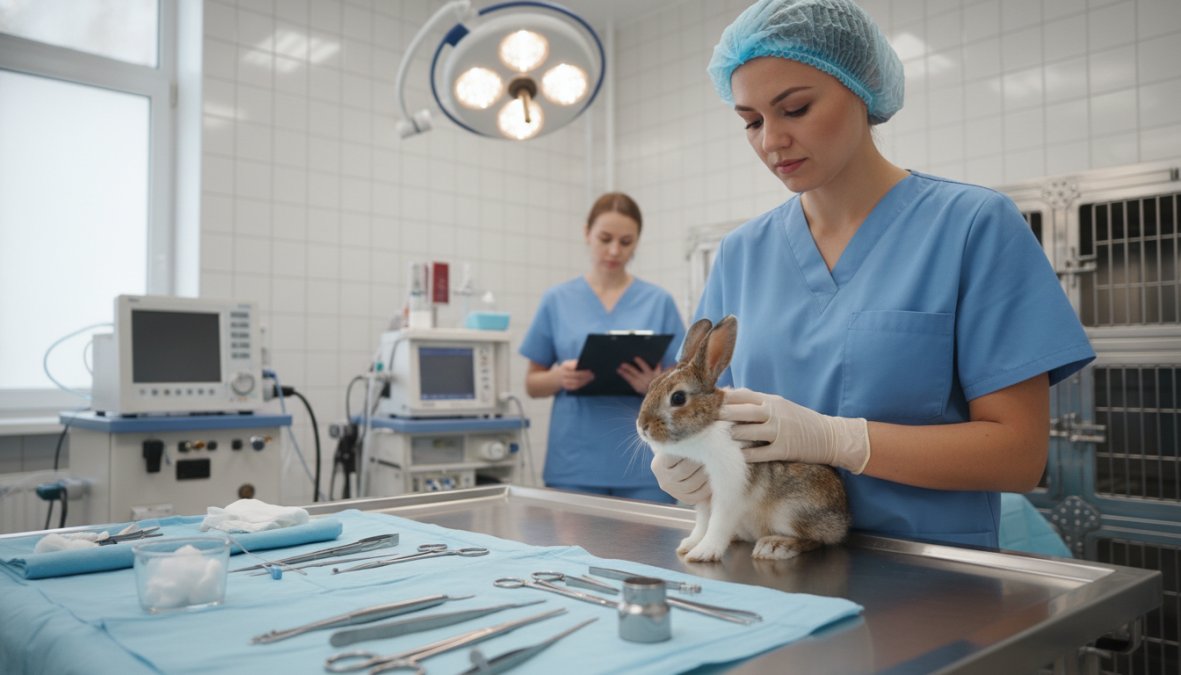
A veterinarian in scrubs gently examines a small rabbit on a stainless steel exam table in a clean, well-lit veterinary surgery room, checking the animal’s heart rate and abdomen before the procedure begins.
Pre-Surgical Fasting Protocols for Rabbits
This is the part that surprises most first-time rabbit owners: rabbits should NOT be fasted before surgery.
Unlike dogs and cats, rabbits cannot vomit. Withholding food before anesthesia does not reduce aspiration risk in rabbits; it increases the risk of dangerous GI slowdown. Rabbits require a continuous flow of food through the digestive tract to maintain gut motility. An exotic veterinarian will typically instruct you to feed your rabbit normally up until the morning of surgery, providing hay and water right up to drop-off.
If any clinic tells you to fast your rabbit for 12 hours before the procedure, that is a serious red flag. Rabbit-savvy surgical teams understand this distinction. At CorePet, the pre-surgical protocol is designed specifically for rabbit physiology, not adapted from canine or feline guidelines.
Anesthesia, Incision, and the Surgical Procedure
Rabbit anesthesia carries higher inherent risk than in dogs or cats, which is why choosing a clinic with specific exotic animal experience matters. The anesthetic protocol typically involves a combination of injectable sedation and gas anesthesia, with continuous monitoring of heart rate, respiratory rate, and body temperature throughout.
The surgical approach for an ovariohysterectomy in rabbits involves a ventral midline incision through the abdomen. The surgeon locates both uterine horns, the bicornuate uterus, and the ovaries, then ligates the blood supply before removing the reproductive tract. The incision is closed in layers with absorbable sutures internally and either sutures or staples at the skin surface.
Total surgical time for an uncomplicated spay is generally under 45 minutes in experienced hands. The rabbit is monitored closely during recovery from anesthesia before being cleared for discharge.
Never fast your rabbit before surgery. Withholding food from a rabbit for hours before anesthesia disrupts gut motility and significantly increases the risk of post-operative GI stasis.
Rabbit Spay Recovery Time: What the Timeline Looks Like
Rabbit spay recovery time typically spans 10 to 14 days for full incision healing, though most rabbits return to normal behavior within five to seven days. The first 48 to 72 hours are the most critical window for monitoring.
Here is a practical recovery timeline:
| Recovery Phase | Timeframe | What to Watch For |
|---|---|---|
| Immediate post-op | 0-12 hours | Alertness returning, eating within 4-6 hours |
| Early recovery | 12-72 hours | Fecal output resuming, appetite stabilizing |
| Active monitoring | Days 3-7 | Normal movement, incision site clean and dry |
| Healing phase | Days 7-14 | Suture/staple removal, full activity resumption |
The most common reason recovery extends beyond two weeks is a post-operative complication, most often GI stasis or incision interference. Both are preventable with the right care protocol.
Post-Operative Care for Rabbits: A Step-by-Step Protocol
Post-operative care for rabbits is more demanding than for most companion animals because the digestive system is so sensitive to stress, pain, and reduced movement. The discharge instructions your veterinarian provides are not suggestions. They are the protocol that keeps your rabbit out of the emergency clinic.
Follow these steps in sequence during the first 72 hours:
- Set up the recovery space before you bring your rabbit home. A quiet, warm, low-traffic area is non-negotiable.
- Offer hay immediately upon arrival home. Gut motility depends on fiber intake. Do not wait for your rabbit to "feel like eating."
- Monitor fecal output within the first four hours. No fecal pellets within six hours of returning home warrants a call to your vet.
- Administer analgesics exactly on schedule. Pain causes reduced movement, which causes GI slowdown. Skipping doses is a false economy.
- Check the incision site morning and evening. Look for swelling, discharge, or signs of the rabbit chewing at the suture.
- Restrict jumping and climbing for the full recovery period. A single hard landing on an unhealed incision can cause serious complications.
- Keep your rabbit separated from bonded companions for at least the first 48 hours to prevent grooming of the incision site.
Recovery Cage Setup Checklist
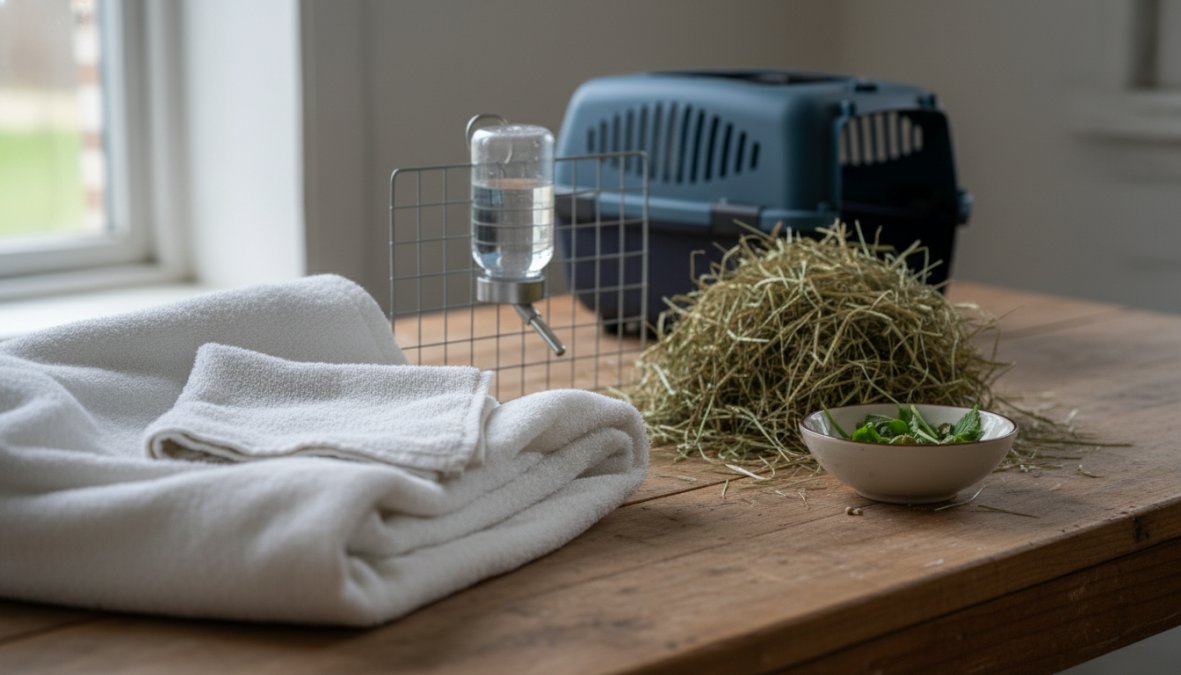
The recovery environment directly affects how quickly your rabbit heals. Use this checklist before surgery day:
- Low-sided enclosure (prevents jumping, allows easy access)
- Soft fleece or paper-based bedding (no loose substrates that can enter the incision)
- Hay available at all times (unlimited access, not rationed)
- Fresh water via bottle or heavy ceramic bowl
- Litter box with low entry point
- Hiding spot or covered area for security
- Thermometer to confirm ambient temperature stays above 65°F
- No ramps, platforms, or elevated surfaces
A recovery cage does not need to be large. It needs to be safe, warm, and stimulus-rich enough that your rabbit stays calm without being tempted to run and jump.
Pain Management Medication Schedule
Pain management after rabbit spay surgery is non-negotiable. Rabbits are prey animals that mask pain instinctively, which means a rabbit sitting quietly in the corner may be in significant discomfort rather than simply resting.
Your exotic veterinarian will typically prescribe analgesics such as meloxicam, an anti-inflammatory, for three to five days post-surgery. Some protocols also include buprenorphine for the first 24 hours. The schedule will look something like this:
- Days 1-3: Administer meloxicam every 24 hours, typically with food
- Days 1-2 (if prescribed): Buprenorphine every 6-8 hours as directed
- Days 3-5: Continue meloxicam, monitor appetite and activity for signs of breakthrough pain
Do not skip a dose because your rabbit "seems fine." Adequate pain management is what keeps your rabbit moving, eating, and producing fecal pellets. Movement drives gut motility. Gut motility prevents GI stasis.
:::pro tip
Syringe-feed Critical Care or a small amount of blended leafy greens if your rabbit refuses to eat within six hours of coming home. Getting fiber into the gut is more important in that window than coaxing voluntary eating.
:::
Appetite Monitoring and Fecal Output Tracking
Appetite and fecal output are your two most reliable indicators of post-operative health. Track both actively, not passively.
A healthy rabbit should begin eating within four to six hours of returning home. Fecal pellets should appear within six to eight hours. The pellets may be smaller or fewer than normal for the first 24 hours, but complete absence of fecal output for more than eight hours is an emergency signal.
Keep a simple log: note the time of each feeding and count fecal pellets at morning and evening checks. This sounds excessive until the moment it helps you catch a problem at hour seven instead of hour twenty-four.
What to Expect During Rabbit Spaying Recovery: GI Stasis Warning Signs
GI stasis is the most serious post-operative complication in rabbits, and it can become life-threatening within 24 to 48 hours of onset. Understanding what to expect during rabbit spaying recovery means knowing these warning signs by heart before you need them.
GI stasis is the condition in which the rabbit’s gastrointestinal tract slows or stops moving, causing gas buildup, pain, and potentially fatal organ damage if untreated.
Watch for these signs and treat each one as urgent:
- No fecal pellets for more than 8 hours after returning home
- Hunched posture with the rabbit pressed against the floor
- Teeth grinding (bruxism), which indicates significant pain
- Distended or hard abdomen when gently palpated
- Complete refusal to eat beyond the first 6 hours post-op
- Lethargy that does not improve as anesthesia wears off
If you observe two or more of these signs simultaneously, contact your veterinarian immediately. Do not wait until the next morning. GI stasis in rabbits moves fast.
According to Merck Veterinary Manual guidelines on rabbit gastrointestinal disease, early intervention in GI stasis cases significantly improves outcomes compared to delayed treatment. Time is the critical variable.
Rabbit Spay Complications: Risks, Red Flags, and When to Call Your Vet
Every surgical procedure carries risk. Rabbit spay complications are uncommon when the procedure is performed by an experienced exotic veterinarian using appropriate anesthetic protocols, but owners need to know what to monitor.
The most common rabbit spay complications include:
- GI stasis (addressed above): the leading post-operative concern
- Incision site infection: redness, swelling, discharge, or odor at the suture line
- Suture or staple removal by the rabbit: requires an Elizabethan collar and immediate veterinary contact
- Internal bleeding: extreme lethargy, pale gums, cold extremities within the first 24 hours
- Anesthetic reaction: rare but possible; symptoms include prolonged sedation or respiratory distress
Red flags that require same-day veterinary contact:
- Pale, white, or blue-tinged gums
- Breathing that appears labored or unusually rapid
- Temperature below 100°F or above 104°F
- Incision site that opens or shows active bleeding
- Complete behavioral shutdown lasting more than 12 hours post-anesthesia
The thing nobody tells you about rabbit surgery recovery is that the first 24 hours are genuinely more demanding than most owners anticipate. Plan to be home and attentive, not running errands.
As noted in American Veterinary Medical Association guidance on exotic animal care, rabbits require specialized post-operative monitoring distinct from standard small animal protocols due to their unique gastrointestinal physiology.
Financial Planning: Understanding the Cost of Rabbit Spaying
Rabbit spay surgery is consistently one of the most under-budgeted veterinary procedures among first-time rabbit owners, partly because rabbits are classified as exotic animals and their surgical costs do not follow the same pricing logic as routine dog or cat procedures. None of the top-ranking guides on this topic provide realistic numbers. This section does.
Realistic Price Ranges by Facility Type
Prices vary significantly by geography, facility type, and what is bundled into the surgical package. The ranges below reflect commonly reported owner experiences across the United States and United Kingdom and are intended as planning benchmarks, not guarantees.
| Facility Type | Typical Price Range (USD) | What Is Usually Included |
|---|---|---|
| Low-cost spay/neuter clinic (if rabbit-experienced) | $150-$300 | Basic anesthesia, surgery, standard sutures |
| General practice with exotic experience | $300-$500 | Pre-surgical exam, anesthesia monitoring, pain meds to go home |
| Dedicated exotic animal hospital | $500-$900+ | Full exotic anesthetic protocol, IV fluids, post-op monitoring, follow-up |
| Emergency or after-hours surgery (pyometra, etc.) | $1,000-$2,500+ | Emergency facility fees, intensive monitoring, extended hospitalization |
The price gap between a general practice and a dedicated exotic hospital is real, and it reflects genuine differences in anesthetic monitoring depth, staff training, and equipment. For a procedure that carries higher anesthetic risk than routine canine or feline surgery, the cost difference is often clinically justified.
In the UK, rabbit spay costs at general practices with exotic experience typically range from £150 to £350, with specialist referral centres charging £400 to £700 or more depending on complexity.
What Drives the Cost Up (and What You Can Negotiate)
Several line items commonly inflate the final invoice beyond the base surgical fee:
- Pre-surgical bloodwork: Some clinics require or strongly recommend a pre-anesthetic panel, particularly for rabbits over three years old. This adds £40-£120 / $50-$150 depending on the panel.
- IV catheter and fluid support during surgery: Standard at exotic hospitals, optional or absent at lower-cost clinics. Fluids during surgery help maintain blood pressure and support recovery, this is worth paying for.
- E-collar (Elizabethan collar): Often charged separately at $10-$25. Buy one in advance if your rabbit is a known chewer.
- Follow-up suture removal appointment: Some clinics include this in the surgical fee; others charge a separate consultation fee of $30-$75. Ask explicitly before booking.
- Post-operative Critical Care powder: Your vet may send you home with a small supply or recommend you purchase it. A 141g bag costs approximately $15-$25 and is worth having on hand regardless.
If a clinic quotes you a rabbit spay price at the very low end of the range and cannot explain their specific rabbit anesthetic protocol when asked, that is a red flag. The savings are not worth the increased anesthetic risk from a team without regular rabbit experience.
Pet Insurance and Exotic Animal Coverage
This is the area most rabbit owners discover too late: standard pet insurance policies frequently exclude rabbits entirely, or classify them as exotic animals with separate, more limited policy tiers.
If you are considering insurance for your rabbit, look specifically for policies that:
- Explicitly list rabbits as a covered species (not just ‘small animals’)
- Cover elective surgical procedures, not only accidents and illness
- Include pre-surgical examinations and anesthesia in the covered costs
- Offer a wellness or preventive care add-on that includes spay/neuter
In the UK, a small number of specialist exotic pet insurers cover rabbit spay under routine or preventive care riders. In the US, exotic pet insurance products exist but vary widely in what surgical procedures qualify. The key question to ask any insurer is: ‘Is an elective ovariohysterectomy in a rabbit covered under this policy, and is anesthesia included in that coverage?’
If insurance is not an option, a dedicated savings fund of $500-$800 set aside before your rabbit reaches six months of age covers the procedure at most mid-range exotic practices and leaves a buffer for post-operative supplies and a follow-up visit.
The True Cost of Not Spaying
The financial case for spaying is not abstract. Uterine adenocarcinoma, the most common cancer in intact does over two years old, requires surgical removal if caught early, at a cost that typically exceeds the original spay fee significantly, often by a factor of two to four, and that is before accounting for oncology consultations, imaging, or palliative care if the cancer has spread. Pyometra, a uterine infection that constitutes a surgical emergency, routinely results in emergency hospitalization costs that dwarf routine spay fees.
According to House Rabbit Society guidelines on reproductive health, the risk of uterine adenocarcinoma in unspayed does increases substantially after age two. Preventive surgery at six months eliminates that risk entirely.
Practical Financial Planning Steps
- Request a fully itemized written quote before scheduling. Ask for the base surgical fee, anesthesia fee, pre-surgical exam, pain medication, IV fluids, and follow-up appointment listed as separate line items.
- Ask specifically: ‘Is IV fluid support included?’ This single question tells you a great deal about the depth of the anesthetic protocol.
- Confirm whether post-operative pain medication is included or priced separately, and ask for the name and dosage of the analgesic so you know what to expect.
- Budget for post-operative supplies separately: Recovery enclosure modifications, Critical Care powder, a low-entry litter box, and an e-collar can add $40-$80 to your total outlay.
- Ask about a payment plan if the full cost is a barrier. Many exotic practices offer payment arrangements, and some work with third-party veterinary financing services.
Request a fully itemized quote that separates anesthesia, IV fluids, pain medication, and follow-up fees. Budget $500-$800 as a realistic planning figure for a mid-range exotic practice in the US. The upfront cost of spaying is almost always lower than the emergency treatment cost for the conditions it prevents.
Conclusion
Rabbit spay surgery is a high-stakes procedure that rewards owners who prepare thoroughly and monitor closely. The recovery window, particularly the first 72 hours, requires active attention to fecal output, appetite, pain management, and incision integrity.
For owners who want surgical care that treats their rabbit as an individual rather than a checkbox, CorePet is built for exactly that. As a locally owned surgery center focused exclusively on spay, neuter, and dental procedures, CorePet uses modern surgical techniques and equipment with a team that performs these procedures regularly. Pricing is transparent and published, and the individualized care model means your rabbit is not rushed through a high-volume assembly line. Book an appointment with CorePet and give your doe the surgical experience she deserves.
Frequently Asked Questions
How long does it take for a rabbit to recover from being spayed?
Most rabbits recover from spaying within 10 to 14 days. During the first 48 to 72 hours, your rabbit may be quieter than usual and have a reduced appetite. By day 3 to 5, most does begin eating and moving more normally. Full internal healing, including suture absorption, typically takes two to three weeks. Monitoring fecal output and appetite daily throughout rabbit spay recovery time is essential to catch any complications early.
Do rabbits need to fast before being spayed?
Unlike dogs and cats, rabbits should NOT be fasted before surgery. Rabbits have a continuously moving digestive system, and withholding food can trigger GI stasis, a potentially life-threatening slowdown of gut motility. Your exotic veterinarian will typically advise keeping hay and water available right up until drop-off time. Always confirm the pre-surgical fasting protocol directly with your vet, as guidance may vary slightly by clinic.
What are the signs of complications after rabbit spaying?
Key warning signs of rabbit spay complications include: no fecal pellets for more than 12 hours, complete refusal to eat beyond 24 hours post-surgery, a swollen or discharge-seeping incision site, labored breathing, lethargy that worsens after day two, or signs of pain such as tooth grinding. GI stasis is the most common post-operative concern. If you observe any of these signs, contact your exotic veterinarian immediately rather than waiting.
Is spaying a rabbit dangerous?
All surgeries carry some risk, but spaying performed by an experienced exotic veterinarian is considered a routine, well-managed procedure. The risks of NOT spaying are significant, unspayed does have a very high lifetime risk of uterine adenocarcinoma and pyometra. Choosing a surgery center that specializes in rabbit sterilization and uses modern anesthesia monitoring equipment substantially reduces surgical risk and improves outcomes during post-operative care for rabbits.
How much does it cost to spay a rabbit?
Rabbit spaying costs vary by region and provider. Specialty spay and neuter centers often offer more affordable pricing than general veterinary practices because they focus exclusively on these procedures and operate at higher efficiency. CorePet provides transparent, accessible pricing for rabbit spaying, visit the CorePet pricing page for current rates. Budgeting ahead also means factoring in post-op analgesics, a follow-up exam, and any recovery supplies for your doe's enclosure.
This article was written using GrandRanker