Table of Contents
- Cat Neuter vs Dog Neuter Pricing: A Side-by-Side Cost Comparison
- Average Cost to Neuter a Dog by Size, Breed, and Clinic Type
- Factors Affecting Pet Surgery Costs You Need to Know
- Why Cat Neuter vs Dog Neuter Pricing Differs So Significantly
- How to Find Low-Cost Spay and Neuter Clinics Near You
- Benefits of Sterilization Beyond the Price Tag
- Pre-Anesthetic Requirements and Potential Surgical Complications
- Conclusion
Last Updated: May 24, 2026
Cat Neuter vs Dog Neuter Pricing: A Side-by-Side Cost Comparison
Understanding cat neuter vs dog neuter pricing is the first step to budgeting responsibly for your pet’s health, and the gap between species is larger than most owners expect. At CorePet, we see this confusion daily: owners assume the procedures cost roughly the same, then get sticker shock when they call a full-service veterinary hospital. The reality is that dog neuter surgery almost always costs more than cat neuter surgery, and the reasons come down to biology, body size, and anesthesia complexity. Below, we’ll break down exactly what drives those differences, where to find affordable options, and what the out-the-door price actually includes.
The Unified Cost Comparison Table Competitors Don’t Provide
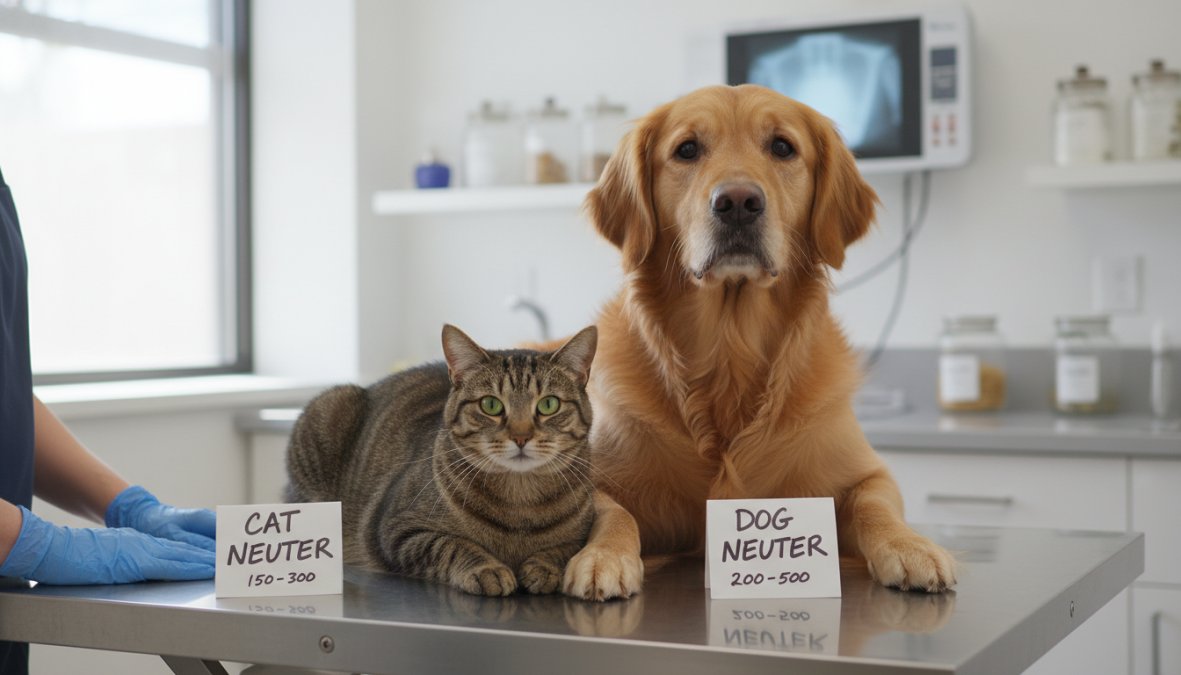
Most pricing guides separate dog and cat information into different pages, forcing owners to mentally stitch together a comparison. The table below puts both species, both sexes, and all three clinic tiers in one place. These ranges reflect commonly reported national figures across low-cost programs, private practices, and full-service hospitals, your local quote will vary based on geography, clinic overhead, and your individual animal’s health status.
| Procedure | Low-Cost Clinic | Private Practice | Specialty / Full-Service Hospital |
|---|---|---|---|
| Cat neuter (male) | $50 – $100 | $150 – $300 | $300 – $500+ |
| Cat spay (female) | $75 – $150 | $200 – $400 | $400 – $700+ |
| Dog neuter – small breed (under 25 lbs) | $100 – $200 | $200 – $400 | $400 – $600+ |
| Dog neuter – medium breed (25-60 lbs) | $150 – $250 | $250 – $500 | $500 – $800+ |
| Dog neuter – large breed (60-100 lbs) | $200 – $350 | $350 – $600 | $600 – $1,000+ |
| Dog neuter – giant breed (100+ lbs) | $250 – $450 | $450 – $800 | $800 – $1,500+ |
| Dog spay – small breed (under 25 lbs) | $125 – $250 | $250 – $500 | $500 – $800+ |
| Dog spay – medium breed (25-60 lbs) | $175 – $300 | $300 – $600 | $600 – $1,000+ |
| Dog spay – large breed (60-100 lbs) | $225 – $400 | $400 – $700 | $700 – $1,200+ |
| Dog spay – giant breed (100+ lbs) | $300 – $500 | $500 – $900 | $900 – $1,800+ |
These ranges represent the base procedure fee only and typically exclude pre-anesthetic bloodwork, IV fluids, take-home pain medication, and e-collars. Your out-the-door cost can run $50-$300 higher than the quoted base price depending on what add-ons are included. See the Hidden Costs Checklist section below before you call for a quote.
What the table tells you at a glance:
- A cat neuter at a low-cost clinic is among the most affordable elective veterinary procedures that exists, often less than a routine wellness exam at a private practice.
- The cost gap between a cat neuter and a giant-breed dog neuter at a full-service hospital can exceed $1,400 for the same general category of procedure.
- The jump from low-cost clinic to private practice is proportionally similar across both species, roughly 2x to 3x, meaning the clinic-type decision matters as much as the species difference.
- Female sterilization (spay) consistently costs more than male sterilization (neuter) at every size and clinic tier, because spay requires entering the abdominal cavity.
Spay vs. Neuter: What Each Procedure Actually Involves
Spay is the sterilization of female companion animals. For cats and dogs, the standard procedure is an ovariohysterectomy, which involves removing both the ovaries and the uterus. Some veterinarians now perform an ovariectomy, removing only the ovaries, which is a shorter surgery with comparable outcomes in most healthy animals.
Neuter refers to the removal of the testes in male animals, a procedure formally called orchiectomy. Male cat neuters are among the fastest, simplest surgical procedures in veterinary medicine, an experienced surgeon can complete the procedure in under five minutes in a healthy young cat. Male dog neuters take longer due to body size and the need for more anesthesia management.
The key distinction for pricing: female sterilization (spay) involves entering the abdominal cavity, which requires more surgical time, more anesthesia, and a longer recovery. That complexity is why spay procedures cost more than neuters across both species, and it is why the female rows in the table above consistently run higher than the male rows at every size tier.
What Is Typically Included in the Surgery Fee
Most surgery fees at reputable clinics cover the core procedure, but the out-the-door cost is rarely the base price. A standard fee typically includes:
- Pre-surgical examination
- General anesthesia and monitoring
- The surgical procedure itself
- Basic post-operative care before discharge
- An Elizabethan collar (e-collar)
What is often NOT included in the base fee:
- Pre-anesthetic chemistries (bloodwork before surgery)
- IV fluids during the procedure
- Pain medication to take home
- Antibiotics if prescribed
- Microchipping
- Vaccination services bundled at the same visit
- Pet license fees required in some jurisdictions
Never assume the quoted price is your final bill. Always ask specifically: “Does this include pre-anesthetic bloodwork, IV fluids, and take-home pain medication?” Clinics that omit these line items can add $75-$250 to your total cost. Getting this answer before you book lets you compare clinics on equal footing.
Average Cost to Neuter a Dog by Size, Breed, and Clinic Type
Dog size is the single biggest driver of neuter costs, and it’s not arbitrary. Larger dogs require higher doses of anesthesia, longer surgical time, more suture material, and extended monitoring. A Chihuahua neuter at a low-cost clinic sits at a very different price point than a Great Dane neuter at a full-service veterinary hospital.
Breed also plays a role beyond size. Short-muzzled breeds (brachycephalic dogs like Bulldogs, French Bulldogs, and Pugs) carry elevated anesthetic risk because of their compressed airways. Most clinics charge a premium for these animals, and some low-cost clinics decline to perform surgery on them without additional pre-surgical clearance.
Clinic type creates the widest cost spread:
- Low-cost clinics and voucher program providers focus exclusively on sterilization volume and keep overhead low. They are the most affordable option for healthy, standard-anatomy animals.
- Private practice veterinary hospitals charge more, but often include more comprehensive pre-surgical workups and closer monitoring.
- Specialty centers are the most expensive and are typically reserved for animals with complicating health factors.
Geographic Cost Variance: Why Location Changes Everything
Geography is a cost variable that most pricing guides understate. Veterinary pricing in urban coastal markets can run two to three times higher than in rural or Midwest regions for the identical procedure. This reflects real estate costs, staff wages, and the local cost of doing business, not differences in surgical quality.
A few practical patterns worth knowing:
- Major metro areas (New York, Los Angeles, San Francisco, Seattle) consistently show the highest veterinary pricing.
- Mid-size cities and suburban markets fall in the middle range.
- Rural areas and smaller towns often have the lowest private practice prices, though they may have fewer low-cost clinic options.
According to ASPCA’s pet care cost resources, geographic variation in veterinary costs is one of the most significant factors pet owners overlook when budgeting for surgery.
Use tools like the Banfield Pet Hospital Price Estimator (available at banfield.com) or FareVet to get a sense of real-world local pricing before you call clinics. These tools won’t replace an actual quote, but they calibrate your expectations by ZIP code.
Factors Affecting Pet Surgery Costs You Need to Know
Most people focus on the procedure name and miss the variables that actually determine their final bill. The factors affecting pet surgery costs fall into three categories: animal-specific, procedure-specific, and clinic-specific.
Animal-specific factors:
- Body weight (directly affects anesthesia dosing)
- Age (older animals may need more thorough pre-anesthetic chemistries)
- Overall health status
- Breed anatomy (brachycephalic, giant breed)
Procedure-specific factors:
- Spay vs. neuter (spay is more complex)
- Species (dog procedures generally cost more than cat procedures)
- Presence of complications (see below)
Clinic-specific factors:
- Overhead and location
- Whether the clinic is a high-volume low-cost model or a full-service hospital
- What the base fee actually includes
Special Conditions That Raise the Price (Cryptorchid, In-Heat, Obesity)
Three conditions reliably increase surgery costs, and owners are sometimes caught off guard by them.
A cryptorchid animal has one or both testes that have not descended into the scrotal sac. Finding and removing a retained testicle requires abdominal exploration, turning a simple neuter into a more complex procedure. Cryptorchid neuters cost significantly more at any clinic type.
Spaying a female animal in-heat or pregnant also increases surgical complexity and time. The reproductive organs are more vascular during these states, raising the risk of bleeding and extending procedure time. Many clinics charge a surcharge for in-heat spays, and some prefer to wait until the heat cycle ends.
Obesity complicates anesthesia management and makes surgical access more difficult. Heavier animals require more anesthetic agent, and the surgeon may need additional time to navigate excess tissue. Some clinics apply a weight-based surcharge above a certain threshold.
Hidden Costs Checklist: The Out-the-Door Price Is Rarely the Base Price
Before scheduling, run through this checklist to calculate your real out-the-door cost:
- Pre-anesthetic bloodwork / pre-anesthetic chemistries included?
- IV fluids during surgery included?
- Take-home pain medication included?
- Antibiotics if needed – included or billed separately?
- E-collar included?
- Microchipping offered, and at what cost?
- Any breed surcharge for brachycephalic or giant breeds?
- Any condition surcharge (cryptorchid, in-heat, overweight)?
- Follow-up wellness exam included or separate?
- Payment plans or financing available?
The base surgery quote is a starting point, not a final number. Running through this checklist before you book will prevent surprise charges and help you compare clinics on equal footing.
Why Cat Neuter vs Dog Neuter Pricing Differs So Significantly
The gap in cat neuter vs dog neuter pricing comes down to three factors: body mass, anesthesia requirements, and procedure complexity.
Cats are small, and male cat neuters are externally performed procedures that take an experienced surgeon only a few minutes. The anesthesia protocol is straightforward, recovery is fast, and the surgical risk is low. This is why cat neuters are among the most affordable veterinary procedures available.
Dogs, by contrast, range from two pounds to over 200 pounds. Every additional pound of body weight increases anesthesia dosing, monitoring time, and surgical complexity. A large-breed dog spay involves navigating significantly more tissue than a cat spay, and the procedure can take several times as long.
Female sterilization (spay/ovariohysterectomy or ovariectomy) adds another layer of complexity for both species, because the surgeon must enter the abdominal cavity. But the scale difference between a cat and a large dog makes this comparison stark.
The practical implication: if you have both a cat and a large dog to sterilize, expect the dog surgery to cost meaningfully more, even at the same clinic.
How to Find Low-Cost Spay and Neuter Clinics Near You
Finding affordable sterilization is genuinely achievable in most parts of the country, but it requires knowing where to look. The best starting point is the ASPCA’s spay/neuter resources and clinic finder, which maintains a national directory of low-cost programs.
Beyond national directories, search for these locally:
- High-volume low-cost clinics that specialize exclusively in spay, neuter, and sometimes dental procedures. These clinics keep costs down through surgical volume and focused workflows.
- Humane societies and animal shelters that offer sterilization to the public, not just adopted animals.
- Veterinary school teaching hospitals, which often offer procedures at reduced cost under faculty supervision.
- Mobile spay/neuter units that operate in underserved communities on scheduled days.
- Community cat programs that specifically target feral and stray cat populations, sometimes with subsidized rates for owned cats as well.
CorePet operates as exactly this type of focused, high-quality surgery center, specializing exclusively in spay, neuter, and dental procedures for dogs, cats, and rabbits. The exclusive focus on these procedures means the team performs them at a high volume with advanced surgical techniques and modern equipment, which supports both quality and cost efficiency.
Income-Based Financial Assistance and Voucher Programs
Voucher programs exist specifically to bridge the cost gap for pet owners who cannot afford standard veterinary pricing. These programs issue sterilization certificates or vouchers redeemable at participating clinics, often at no cost or a nominal fee to the owner.
Eligibility is frequently tied to Area Median Income (AMI) thresholds. Many programs serve households at or below a certain percentage of AMI, which varies by county and program. Some programs prioritize community cats, feral colonies, or pets in specific zip codes.
How to find voucher programs:
- Contact your local animal control or animal services department.
- Search "[your city/county] spay neuter voucher program."
- Check with local humane societies, which often administer or know of local voucher programs.
- Ask your veterinarian, as many clinics maintain lists of local assistance programs.
The Humane Society of the United States’ pet care assistance resources maintains guidance on finding financial assistance for veterinary care, including sterilization.
Does Pet Insurance Cover Sterilization Surgery?
Most standard pet insurance policies do not cover elective sterilization surgery. Spay and neuter procedures are classified as elective, preventive care, which falls outside the scope of accident-and-illness policies.
However, some insurers offer wellness add-ons or preventive care riders that reimburse a portion of spay/neuter costs. These add-ons typically cover a fixed dollar amount per year toward routine and preventive care, which can include sterilization.
Before purchasing a wellness rider for this purpose, calculate whether the added premium cost is worth the reimbursement amount. For many owners, a one-time procedure at a low-cost clinic is more economical than paying a monthly wellness rider premium.
Benefits of Sterilization Beyond the Price Tag
The cost conversation matters, but sterilization is one of the few veterinary decisions where the long-term financial case is actually stronger than the upfront cost argument. Most guides list the health benefits in a bullet list and move on. This section goes deeper: what the risks actually are, how they differ between cats and dogs, and how to think about the cost of sterilization against the cost of not sterilizing.
The Financial Case: What You Are Avoiding by Sterilizing
The most compelling argument for sterilization is not behavioral or population-level, it is the cost of the conditions it prevents.
Pyometra is a life-threatening uterine infection that affects intact female dogs and cats. It requires emergency surgery to treat, and the procedure is significantly more complex and expensive than a routine spay because the infected uterus is enlarged, fragile, and highly vascular. Emergency pyometra surgery at a full-service hospital routinely costs several times more than a routine spay, and that figure does not include hospitalization, IV antibiotics, or post-operative monitoring. The condition is entirely preventable by spaying before it develops. The financial math is straightforward: a routine spay now costs a fraction of emergency pyometra surgery later.
Mammary tumors in intact female dogs have a well-documented relationship with reproductive hormone exposure. The risk profile changes meaningfully depending on when spay occurs relative to heat cycles, a commonly cited pattern in veterinary literature is that spaying before the first heat cycle is associated with substantially lower mammary tumor risk than spaying after multiple cycles. In cats, mammary tumors are less common overall but tend to be more aggressive when they do occur. Treatment for mammary tumors, surgery, pathology, and potential follow-up, represents a significant and recurring expense compared to a one-time spay.
Testicular cancer is eliminated entirely by neutering, since there is no remaining tissue for the cancer to develop in. For dogs, benign prostatic hyperplasia (BPH), an enlargement of the prostate that causes difficulty urinating and defecating, is nearly universal in intact older male dogs. Medical management of BPH is ongoing and cumulative in cost; neutering resolves it.
Cryptorchid animals (those with one or both testes retained in the abdomen rather than descended) face a meaningfully elevated risk of testicular torsion and testicular cancer in the retained testicle. Neutering a cryptorchid animal removes this risk, though the procedure costs more than a standard neuter because it requires abdominal exploration.
Species-Specific Nuances Competitors Overlook
Most benefit summaries treat dogs and cats as interchangeable. They are not.
Cats and mammary tumors: Feline mammary tumors are reported to be malignant at a much higher rate than canine mammary tumors. This makes the case for early spay in cats particularly strong from a health standpoint, not just a population-control standpoint.
Dogs and timing debates: The relationship between neuter timing and orthopedic or behavioral outcomes in dogs, particularly large and giant breeds, is an area of active discussion in veterinary medicine. Some research has suggested that early neutering in certain large breeds may be associated with increased rates of specific joint conditions. This does not mean neutering is contraindicated; it means the timing conversation is worth having with your veterinarian, particularly for breeds like Golden Retrievers, Labrador Retrievers, German Shepherds, and Rottweilers. For cats, this timing nuance is largely absent, early neuter is broadly supported across the profession.
Intact male cats and household dynamics: Intact male cats spray urine to mark territory. The odor is significantly more pungent than that of neutered males and is extremely difficult to eliminate from household surfaces and fabrics. Neutering before this behavior becomes established is far more effective than attempting to modify it after the fact. This is a practical quality-of-life consideration that has real household cost implications (cleaning, replacement of damaged materials) that rarely appear in clinical benefit summaries.
Population-Level Impact: The Shelter Math
At the population level, sterilization is the primary driver of the long-term decline in shelter euthanasia rates that has occurred over several decades in the United States. According to the American Veterinary Medical Association’s resources on pet overpopulation, sterilization remains the most effective single intervention for managing companion animal populations.
The practical implication for individual owners: an unspayed female cat can produce multiple litters per year, and her offspring can reproduce within months. The downstream shelter and resource burden of a single unsterilized cat over her lifetime is substantial. This is not a guilt argument, it is context for why low-cost and voucher programs exist and why public funding supports them.
The Framing That Changes the Decision
The cost of sterilization is a one-time, predictable expense. The costs it prevents, emergency pyometra surgery, mammary tumor treatment, ongoing BPH management, behavioral damage to your home, are recurring, unpredictable, and typically far higher.
For owners weighing the upfront cost of sterilization against their budget, the relevant comparison is not "can I afford this now" but "what is the expected cost of not doing this over my pet’s lifetime." For the vast majority of cats and dogs, the expected value calculation strongly favors sterilization, and doing it earlier rather than later captures more of the preventive benefit.
The one condition most worth understanding before you decide on timing is pyometra for intact females. Ask your veterinarian to walk you through the signs, the treatment cost at your local emergency clinic, and how that compares to a routine spay at a low-cost clinic. That single conversation reframes the entire cost discussion.
Pre-Anesthetic Requirements and Potential Surgical Complications
Pre-anesthetic chemistries are bloodwork panels run before surgery to assess organ function, particularly the liver and kidneys, which process anesthetic agents. For young, healthy animals, many low-cost clinics make this bloodwork optional to keep costs down. For older animals or those with known health issues, pre-anesthetic bloodwork is strongly advisable and often required.
Standard pre-surgical requirements typically include:
- Fasting for a specified period before surgery (usually 8-12 hours for food, shorter for water)
- A current health status check at intake
- Disclosure of any medications the animal is taking
- Disclosure of any known health conditions
Potential surgical complications are uncommon in healthy animals undergoing routine sterilization, but they exist. Owners should be aware of:
- Anesthesia reactions: rare but possible, particularly in brachycephalic breeds and animals with undetected heart conditions
- Surgical site infection: typically preventable with proper post-operative care and antibiotics when indicated
- Internal bleeding: rare, more likely in animals spayed in-heat due to increased vascularity of the reproductive organs
- Suture reactions: some animals react to suture material, requiring follow-up care
- Incision opening: usually caused by excessive activity or licking during recovery
Post-operative care instructions from your clinic are not optional reading. Restricting activity, preventing licking of the incision, and monitoring for signs of infection are the owner’s responsibility after discharge. Most complications that do occur are preventable with attentive post-operative care.
Ask your clinic whether they use dissolvable sutures or external sutures requiring removal. Dissolvable sutures eliminate the need for a follow-up visit, which saves both time and any associated recheck fee.
Conclusion
Budgeting for sterilization surgery is straightforward once you understand what drives the cost differences between species, sizes, and clinic types. The challenge is that most guides present national averages without explaining the variables that actually determine your bill.
CorePet specializes exclusively in spay, neuter, and dental procedures for dogs, cats, and rabbits, which means every surgery is performed by a team that does this work at high volume with modern surgical techniques and advanced equipment. The focused model keeps costs reasonable without compromising on individualized, respectful care. Book an appointment with CorePet to get transparent pricing and a team that treats your pet’s surgery as the priority, not an afterthought.
Frequently Asked Questions
Why is neutering a dog more expensive than a cat?
Dog neuter surgery generally costs more than cat neuter surgery because of the greater volume of anesthesia required, longer procedure time, and larger instrument sizes needed. Dogs also vary significantly in body weight, and heavier animals require more anesthesia and monitoring resources. Special conditions like cryptorchidism, an undescended testicle, add surgical complexity for both species but are more common cost drivers in dogs. Clinic type and geographic location further widen this pricing gap.
What factors influence the cost of neutering a pet?
Several factors affecting pet surgery costs include the animal's species, weight, age, and breed. Short-muzzled breeds like bulldogs require more intensive anesthesia monitoring. Special conditions such as cryptorchidism, obesity, or a female in-heat status increase surgical complexity. The clinic type, low-cost clinic versus a full-service veterinary hospital, makes a major difference, as does geographic location. Add-ons like pre-anesthetic bloodwork, IV fluids, pain medication, antibiotics, and microchipping all contribute to the final out-the-door cost.
Does pet insurance cover neutering costs?
Most standard pet insurance policies classify spay and neuter surgeries as elective procedures and do not cover them under accident-and-illness plans. However, some insurers offer optional wellness riders or preventive care add-ons that reimburse a portion of sterilization costs. It is worth reviewing your policy's schedule of benefits carefully before assuming coverage. CareCredit and similar veterinary financing options can help bridge the gap if insurance does not apply to your pet's sterilization surgery.
Are there low-cost neutering options available for pet owners on a budget?
Yes. Low-cost spay and neuter clinics, nonprofit organizations, and government-funded voucher programs exist in most regions to make sterilization accessible. Many programs use Area Median Income guidelines to qualify pet owners for reduced or subsidized pricing. Organizations like Emancipet and regional humane societies often run community clinics. Searching your local ASPCA affiliate, county animal services, or a national directory like SpayUSA can connect you with affordable options that still meet safe surgical standards.
What is typically included in the price of a neuter surgery?
A standard neuter surgery fee usually covers anesthesia, the surgical procedure itself, and basic post-operative care. However, what is included varies widely between clinics. Some facilities bundle pre-anesthetic chemistries, IV fluids, pain medication, and an e-collar into the quoted price, while others charge for each separately. Always ask for an itemized estimate and confirm whether take-home antibiotics, a follow-up wellness exam, or sterilization certificates are included to avoid surprise charges when you pick up your companion animal.
At what age should you neuter a cat versus a dog?
For cats, most veterinarians recommend neutering around four to six months of age, before the onset of sexual maturity. For dogs, the ideal timing is more nuanced and often depends on breed size. Small breeds may be neutered around six months, while large and giant breeds may benefit from waiting until 12 to 18 months to support healthy musculoskeletal development. Always consult your veterinarian for individualized guidance, as early sterilization timing can affect long-term health outcomes differently across species and breeds.
This article was written using GrandRanker