Last Updated: November 7, 2026
Quick Summary
To feed cat after spay surgery, skip food on surgery day as your vet instructs, then return to the regular diet in gradually larger portions the next day. Most cats regain their normal appetite within 24 to 48 hours. Keep fresh water available once your cat is alert and steady.
- Follow your vet’s fasting instructions before surgery.
- Offer food the evening of surgery only as your veterinarian instructs.
- Return to the regular diet in gradually larger portions the next day.
- Call your vet if your cat refuses food for more than 48 hours.
- Avoid switching foods or giving table scraps during recovery.
Table of Contents
- How to Feed Your Cat After Spay Surgery, Step by Step
- How to Help a Cat Eat After Spaying When Appetite Is Low
- Cat Spay Recovery Food and Water: What Matters Most
- Frequently Asked Questions
How to Feed Your Cat After Spay Surgery, Step by Step
Feeding a cat after spay surgery is simple when you follow a clear plan, and this guide to feed cat after spay recovery covers each stage. Appetite may take up to 48 hours to fully recover after surgery. The steps below help you offer food safely at each stage.
- Before surgery: Your vet will give you fasting instructions.
- Evening of surgery: Follow your veterinarian’s instructions on whether and how much to offer.
- Next day: Return to the regular diet in gradually larger portions.
- Within 24 to 48 hours: Most cats are back to normal eating habits.
Always follow your vet’s specific discharge instructions, since they may differ from these general steps. If you are in New Hampshire and are considering a spay procedure, you can book an appointment and ask about recovery feeding guidance during your consultation.
Here is a quick timeline of when to offer food after your cat’s spay surgery.
| Stage | What to do | Timing |
|---|---|---|
| Before surgery | Follow your vet’s fasting instructions | Before surgery |
| Evening of surgery | Offer food only as your vet instructs | Evening of surgery |
| Next day | Return to regular diet in gradually larger portions | Next day |
| Recovery | Most cats return to normal eating habits | Within 24 to 48 hours |
How to Help a Cat Eat After Spaying When Appetite Is Low
A cat with low appetite after surgery is common, and it often improves on its own. Offer small amounts of the regular food, and warm wet food slightly to make it more appealing.
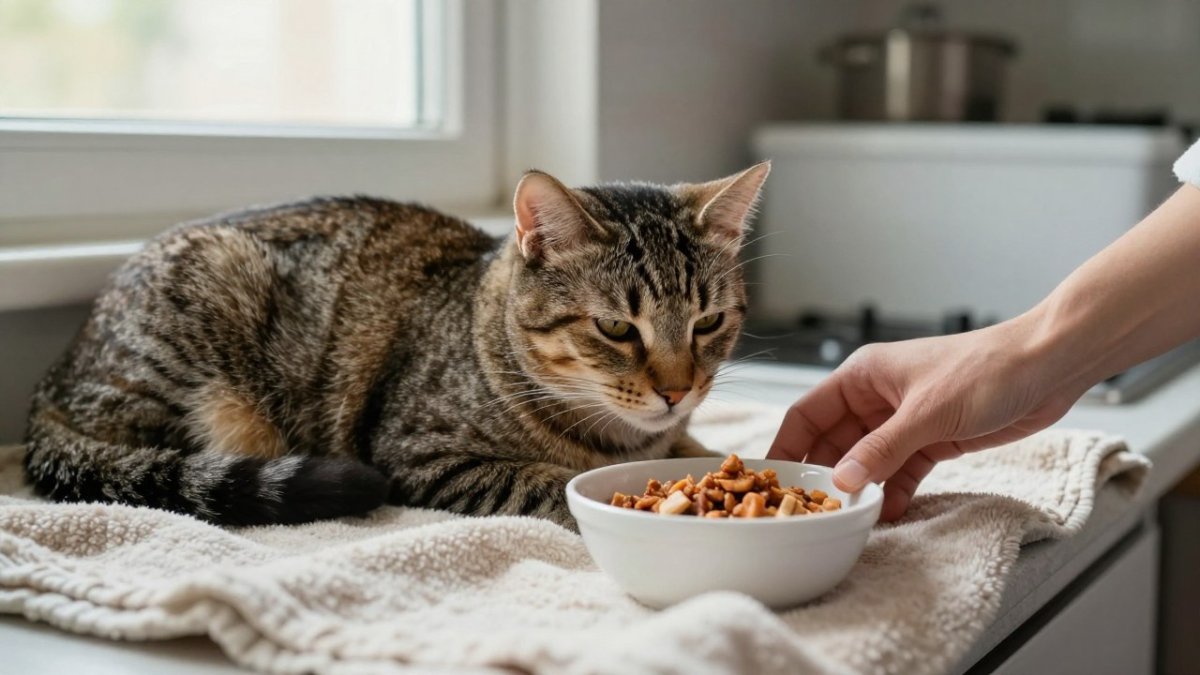
Call your vet if your cat refuses food for more than 48 hours, vomits repeatedly, or seems weak or lethargic. You can read which post-surgery complications warrant a call to the vet to know what to watch for. Persistent appetite loss can also signal complications that a veterinarian should evaluate.
Cat Spay Recovery Food and Water: What Matters Most
Keep fresh water available once your cat is alert and steady after anesthesia. Stick with the regular diet rather than switching foods, because sudden changes can upset the stomach. Avoid table scraps during recovery.
Your cat may also benefit from a quiet, comfortable spot to rest while eating. For more on recovery expectations, see Post-surgical recovery expectations for cats.
Recovering from spay surgery is easier with clear guidance and a steady routine. If you have questions about your cat’s recovery, book an appointment with CorePet to talk through your cat’s needs.
Frequently Asked Questions
Can I feed my cat after spay surgery?
Most cats can be offered food the evening of surgery, but in small amounts. Your veterinarian’s discharge instructions come first, since fasting rules depend on the cat’s age and the procedure. Follow your veterinarian’s guidance on portion size, and watch for vomiting. If you have questions about timing, call your veterinary team before the first meal.
What should I feed a cat that just got spayed?
Ask your veterinarian which food is appropriate for your cat’s recovery. Sudden diet changes can upset the stomach, so discuss any switch before making it. Avoid table scraps and new treats during recovery. If your cat has a medical condition or is a kitten, ask your veterinarian for food guidance tailored to that cat.
When should I call the vet after my cat’s spay?
Call your veterinarian if your cat seems unwell, refuses food, vomits repeatedly, or shows any concern at the incision site. Contact a veterinary professional promptly rather than waiting, since these signs can indicate complications that need evaluation.